
Graphene – Nobel Laureate Meets Yogi Adityanath to Boost Advanced Materials Research
Graphene – Uttar Pradesh Chief Minister Yogi Adityanath held a significant meeting on Wednesday with Nobel Prize-winning physicist Konstantin Novoselov to discuss the future of advanced materials research and technology development in the state. The interaction also included Rajat Verma, Founder and Chief Executive Officer of Lohum, along with the company’s Chief of Staff Ayush Sabat.
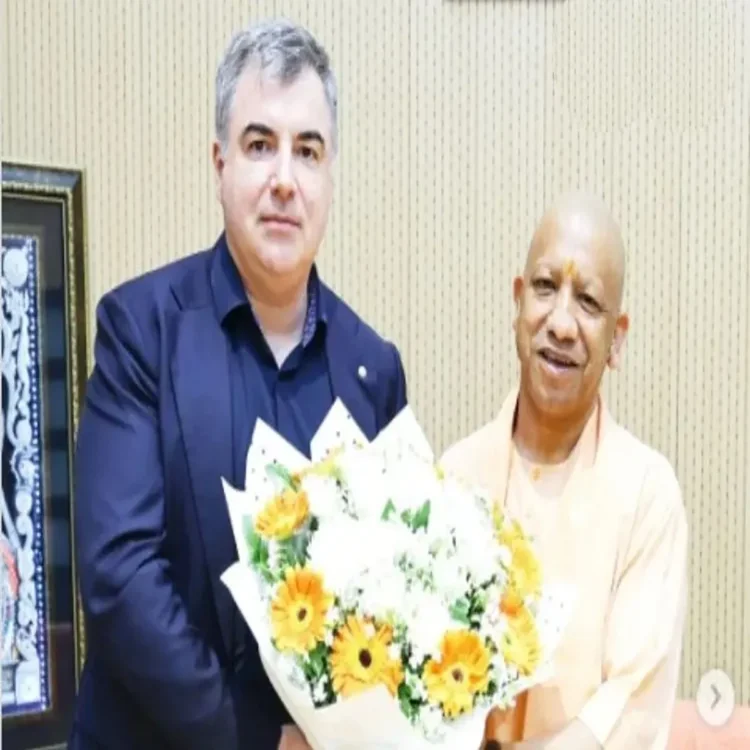
The discussion centered on strengthening scientific research, encouraging technological innovation, and exploring ways to transform Uttar Pradesh into a major center for advanced engineering and material sciences.
Subheading: Focus on research and technology development
During the meeting, Chief Minister Yogi Adityanath welcomed the distinguished scientist and the Lohum leadership, emphasizing the state government’s commitment to fostering innovation-driven industries. According to people familiar with the discussions, the interaction explored potential collaborations that could expand research capabilities and attract high-technology investment to Uttar Pradesh.
Participants also reviewed opportunities for building a stronger ecosystem for advanced materials research. The goal is to encourage both academic and industrial institutions to work together in developing next-generation technologies.
Subheading: Positive response to Uttar Pradesh’s investment climate
The visiting delegation appreciated the investment-friendly environment in the state. Over the past few years, Uttar Pradesh has focused on improving industrial infrastructure, streamlining policies, and creating conditions that encourage domestic and international companies to establish operations.
Following the meeting, the Chief Minister shared details of the interaction on social media, describing the discussion with Professor Konstantin Novoselov as constructive and forward-looking. He highlighted that the conversation focused on strengthening advanced materials research and encouraging innovation-led growth within the state.
Subheading: Proposal for rare earth to magnet facility
Another important topic discussed during the meeting was Lohum’s proposal to establish India’s first integrated rare earth to magnet manufacturing facility in Uttar Pradesh. The project aims to build a complete supply chain that processes rare earth materials and converts them into high-performance magnets used in several modern technologies.
If implemented, the facility could play an important role in boosting domestic high-tech manufacturing. Permanent magnets are essential components in electric vehicles, renewable energy systems, electronics, and various industrial applications. The proposed project is expected to contribute to India’s efforts to strengthen its technological self-reliance.
Subheading: Novoselov’s role in advanced materials innovation
Konstantin Novoselov, who received the Nobel Prize in Physics for the discovery of graphene, is currently associated with Lohum as a strategic advisor and collaborator. His work in advanced materials science has opened new possibilities in electronics, energy storage, and nanotechnology.
Through this collaboration, Novoselov aims to help translate scientific research into large-scale industrial applications, particularly in the fields of battery technology and energy systems.
Subheading: Research focus on batteries and recycling systems
The partnership between Lohum and Novoselov focuses on two key technological areas. The first involves the use of two-dimensional materials such as graphene to enhance the performance of next-generation lithium-ion batteries. Researchers believe that these materials could improve battery capacity, extend operational life, and enhance safety.
The second area focuses on developing advanced recycling systems for batteries and permanent magnets. These systems are designed to improve the recovery of critical minerals, ensuring that valuable materials can be reused effectively within a circular economy.
Subheading: Alignment with India’s clean energy ambitions
Experts believe that initiatives combining advanced materials research with industrial applications could play a crucial role in supporting India’s clean energy transition. Improved battery technologies and efficient recycling systems are essential for expanding renewable energy infrastructure and electric mobility.
Collaborations between scientific experts and technology companies also align with national initiatives aimed at strengthening domestic manufacturing and innovation. The discussions in Lucknow highlighted how partnerships between global researchers and Indian industry could contribute to the country’s long-term technological and energy goals.