
WildlifeConflict – Elephant herd kills three family members in Jharkhand village
WildlifeConflict- Three members of a family lost their lives after a group of wild elephants attacked their home in a remote village of Jharkhand’s Bokaro district early Thursday morning. According to forest authorities, the tragic incident took place in Barkipunnu village, located under the Mahuadanr police station jurisdiction, when the animals reportedly entered the residential area in search of food.
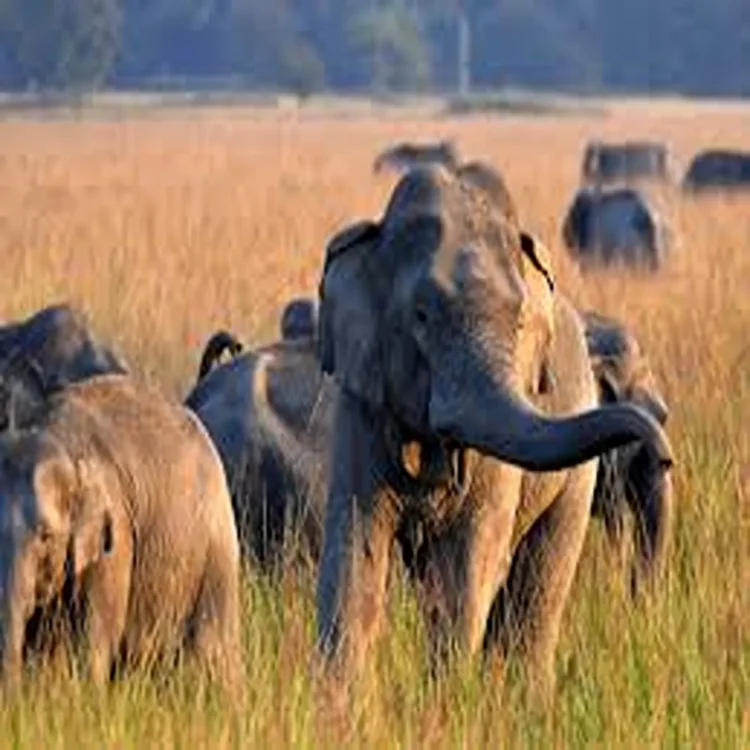
Elephants Break Into House Searching for Food
Officials from the forest department stated that the herd, consisting of five elephants, targeted the family’s house while searching for stored paddy. During the intrusion, a portion of the mud-built structure was severely damaged. Startled by the sudden attack and destruction of their home, the family members attempted to run out to save themselves. However, they were caught by the elephants just outside the residence and were fatally trampled.
Bokaro Divisional Forest Officer Sandeep Sinde confirmed that the elephants had caused visible structural damage while trying to access stored grain. He added that such incidents often occur when wild animals move into villages attracted by easily available food sources.
Herd Movement Had Been Noticed for Several Days
Forest department officials revealed that villagers and authorities had observed the elephant herd moving around the Barkipunnu region for the past few days. Despite monitoring the animals’ movement, the herd eventually strayed into the residential zone during the early hours of the morning, when most villagers were asleep.
Wildlife experts have frequently warned that seasonal migration and shrinking natural habitats are increasing encounters between humans and elephants in parts of eastern India. Dense forest regions surrounding rural settlements often serve as traditional elephant corridors, making nearby villages vulnerable to sudden animal movement.
Authorities Begin Compensation Process for Victims’ Families
Following the incident, forest officials visited the site and initiated formal procedures to provide financial assistance to the relatives of the deceased. Sinde stated that the government’s compensation process has already been set in motion and necessary documentation is being completed to ensure timely support for the affected family members.
Local administration officials also assured villagers that additional monitoring teams would be deployed in nearby areas to track elephant movement and reduce further risks. Awareness campaigns and precautionary advisories are expected to be shared with residents living close to forest boundaries.
Growing Concerns Over Human-Elephant Encounters
Incidents involving wild elephants entering human settlements have been reported frequently in Jharkhand over recent years. Environmental observers link the rising conflict to habitat loss, reduced forest cover, and expansion of agricultural land. As elephants depend heavily on natural vegetation and water sources, disturbances in their ecosystem often push them toward villages where crops and stored grains become easy food options.
Authorities have been working to strengthen early warning systems and encourage villagers to report animal sightings quickly. Forest teams also conduct night patrols in high-risk areas to divert elephant herds back toward forest zones whenever possible. However, managing large and unpredictable animals remains a significant challenge for wildlife officials.
Community Safety Measures Under Review
In response to the latest tragedy, local officials are reviewing existing safety measures and exploring options such as installation of solar-powered fencing, watch towers, and community alert systems. Wildlife departments in several districts have also been promoting alternative crop storage methods to reduce the attraction of elephants toward residential areas.
Experts emphasize that long-term solutions require coordinated efforts involving habitat restoration, safe migration corridors, and community participation. Strengthening coexistence strategies is considered essential to protect both human lives and wildlife populations in forest-adjacent regions.