
Wildfires – Uttarakhand Forest Fires Surge Sharply Over Five Years Study
Wildfires – Forest fires in Uttarakhand’s central Himalayan belt have risen sharply over recent years, with new research highlighting a worrying upward trend and its far-reaching impact on both ecosystems and local communities.
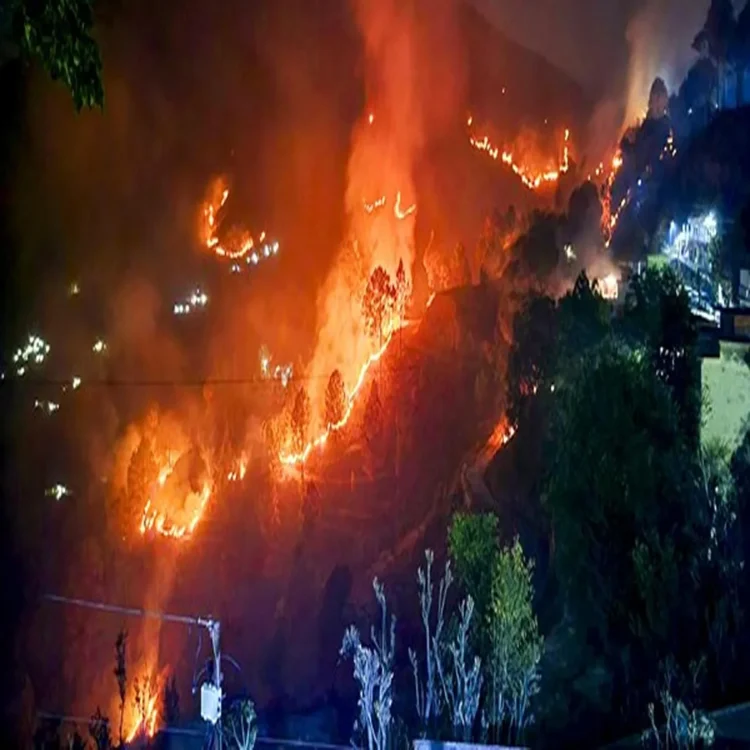
A detailed study conducted by Himalayan ecology expert Professor Vishwambhar Prasad Sati along with researcher Surajit Banerjee from Mizoram University reveals that forest fire incidents in the region increased by 56 percent between 2019 and 2024. Over this five-year period, more than 46,000 fire cases were recorded, pointing to a growing environmental challenge in the state.
High-risk zones identified across key forest regions
The research highlights several areas that face a particularly high likelihood of fires. Among them are Rajaji National Park, Jim Corbett National Park, and forest stretches around Ramnagar, Haldwani, and Nainital. These locations show more than a 90 percent probability of fire occurrence, especially during the dry pre-monsoon months.
The study notes that specific geographical and ecological factors contribute to this vulnerability. Forests located at elevations between 800 and 2,200 meters are most affected. Slopes facing south and west are especially prone to ignition due to higher exposure to sunlight and heat.
Vegetation and terrain increase fire susceptibility
According to the findings, forest composition plays a crucial role in fire intensity. Large areas are dominated by chir pine trees along with species such as sal, bamboo, and semal. These forests accumulate significant amounts of dry leaves and pine needles, which act as highly flammable material.
During periods of rising temperatures, this organic debris dries out further, creating conditions that allow fires to spread quickly. The combination of terrain, vegetation, and seasonal dryness makes these forests particularly sensitive to even minor ignition sources.
Human activities remain the primary trigger
While environmental conditions create a conducive setting for fires, the study identifies human actions as the leading cause of ignition. Careless disposal of burning materials, traditional slash-and-burn agricultural practices, and sparks generated from roadside infrastructure are among the major contributors.
Researchers stress that although climate-related factors such as increasing temperatures and reduced soil moisture intensify the problem, most fires begin due to human negligence or unmanaged activities.
Ecological and economic consequences deepen concerns
The impact of repeated forest fires extends beyond immediate damage to vegetation. The study found that burned topsoil loses more than half of its essential nutrients, including organic carbon, nitrogen, and potassium. This degradation reduces soil fertility and slows down natural forest regeneration.
Communities that depend on forest-based resources are also facing significant challenges. Many rely on non-timber forest products such as medicinal plants, wild fruits, and mushrooms for their livelihoods. With forests repeatedly damaged, these income sources are shrinking.
The report also draws attention to migration trends linked to environmental decline. Districts such as Pauri, Tehri, and Almora are witnessing increasing numbers of young people leaving for cities like Dehradun and Haridwar in search of stable employment.
Rising incidents and financial losses recorded
Data from the study shows that 2,186 fire incidents were reported in 2022 alone. Among all districts, Almora experienced the highest level of damage, with estimated losses reaching Rs. 25.4 lakh.
The researchers emphasize that forest fires should not be seen as isolated environmental events. Instead, they are closely connected to broader issues such as climate change, economic disparities, and weakening local governance systems.
Role of local institutions and future solutions
The study underlines the importance of the Van Panchayat system, a traditional village-level forest management institution. These community groups have historically played a key role in preventing fires through regular monitoring and the creation of firebreak lines.
However, the effectiveness of these institutions is declining due to reduced participation and migration of younger populations. This weakening local engagement is making forests more vulnerable.
As a potential solution, the researchers suggest promoting the industrial use of pine needles. By converting this highly flammable material into bio-briquettes, it can serve as an alternative energy source to coal and firewood. This approach could help reduce fire risks while also creating employment opportunities in rural areas.