
Weather Today: Relentless Cold Wave and Dense Fog Disrupt Daily Life Across North India
Weather Today: A strong western disturbance has intensified winter conditions across large parts of North India, bringing with it dense fog, biting cold winds, and a prolonged cold wave. Over the past few days, everyday life in major cities and smaller districts alike has been significantly affected, with transportation delays, school closures, and heightened concerns for vulnerable populations. According to the India Meteorological Department, cold conditions are expected to persist until the end of December, while a gradual rise in daytime temperatures may begin with the onset of the new year.
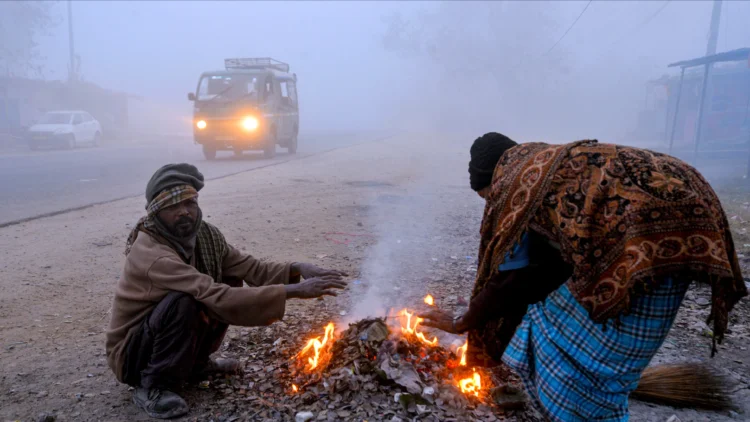
Weather Conditions Tighten Their Grip
Thick fog blanketed Delhi and surrounding regions, drastically reducing visibility during early morning hours. In several locations, visibility dropped to as low as 50 to 100 meters, creating hazardous conditions for commuters. The persistent fog, combined with low temperatures, has made mornings particularly challenging, especially for those dependent on road, rail, and air transport. Meteorological experts have attributed these conditions to moisture-laden winds interacting with cold air near the surface, a common winter phenomenon in the Indo-Gangetic plains.
Impact on Rail and Air Transportation
The dense fog has severely disrupted transportation networks. Rail services were among the worst affected, with long-distance trains running several hours behind schedule. Premium services such as Vande Bharat Express and Rajdhani Express also experienced extensive delays, underscoring the widespread nature of the disruption. In some areas, railway authorities reverted to semi-automatic signaling systems to maintain safety, allowing only one train on a section of track at a time. Air travel was not spared either, as poor visibility led to delayed departures and arrivals at several northern airports.
School Closures and Administrative Measures
In response to the severe cold wave, Uttar Pradesh Chief Minister Yogi Adityanath ordered the closure of all schools up to grade 12 until January 1. This directive applies uniformly across all education boards, including CBSE, ICSE, and the state board. The decision was taken to safeguard children from exposure to extreme cold during early morning hours.
Relief Efforts for Vulnerable Communities
State authorities have been instructed to remain on high alert and actively monitor ground-level arrangements. District officials have been directed to ensure that no individual is forced to sleep outdoors in freezing conditions. Night shelters are being equipped with warm bedding, blankets, drinking water, sanitation facilities, and adequate lighting. Bonfires are also being arranged in public areas to provide temporary relief to those without proper heating facilities. These measures aim to reduce cold-related health risks among homeless and economically weaker sections.
Temperature Trends Across States
Several states reported significantly low minimum temperatures. In Bihar, Patna recorded a minimum temperature of 10.9 degrees Celsius, while districts such as Gaya, Chhapra, and Aurangabad experienced even colder nights. Rajasthan witnessed some of the harshest conditions, with Fatehpur recording a chilling 1 degree Celsius. Punjab districts reported minimum temperatures hovering between three and four degrees Celsius, with Faridkot among the coldest. Delhi itself saw a minimum temperature of 6.3 degrees Celsius, marking a noticeable drop from the previous day.
Rising Air Pollution Levels
The cold and fog have also contributed to deteriorating air quality, particularly in the national capital. According to data from the Central Pollution Control Board, Delhi’s air quality index reached the severe category, crossing the 400 mark. Low wind speeds and temperature inversion trapped pollutants close to the ground, worsening breathing conditions and prompting health advisories for residents.
Outlook for the Coming Days
Weather experts suggest that while nights will remain cold for the rest of December, a slight improvement in daytime warmth is expected as the calendar turns. However, foggy mornings are likely to continue, requiring sustained caution from commuters and authorities alike. Until conditions stabilize, preparedness and coordinated response remain crucial to minimize disruptions and protect public health.