
TradeDeal – Rahul Gandhi Alleges ‘Surrender’ in India-US Pact
TradeDeal – Leader of the Opposition Rahul Gandhi on Wednesday launched a strong criticism of the government over the proposed India-US trade framework, accusing the Narendra Modi administration of compromising national interests. Speaking during the discussion on the Union Budget in the Lok Sabha, Gandhi described the agreement as a “complete surrender” and claimed it risked undermining key sectors of the Indian economy.
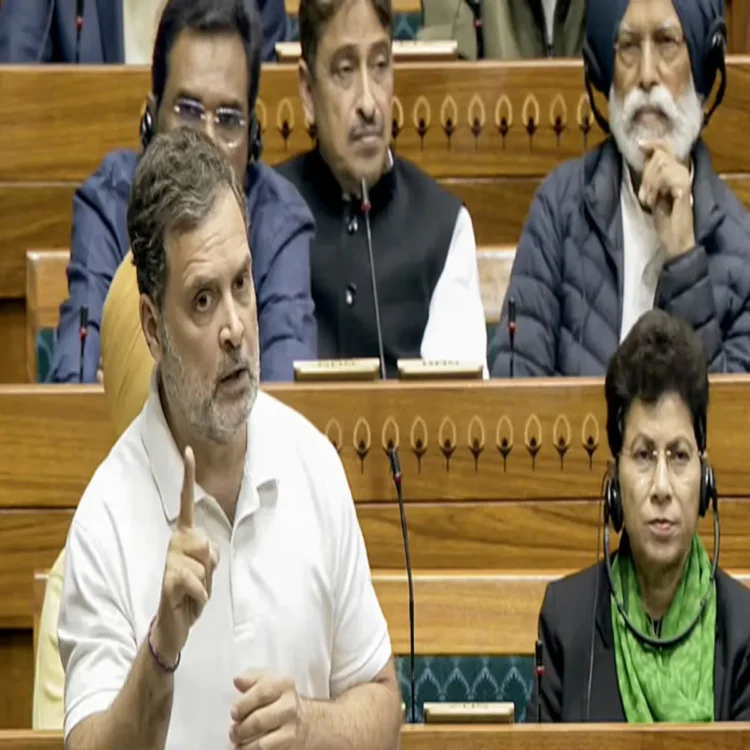
Budget Debate Sparks Political Confrontation
Taking part in the Budget debate, Gandhi questioned the rationale behind the trade arrangement, suggesting that no Prime Minister would willingly agree to such terms without facing external pressure. He argued that the deal appeared to reflect an imbalance in negotiations, alleging that the United States held disproportionate leverage over India in finalizing the framework.
Gandhi asserted that the agreement could have far-reaching implications for domestic industries and national policy decisions. According to him, the structure of the deal raised concerns about India’s autonomy in matters such as energy procurement and agricultural trade. He contended that allowing another country significant oversight in these areas would set a troubling precedent.
Concerns Over Farmers and Textile Industry
A central part of Gandhi’s address focused on the potential impact of the trade framework on Indian farmers. He claimed that the opening of markets to heavily mechanized American agriculture could adversely affect small and marginal farmers across India. Such a shift, he argued, might intensify competition and reduce the viability of traditional farming practices.
In addition, Gandhi raised alarms about the textile sector, stating that it could face setbacks under the new arrangement. The textile industry, which employs millions and contributes significantly to exports, was described by him as vulnerable to policy changes linked to the trade pact.
He further suggested that India’s energy security could be influenced by external oversight if procurement decisions were closely monitored under the framework. Gandhi maintained that strategic sectors must remain firmly under domestic control to safeguard long-term national interests.
Sharp Exchanges in the Lok Sabha
The debate took a more heated turn when Gandhi referred to Union Minister Hardeep Singh Puri and industrialist Anil Ambani in the context of disclosures related to the so-called Epstein files. His remarks prompted immediate objections from treasury bench members, leading to sharp exchanges in the House.
Government representatives countered the accusations, stating that the claims lacked factual basis and were politically motivated. The atmosphere in the chamber grew tense as members from both sides raised their voices during the discussion.
Hardeep Puri Rejects Allegations
Responding to the references made during the debate, Union Minister Hardeep Singh Puri dismissed the allegations as unfounded. He clarified that he had met Jeffrey Epstein on a few occasions as part of official engagements and had limited communication with him. Puri stated that these interactions occurred in a formal capacity and bore no connection to the criminal activities that later came to light.
The minister emphasized that any attempt to link him to the controversy was misleading. He maintained that his record in public service was transparent and that he had nothing to hide.
Government Yet to Detail Final Terms
While the political rhetoric intensified, the government has not yet publicly shared comprehensive details of the final trade framework. Officials have previously indicated that discussions aim to strengthen economic ties, enhance market access, and promote bilateral growth between India and the United States.
The India-US trade relationship remains one of the most significant economic partnerships for both countries. However, as negotiations progress, the debate underscores the broader questions surrounding economic sovereignty, sectoral protection, and strategic alignment.
With Parliament witnessing animated exchanges over the matter, the proposed trade framework is likely to remain at the center of political discourse in the coming weeks.