
TradeDeal – BJP and Congress Clash Over Farmer Talks
TradeDeal – Senior Bharatiya Janata Party leader and Member of Parliament Ravi Shankar Prasad has launched a sharp attack on Congress MP Rahul Gandhi, accusing him of undermining democratic institutions through his recent conduct in and outside Parliament.
Speaking to reporters, Prasad alleged that Gandhi’s political behaviour reflects what he described as a disregard for constitutional norms and parliamentary dignity. He argued that the Congress leader’s actions have weakened his own party and diverted attention from pressing electoral setbacks.
BJP Criticises Rahul Gandhi’s Parliamentary Conduct
Prasad claimed that Gandhi’s interventions in Parliament lacked decorum and seriousness. He pointed out that while Gandhi was engaged in protests and heated exchanges inside the House, election results from Maharashtra’s Zilla Parishads and municipal corporations showed a poor performance for the Congress party.
According to Prasad, the Congress leadership should focus on rebuilding its organisational strength instead of staging confrontations. He further alleged that Gandhi has repeatedly spoken critically about India’s democratic framework during visits abroad, suggesting that such remarks damage the country’s global image.
The BJP leader also raised questions regarding Gandhi’s references to a yet-to-be-released publication by former Army chief MM Naravane, asking how he had accessed details before its official release. Additionally, Prasad objected to comments he said were made by Gandhi about a Sikh minister and the Lok Sabha Speaker, describing them as inappropriate and unbecoming of a senior parliamentarian.
He accused the Congress leader of encouraging disruptive behaviour in the House, including an incident in which party MPs allegedly surrounded the Prime Minister’s seat. Such actions, Prasad said, do little to strengthen democratic debate.
Rahul Gandhi Meets Farmer Unions Over Trade Concerns
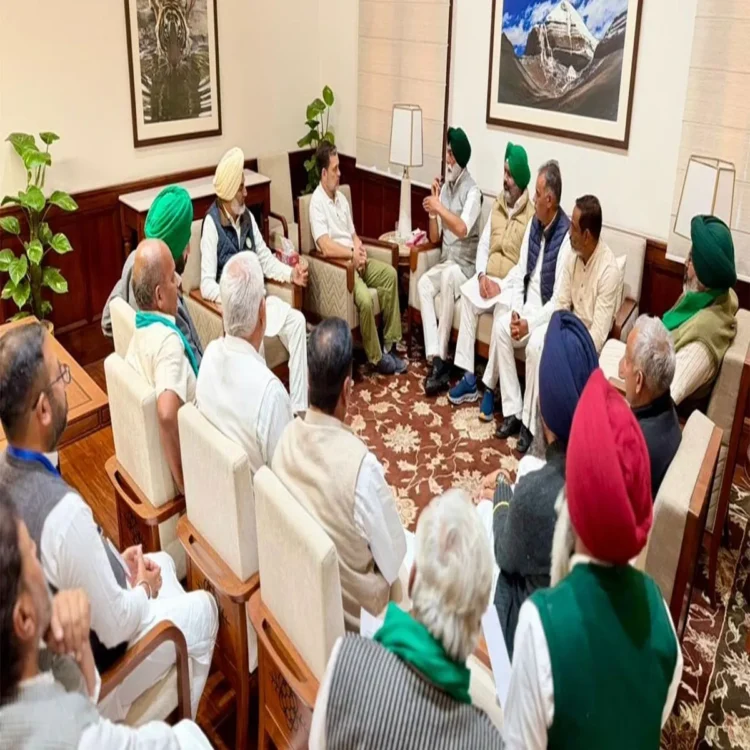
Amid the political exchange, Rahul Gandhi convened a meeting at his Parliament office with representatives of 17 farmer unions from across the country. The discussion centred on concerns related to the proposed interim trade agreement between India and the United States.
According to participants, farm leaders voiced apprehension that the agreement could expose Indian agricultural producers to heightened competition. They warned that growers of corn, soyabean, cotton, fruits and nuts may face economic strain if cheaper imports enter the domestic market.
Sukhpal Singh Khaira, MLA from Bholath and Chairman of the All India Kisan Congress, later shared details of the meeting on social media. He said the delegation stressed the need to safeguard farmers’ incomes and rural livelihoods, arguing that any trade framework must prioritise local producers.
Farmer Groups Signal Organised Resistance
The delegation included several prominent figures from agricultural organisations, among them Adv. Ashok Balhara, PT John and Tejveer Singh. Collectively, the representatives indicated that farmer groups are closely reviewing the potential implications of the trade deal.
Leaders associated with the Kisan Mazdoor Morcha suggested that if their concerns are not addressed, a coordinated response could follow. Observers note that farmer unions have previously demonstrated their capacity for sustained mobilisation during the nationwide protests against the farm laws in 2020 and 2021.
While the government has maintained that trade negotiations aim to expand economic opportunities and strengthen bilateral ties, opposition leaders argue that safeguards for domestic agriculture must remain a priority.
Political Debate Continues
The exchange between BJP and Congress leaders highlights the broader political contest shaping the national discourse. As Parliament continues to deliberate on economic and legislative matters, differences over democratic conduct, international engagement and trade policy are likely to remain central themes.
With farmer unions signalling caution and political parties sharpening their positions, the coming weeks may see further debate both inside and outside Parliament.