
Tamil Nadu: DMK’s Confidence in Continued Leadership A Vision for Future
Tamil Nadu: The political landscape of Tamil Nadu continues to witness strong assertions from the ruling establishment, with the state leadership expressing clear confidence about the future. During a recent public interaction, the Chief Minister conveyed optimism that the Dravida Munnetra Kazhagam will once again secure the people’s mandate in the upcoming Assembly elections. This confidence is rooted in what the government describes as consistent welfare governance, people-centric development, and inclusive growth policies that aim to reach every section of society.
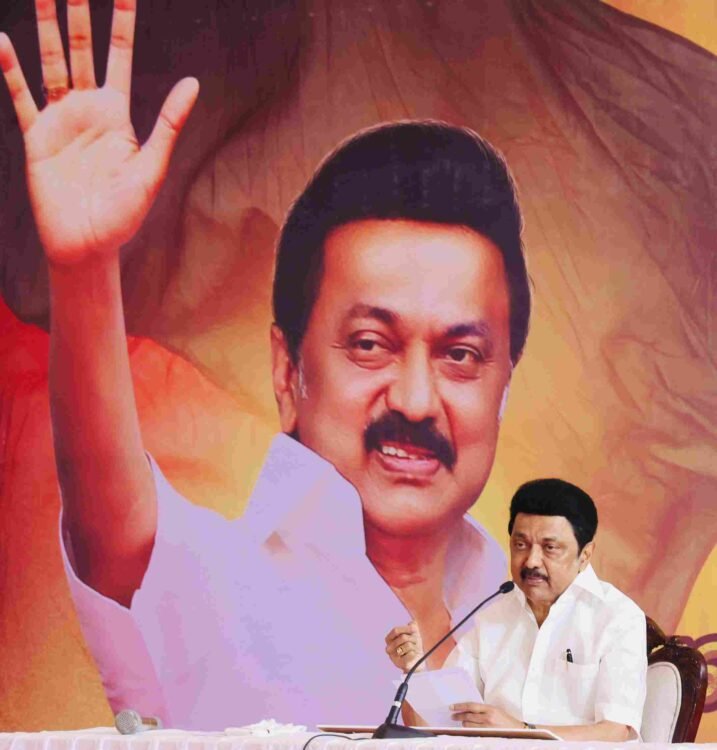
Public Trust and Political Legacy
Tamil Nadu’s political history has long been shaped by regional movements and social justice-driven governance. Addressing citizens in Tiruvannamalai district, the Chief Minister highlighted the emotional and historical connection between the region and the party. Tiruvannamalai holds a special place in the party’s journey, having contributed to its early parliamentary success. According to him, such historical milestones continue to inspire the present leadership and reinforce its commitment to public service.
The interaction with the public was presented not merely as a political event, but as a reflection of ongoing engagement with grassroots communities. The leadership emphasized that repeated electoral victories in the past were a result of public trust earned through consistent action rather than promises.
Welfare Governance and Social Impact
A major focus of the address was on welfare-oriented governance. Over the last four years, the state administration has rolled out multiple social welfare programs that, according to the government, have gained attention beyond Tamil Nadu. These initiatives are positioned as tools for reducing inequality, strengthening social security, and ensuring dignity for vulnerable populations.
Special emphasis was placed on women empowerment. Monthly financial assistance programs for women have been highlighted as a significant step toward economic independence. The government stated that more than 13 million women are currently benefiting from such schemes, enabling them to support household expenses, education, and healthcare needs with greater confidence.
Mobility and Access to Opportunities
Another flagship initiative discussed was free bus travel for women. This program has reportedly facilitated hundreds of crores of journeys across the state. Improved mobility has helped women access employment, education, healthcare services, and markets without additional financial burden. The administration views this as a transformative policy that directly supports workforce participation and social inclusion.
From a governance perspective, transport accessibility is also linked to urban development, rural connectivity, and sustainable mobility planning. The leadership framed this initiative as both a social welfare measure and a long-term investment in human capital.
Education and Child Development Initiatives
Education remains a core pillar of the state’s development agenda. The Chief Minister’s Breakfast Scheme was highlighted as a key intervention to improve school attendance and learning outcomes. Nearly two million schoolchildren are said to benefit daily from this program. By addressing nutritional needs, the scheme aims to reduce dropouts, enhance concentration, and create a healthier learning environment for children from economically weaker backgrounds.
The leadership reiterated that such education-focused policies are not short-term welfare measures, but strategic investments in the state’s future workforce and intellectual capital.
Regional Development and Infrastructure Expansion
In addition to social schemes, several development projects were announced for the Tiruvannamalai district. These include the establishment of a new industrial estate to encourage small and medium enterprises, upgrades to temple infrastructure to boost cultural tourism, and the construction of a modern building for a government arts college.
Agricultural development also featured prominently in the announcements. Plans for a modern agricultural nursery, an extension centre, and a seed storage facility were shared, with the aim of supporting farmers through improved access to quality inputs, knowledge transfer, and storage infrastructure. These initiatives are expected to enhance agricultural productivity and rural income stability.
Centre-State Relations and Policy Challenges
The Chief Minister also addressed challenges related to centre-state relations. He expressed concern over what he described as inadequate financial support from the Union government. Despite these constraints, the state administration claimed it has continued to deliver development outcomes through efficient financial management and prioritization.
Criticism was directed at the national leadership for failing to effectively address issues such as inflation control, employment generation, and environmental sustainability. The state government positioned itself as resilient, asserting that progress in Tamil Nadu continues regardless of external constraints.
Looking Ahead: Political Confidence and Public Commitment
Concluding the address, the Chief Minister reiterated his belief that the people of Tamil Nadu would once again place their trust in the ruling party. Extending New Year greetings, he reaffirmed the government’s commitment to inclusive growth, social justice, and sustainable development. According to him, the administration’s future roadmap will continue to focus on balanced regional growth, economic empowerment, and strengthening public institutions.