
SupremeCourt – Top Court to Hear Mamata Banerjee Plea on Voter Roll Revision
SupremeCourt – The Supreme Court is set to examine a petition filed by West Bengal Chief Minister Mamata Banerjee and several leaders of the Trinamool Congress challenging the Special Intensive Revision of electoral rolls currently underway in the state ahead of upcoming elections.
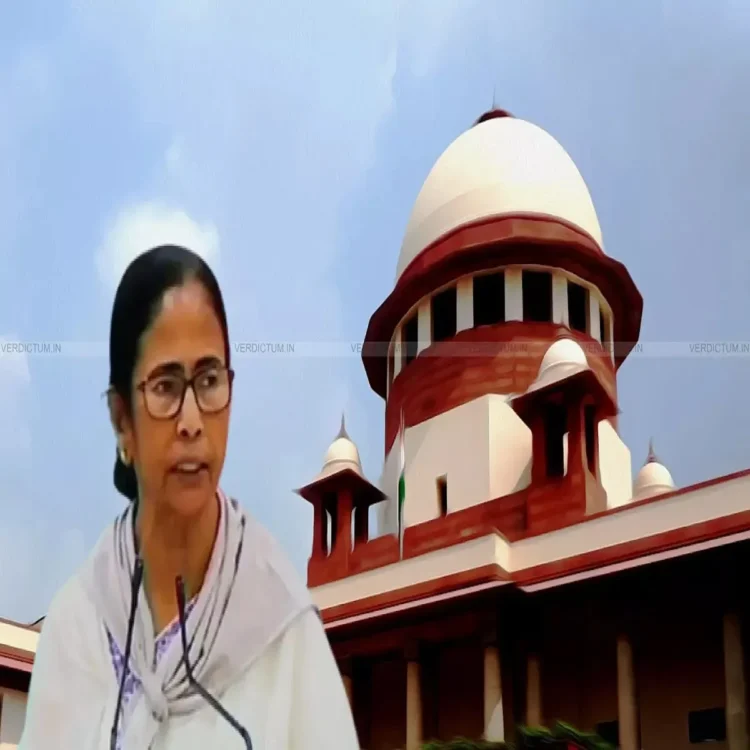
Petition Filed Against Electoral Roll Revision
According to the official cause list published by the Supreme Court, a Bench headed by Chief Justice of India Surya Kant will hear the matter on Tuesday. The Bench also includes Justices R Mahadevan and Joymalya Bagchi. The petitions have been submitted by Mamata Banerjee along with Trinamool Congress Members of Parliament Dola Sen and Derek O’Brien.
The petitioners have questioned the manner in which the Election Commission of India is conducting the revision of the voter list. They argue that the ongoing process may lead to the removal of a large number of legitimate voters from the electoral rolls.
Allegations of Bias Against Election Commission
In her submission before the court, Banerjee has alleged that the Election Commission’s approach reflects political bias. She claimed that the revision process, if carried out in its current form, could result in the exclusion of lakhs of voters from socially and economically weaker sections.
The Chief Minister’s plea further states that communities that already face social disadvantages may be disproportionately affected. The petition has urged the court to ensure that the revision process does not lead to the deletion of genuine voters and that safeguards are put in place to protect their electoral rights.
Court Earlier Addressed Administrative Deadlock
During an earlier hearing in the matter, the Supreme Court stepped in to resolve differences between the West Bengal government and the Election Commission regarding the implementation of the revision exercise. The court attempted to establish a mechanism that would ensure the process continues without disrupting the rights of voters.
To streamline the handling of objections and claims raised by voters during the revision, the Bench directed that judicial officers be involved in reviewing disputed cases.
Judicial Officers Assigned to Review Claims
Following the Supreme Court’s direction, the Chief Justice of the Calcutta High Court was asked to nominate serving as well as retired judicial officers to assist in examining voter claims and objections. The officers chosen for the task were required to hold the rank of Additional District Judge.
The court also clarified that officials from the Election Commission and representatives of the West Bengal government would cooperate with these judicial officers during the adjudication process.
The move was intended to provide an impartial framework for resolving disputes over voter registration and deletion from the electoral rolls.
Assistance From Neighbouring States Permitted
In order to handle the large number of pending cases related to the revision exercise, the Supreme Court allowed judicial officers from neighbouring states to be temporarily assigned to West Bengal. Officers from High Courts such as Jharkhand and Orissa were permitted to assist in dealing with voter objections and claims.
This step was taken to ensure that the adjudication process moves forward without unnecessary delay, particularly given the approaching electoral schedule.
Massive Volume of Pending Applications
The court’s intervention came after the Chief Justice of the Calcutta High Court informed the Bench about the scale of the workload involved in the revision process. According to the information presented, nearly 80 lakh applications required examination.
Many of these cases were linked to issues such as logical discrepancies in voter records and the identification of unmapped voters. However, the state reportedly had only around 250 judicial officers available to address the enormous number of applications, creating concerns about delays in resolving disputes.
Final Electoral Roll May Be Published Despite Pending Cases
Invoking its authority under Article 142 of the Constitution, the Supreme Court also clarified that the Election Commission could proceed with the publication of the final electoral roll even if some cases remain unresolved at the time.
The court stated that voters whose claims are approved later and whose names appear in supplementary lists would still be treated as part of the final electoral roll.
The upcoming hearing is expected to further examine the concerns raised by the petitioners and determine whether additional safeguards or directions are required to ensure the integrity and fairness of the electoral roll revision process.