
Supreme Court – Hearing Set in ED and Bengal Search Dispute
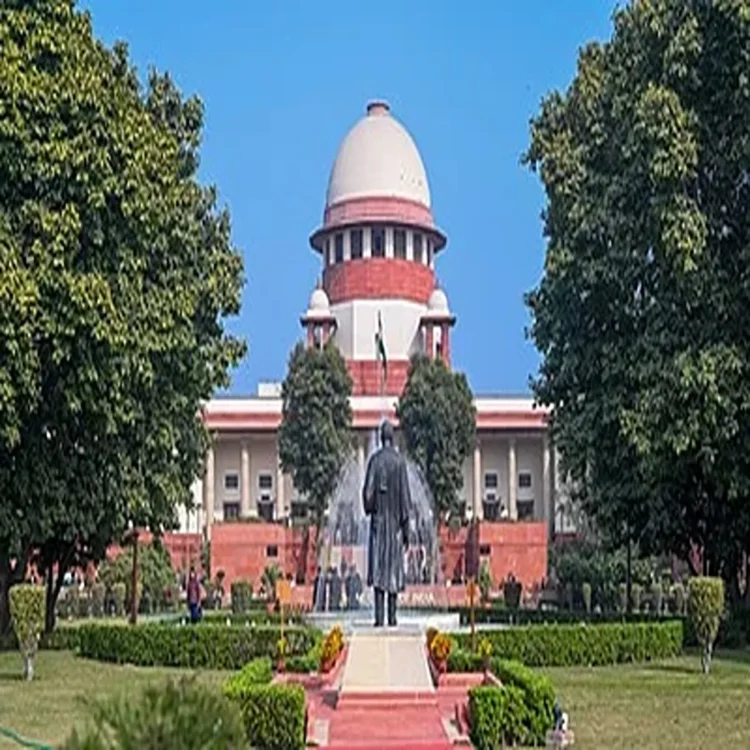
Supreme Court – The Supreme Court will on Wednesday take up a petition filed by the Enforcement Directorate alleging that officials of the West Bengal government, including Chief Minister Mamata Banerjee, interfered with its search operations at the office of political consultancy firm Indian Political Action Committee.
Bench to Examine ED’s Allegations
According to the court’s official cause list, the matter is scheduled for February 18 before a Bench comprising Justices Prashant Kumar Mishra and K. V. Viswanathan. The case arises from search operations carried out by the federal agency earlier this year, during which it claims its officers were obstructed in the discharge of their duties.
The hearing had initially been listed last week but was postponed after senior advocate Kapil Sibal, appearing in the matter, sought an adjournment due to health reasons. Solicitor General Tushar Mehta, representing the Enforcement Directorate, informed the Bench that he had been made aware of Sibal’s inability to attend. The court subsequently agreed to defer the proceedings to February 18.
ED Seeks FIRs Against Senior Officials
In its plea, the Enforcement Directorate has asked the apex court to direct the registration of First Information Reports against Chief Minister Mamata Banerjee, the state’s Director General of Police, and the Kolkata Police Commissioner. The agency alleges that its simultaneous search operations were hindered, affecting the lawful execution of its investigation.
The dispute stems from searches conducted at the residence of Pratik Jain on Loudon Street and at the Indian Political Action Committee office in Bidhannagar on January 8, 2026. These actions were part of a broader investigation linked to an alleged coal scam.
Earlier, on January 15, the Supreme Court had stayed FIRs filed by the West Bengal Police against ED officials in connection with the same search operations. The court also ordered that CCTV footage and digital storage devices from the searched premises and surrounding areas be preserved.
Banerjee Denies Interference Claims
In a counter-affidavit submitted before the court, Chief Minister Mamata Banerjee has strongly rejected the allegations of obstruction. She stated that her presence at the premises was limited and intended solely to secure confidential data belonging to the All India Trinamool Congress.
According to her affidavit, she visited the locations after receiving information that sensitive political material linked to her party was being accessed during the searches. She maintained that this data was critical to the party’s preparations for the upcoming West Bengal Legislative Assembly elections.
The document further states that she requested permission from ED officials to retrieve certain electronic devices and physical files containing party-related material. It claims that the officers present did not object and allowed her to collect specific items before she left the premises without causing disruption.
The affidavit also refers to the agency’s own search records, asserting that the operations continued thereafter in a peaceful and orderly manner.
Questions Over Jurisdiction and Timing
Banerjee has argued that neither the All India Trinamool Congress nor its members are accused in the alleged coal scam under investigation. On that basis, she contends that the Enforcement Directorate cannot claim authority over proprietary party data.
The counter-affidavit also raises concerns about the timing of the searches, noting that they took place ahead of the 2026 Assembly elections. It questions why the agency acted after what it describes as a prolonged period of inactivity, suggesting that the operation coincided with the consultancy firm holding key political documents, including a proposed list of election candidates.
Additionally, the affidavit alleges procedural lapses under the Prevention of Money Laundering Act. It states that statutory safeguards were not followed and claims that no audio or video recordings of the searches were produced.
Legal and Political Implications
The upcoming hearing is expected to focus on whether there was any unlawful obstruction of federal officers and whether further legal action is warranted. The case also touches on broader issues concerning the relationship between central investigative agencies and state authorities, particularly during politically sensitive periods.
With both sides presenting sharply contrasting versions of events, the Supreme Court’s consideration of the matter on February 18 will be closely watched for its legal as well as political significance.