
SocialJustice – Rahul Gandhi Questions Representation of Dalits in RSS Leadership
SocialJustice – Leader of Opposition in the Lok Sabha, Rahul Gandhi on Friday strongly criticised the Rashtriya Swayamsevak Sangh and the ruling Bharatiya Janata Party, alleging that people from Dalit and backward communities have little presence within their leadership structure. He made the remarks while speaking to Congress workers during a party gathering focused on social justice and the protection of the Constitution in Lucknow.
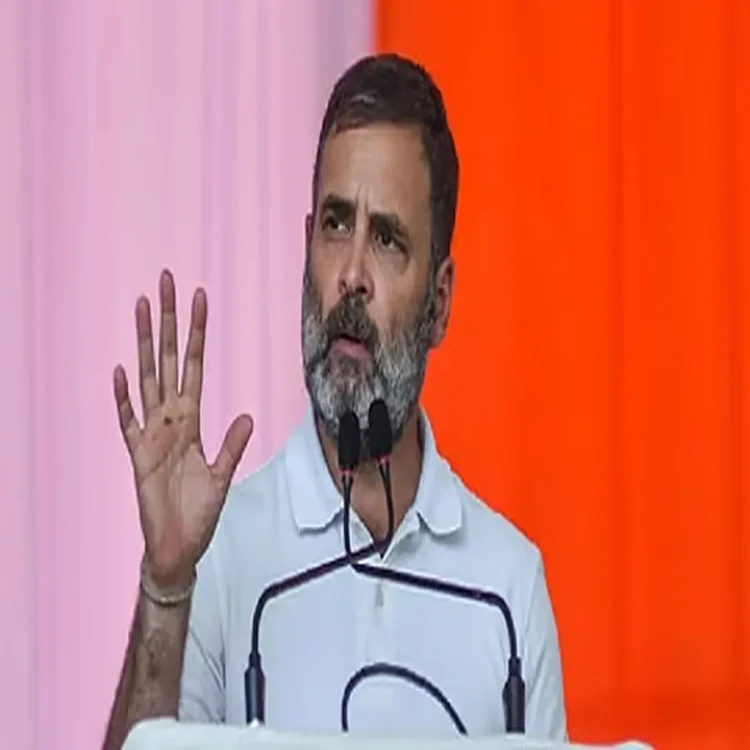
The Congress leader was addressing the Samvidhan Sammelan organised by the party, where several leaders and workers assembled to discuss representation, equality, and constitutional values.
Tribute to Kanshi Ram at Party Event
During the programme, Gandhi paid tribute to Kanshi Ram, the founder of the Bahujan Samaj Party, ahead of his birth anniversary. He described Kanshi Ram as a leader whose ideas and struggles continue to hold significance in contemporary politics.
Gandhi remarked that if India’s first Prime Minister Jawaharlal Nehru were alive today, Kanshi Ram might have risen to the position of chief minister. According to him, Kanshi Ram’s vision centred on ensuring that political and economic progress benefits the poorest and most marginalised communities rather than being limited to a small section of society.
Call for Bharat Ratna Recognition
The gathering in Lucknow was attended by more than 4,000 Congress functionaries from across the state. At the conclusion of the event, participants adopted a resolution urging the central government to confer the Bharat Ratna posthumously on Kanshi Ram in recognition of his contribution to social and political empowerment.
Party leaders present at the event described the demand as a tribute to Kanshi Ram’s lifelong efforts to organise marginalised communities and strengthen their political voice in India.
Questions on Representation in Key Institutions
While addressing the gathering, Gandhi questioned the representation of socially disadvantaged groups within the RSS leadership. He claimed that an examination of the organisation’s senior positions would show limited presence of individuals from Other Backward Classes, Dalits and Adivasis.
According to him, this lack of representation reflects a broader imbalance within the country’s institutional framework. Gandhi argued that India’s major decision-making bodies do not yet mirror the diversity of its population.
Concerns Over Inclusion Across Sectors
Gandhi also raised concerns about representation in several national institutions. He stated that communities such as Dalits, Adivasis, backward classes, extremely backward groups and minorities remain under-represented in areas including the judiciary, bureaucracy, cabinet positions, higher education institutions and the corporate sector.
He emphasised that achieving real equality requires a governance structure where people from all sections of society have meaningful participation in leadership roles.
Constitution as a Collective Vision
Speaking about the importance of the Constitution, Gandhi said it should not be viewed merely as a legal framework created after Independence. Instead, he described it as a document shaped by the ideas and contributions of many social reformers and thinkers who fought for equality and justice.
He referred to figures such as B. R. Ambedkar, Mahatma Gandhi, Narayana Guru, Basavanna and Gautama Buddha as key influences whose ideas shaped the principles of justice, equality and social harmony reflected in the Constitution.
Gandhi concluded by urging party workers to continue advocating for constitutional values and social inclusion, stating that equal representation remains a central challenge in India’s democratic journey