
ReligionConversion – Maharashtra Government Introduces Bill With Strict Penalties for Forced Conversions
ReligionConversion – The Maharashtra government on Friday introduced a proposed law in the state Assembly aimed at preventing unlawful religious conversions. The bill, presented by the BJP-led Mahayuti coalition, outlines stringent punishments for individuals found guilty of coercive or fraudulent conversions, including imprisonment of up to seven years and financial penalties reaching Rs 5 lakh.
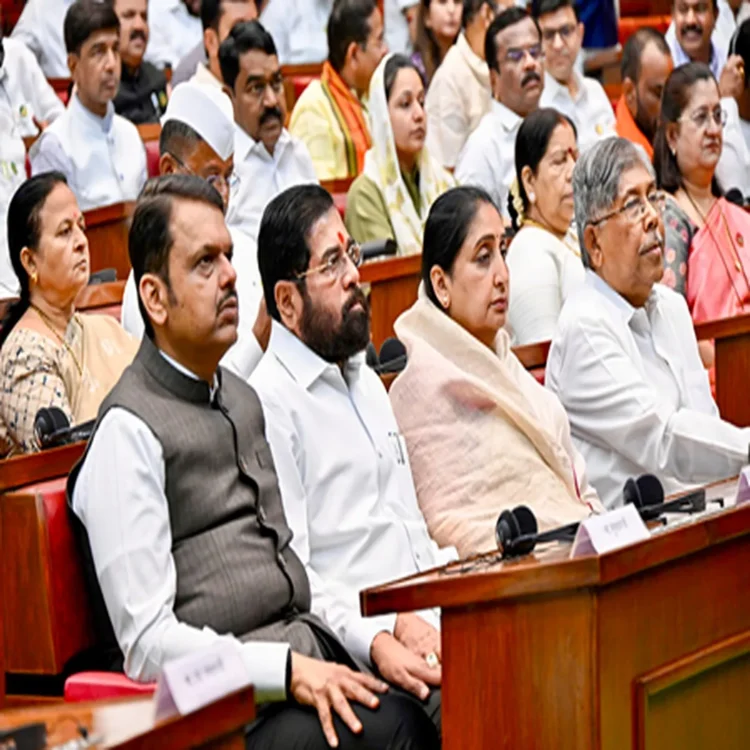
The legislation is scheduled to be discussed in detail when the Assembly reconvenes on Monday. Lawmakers are expected to debate the provisions and raise concerns before any further legislative steps are taken.
Advance Notice Requirement for Religious Conversion
One of the central provisions of the proposed law requires individuals who wish to change their religion to formally notify authorities at least 60 days in advance. The notification must be submitted to the relevant district administration.
After receiving the notice, the district collector would publish the information and invite feedback or objections from the public. During this period, if family members or relatives raise concerns about the conversion, authorities would have the power to initiate an inquiry. Police action could also be taken against those suspected of involvement in unlawful conversion activities.
Supporters of the measure argue that the advance notice requirement is intended to ensure transparency and prevent conversions obtained through pressure, deception, or financial incentives.
Opposition Voices Concerns Over Targeting Minorities
The proposal immediately drew criticism from opposition lawmakers. Samajwadi Party legislators Abu Azami and Rais Shaikh strongly objected to the bill during Assembly proceedings.
They argued that the proposed legislation could disproportionately affect minority communities and potentially be used to harass individuals exercising their personal choice in matters of faith. According to them, the government must ensure that the law does not infringe upon constitutional rights related to religious freedom.
Civil Society Groups Raise Constitutional Questions
Outside the legislature, several civil society organisations also expressed concern about the draft law. Activists said certain provisions could interfere with personal liberty, especially in cases where adults independently choose to change their religion.
Some groups warned that requiring official approval and public scrutiny could compromise individual privacy. Others noted that women, in particular, might face additional social pressure under such a framework, potentially limiting their autonomy in personal decisions.
Legal experts have also begun examining whether aspects of the proposal align with constitutional protections regarding freedom of belief and expression.
Maharashtra Joins List of States Considering Similar Laws
If enacted, Maharashtra would become the eleventh Indian state to introduce legislation addressing religious conversion practices. Several other states have already implemented comparable measures in recent years.
States such as Uttar Pradesh, Madhya Pradesh, Odisha, Karnataka, and Tamil Nadu have adopted laws designed to regulate or prevent forced religious conversions. While the details vary from state to state, many of these laws focus on conversions carried out through coercion, fraud, or inducement.
Stronger Punishment for Repeat Offenders
Under the Maharashtra proposal, individuals convicted of unlawful conversion could face a prison sentence of up to seven years along with a monetary fine of Rs 5 lakh.
The draft law also includes stricter penalties for repeat offenders. If a person is found guilty of committing the offence more than once, the punishment could extend to ten years of imprisonment, with fines reaching Rs 10 lakh.
Another notable provision places the responsibility of proving innocence on the accused once charges are filed under this law. Critics say this reversal of the usual burden of proof could raise legal challenges.
Provisions Related to Conversion Linked With Marriage
The proposed legislation also addresses situations where religious conversion occurs in connection with marriage. If a court determines that a conversion was carried out through deception, coercion, or false promises with the intent of marriage, the marriage could be declared invalid.
In cases where a marriage takes place following a forced or unlawful conversion, the law proposes that any child born to the couple would automatically follow the religion of the mother.
The draft law further states that if a woman is identified as a victim of coercive conversion, the state government would provide assistance, including rehabilitation support and protection measures.
As the Assembly prepares for further debate, the proposed legislation is expected to spark broader discussions about balancing religious freedom, individual rights, and safeguards against exploitation.