
RajyaSabha – Voting Begins For 37 Upper House Seats Across Ten States
RajyaSabha – Voting for the biennial elections to 37 seats of the Rajya Sabha is set to take place on Monday, with polling scheduled between 9:00 A.M. and 4:00 P.M. The Election Commission of India has confirmed that the counting of votes will begin at 5:00 P.M. on the same day. The election process aims to fill vacancies in the Upper House of Parliament as the terms of several sitting members are due to end in April.
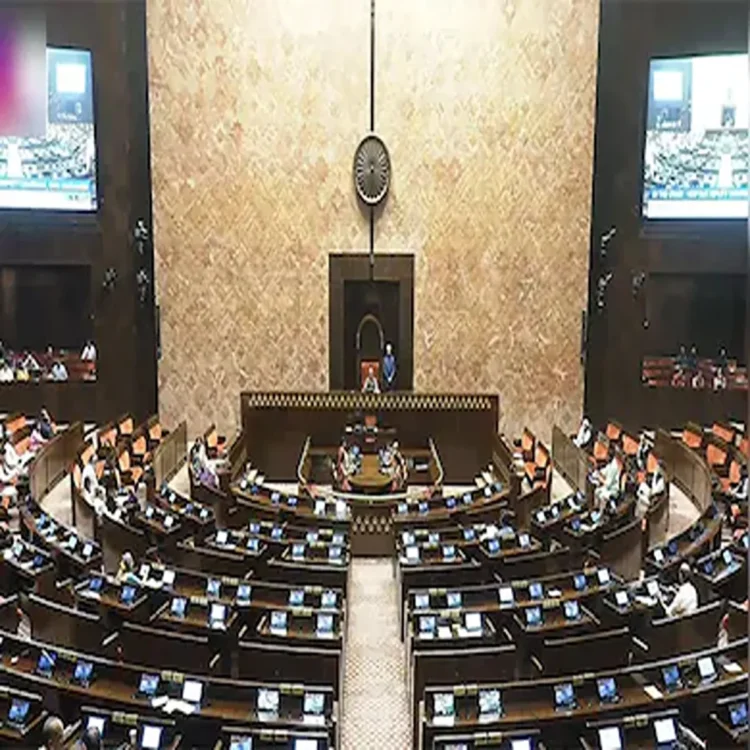
Election Schedule and Arrangements
The Election Commission has prepared a detailed framework to ensure the polling process proceeds smoothly. These elections are being conducted across 10 states to fill a total of 37 seats in the Rajya Sabha. Officials have outlined strict procedural guidelines and monitoring mechanisms to maintain transparency throughout the voting and counting stages.
Polling will take place within the respective state legislative assemblies, where elected legislators cast their votes to choose members for the Upper House. The Commission has also arranged for observers to supervise the proceedings closely to ensure adherence to electoral rules and to safeguard the fairness of the election process.
Distribution of Seats Across States
The seats going to polls are spread across multiple states, reflecting the rotational retirement system followed in the Rajya Sabha. Maharashtra accounts for the highest number with seven seats. Tamil Nadu will elect six members, while Bihar and West Bengal will each fill five seats.
Odisha has four seats falling vacant, followed by Assam with three. Telangana, Chhattisgarh and Haryana will each elect two representatives. Himachal Pradesh has one seat in this round of elections. These vacancies arise as the current members representing these states are completing their six-year terms in April.
The biennial election process ensures that the Upper House continues functioning without interruption while gradually inducting new members.
Notable Members Completing Their Terms
Several prominent political leaders are among those whose tenure in the Rajya Sabha will conclude next month. These include Union Ministers Ramnath Thakur and Ramdas Athawale, as well as Rajya Sabha Deputy Chairman Harivansh Narayan Singh.
Other members nearing the end of their term include Sharad Pawar from the NCP-SP, Upendra Kushwaha of the Rashtriya Lok Morcha, senior Congress leader Abhishek Manu Singhvi, AIADMK leader M. Thambidurai, and DMK leader Tiruchi Siva. Their retirement from the Upper House has created vacancies that are now being filled through the scheduled election process.
Voting Procedure and Ballot Rules
The Election Commission has issued clear instructions regarding the voting method to prevent procedural errors. Legislators participating in the election must use only the integrated violet-coloured sketch pens supplied by the Returning Officer. These pens are specially approved for marking preferences on the ballot paper.
Officials have emphasized that no other writing instrument will be accepted during voting. This rule is designed to maintain uniformity and prevent any confusion or invalidation of ballots during counting.
Ensuring Transparency and Fair Conduct
To maintain the integrity of the election, the Commission has appointed observers who will monitor the proceedings at various stages. Their role includes overseeing voting procedures, ensuring compliance with electoral guidelines, and addressing any concerns that may arise during the process.
The Election Commission has reiterated that all measures are being taken to ensure that the election remains transparent, orderly, and fair.
Understanding the Rajya Sabha’s Structure
Unlike the Lok Sabha, which has a fixed five-year term and can be dissolved before the completion of its tenure, the Rajya Sabha functions as a permanent chamber of Parliament. Members of the Upper House serve six-year terms, but one-third of the membership retires every two years.
This staggered system ensures continuity in parliamentary functioning while allowing periodic elections to bring in new representatives from the states. The ongoing biennial elections are part of this established constitutional process that keeps the legislative institution operational without disruption.