
Politics – Shinde Hits Back at Rahul Gandhi Over Modi Criticism
Politics – Maharashtra Deputy Chief Minister Eknath Shinde has strongly criticised Congress leader and Leader of Opposition in the Lok Sabha Rahul Gandhi for his recent remarks questioning Prime Minister Narendra Modi and India’s foreign policy approach. The exchange comes in the wake of a decision by the United States to grant a temporary waiver allowing India to continue purchasing Russian oil despite growing tensions in West Asia.
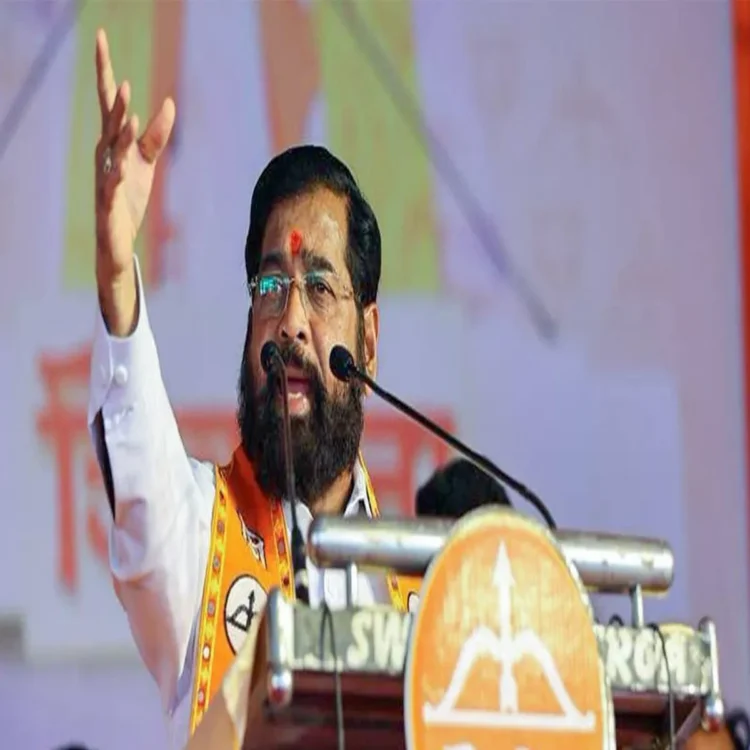
Shinde Defends Government’s Global Economic Vision
Responding to Gandhi’s criticism, Shinde said the Prime Minister is guiding India toward greater economic strength and international influence. According to him, the country is steadily progressing toward becoming a major global economic power under the present leadership.
He added that India’s stature on the world stage has grown significantly in recent years. Shinde argued that the government’s diplomatic and economic policies are designed to strengthen the nation’s position internationally while supporting its long-term development goals.
Sharp Remarks on Rahul Gandhi’s Statements
The Deputy Chief Minister also questioned Gandhi’s approach to criticising the government, accusing him of tarnishing the country’s image both domestically and abroad. Shinde said such remarks raise concerns about national unity and responsibility in political discourse.
He further alleged that Gandhi frequently targets Prime Minister Modi in order to remain in the public spotlight. According to Shinde, criticism of the Prime Minister often attracts widespread media attention, which he described as a tactic used for political visibility.
Rahul Gandhi Raises Questions on Foreign Policy
The controversy began after Rahul Gandhi shared a post on social media platform X addressing India’s foreign policy direction. In his statement, Gandhi suggested that the country’s diplomatic stance should reflect the collective will of its people and draw inspiration from India’s historical values, geographical realities, and philosophical traditions based on truth and non-violence.
He argued that the present situation reflects the influence of what he described as a “compromised individual,” implying that India’s foreign policy decisions are not being guided by institutional principles.
Gandhi’s remarks quickly drew responses from leaders of the ruling alliance, including Shinde, who defended the government’s approach and criticised the Congress leader’s comments.
US Grants Temporary Waiver for Russian Oil Purchases
The debate unfolded after the United States Treasury Department announced a temporary 30-day waiver permitting Indian refiners to purchase Russian oil. The measure was introduced to ensure stability in global energy supplies during ongoing geopolitical tensions.
According to US Treasury Secretary Scott Bessent, the waiver is intended as a short-term step to allow oil shipments that are already stranded at sea to reach their destinations. The decision is expected to prevent disruptions in the global energy market.
Bessent noted that the move would not provide substantial financial benefit to Russia because it only applies to oil cargoes already in transit. He also emphasised that India remains an important partner for the United States in energy cooperation.
Washington Expects Higher US Oil Imports
Alongside the waiver announcement, Washington indicated that it anticipates India increasing its purchases of American oil in the future. US officials said the temporary arrangement is designed to ease immediate market pressure while maintaining broader energy supply stability.
The development comes at a time when international energy markets are experiencing volatility due to geopolitical tensions in several regions. Analysts say decisions involving large oil importers like India play a key role in shaping global supply dynamics.
As the discussion over foreign policy and energy partnerships continues, the political exchange between ruling coalition leaders and the opposition highlights how international developments often influence domestic political debate in India.