
ParliamentDebate – Priyanka Gandhi Challenges Rijiju Over Nehru Remark in Lok Sabha
ParliamentDebate – A sharp exchange unfolded in the Lok Sabha on Tuesday after Congress MP Priyanka Gandhi Vadra responded to remarks made by Union minister Kiren Rijiju during a debate on an Opposition-backed resolution seeking the removal of Speaker Om Birla. The discussion, which centered on parliamentary conventions and the role of the Speaker, soon turned political as both sides referred to historical precedents and present-day leadership within Parliament.
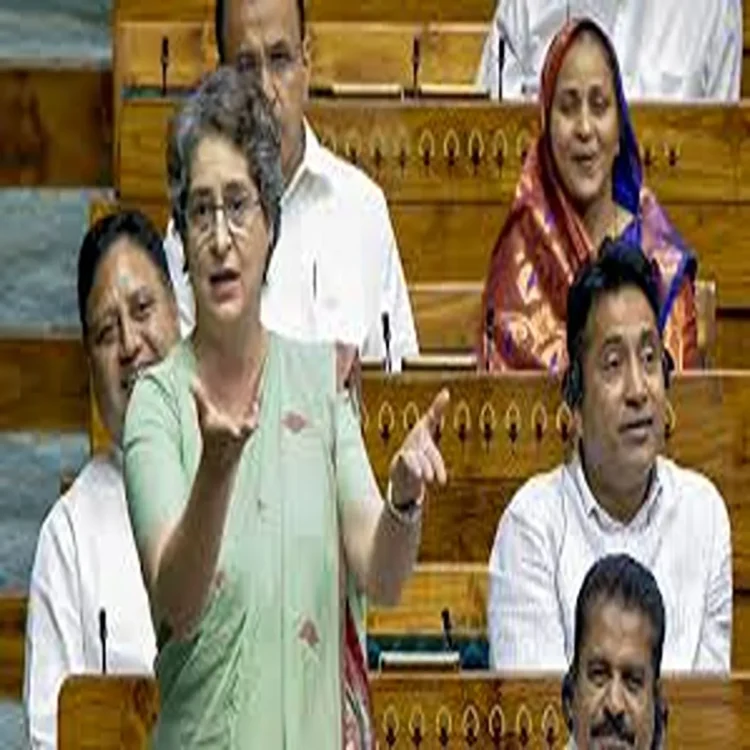
Heated Discussion Over Motion Against the Speaker
The debate began as members of the Opposition presented their case for moving a resolution seeking the removal of Speaker Om Birla. During the discussion, Kiren Rijiju referred to an instance from the early years of independent India to criticize the Opposition’s move.
Rijiju quoted former Prime Minister Jawaharlal Nehru from a 1954 debate related to a similar motion involving then Speaker G. V. Mavalankar. In that speech, Nehru had warned lawmakers about the seriousness of signing such a resolution and questioned whether members fully understood the implications of their decision.
Reading out the statement in the House, Rijiju suggested that attempts to remove a sitting Speaker could weaken long-standing parliamentary traditions. According to him, such steps should be approached with caution and responsibility, given the institutional significance of the Speaker’s office.
Rijiju’s Comment Draws Reaction
During his speech, the minister also made a pointed remark directed at the Congress benches. Referring to Priyanka Gandhi, who was present in the House during the debate, Rijiju observed that she appeared to be smiling while the discussion was underway.
He went on to say that if she had been chosen as the Leader of Opposition, the performance of the Opposition might have been different. The comment drew attention across the chamber and prompted a response from the Congress MP shortly afterward.
Priyanka Gandhi Explains Her Reaction
Responding to the remark, Priyanka Gandhi clarified the reason behind her reaction during the speech. She said she found it ironic that members of the ruling side were quoting Jawaharlal Nehru, a leader whom they often criticize in political speeches.
According to her, the laughter was not directed at the debate itself but at what she described as a sudden appreciation of Nehru’s views by those who regularly question his legacy. She pointed out that Nehru was now being cited as someone who strengthened democratic institutions and delivered influential speeches in Parliament.
Her remarks added another layer to the ongoing exchange, highlighting the broader political disagreements between the government and the Opposition regarding historical leaders and their role in shaping India’s democratic framework.
Defence of the Leader of Opposition
Priyanka Gandhi also used the opportunity to defend Congress leader Rahul Gandhi, who currently serves as the Leader of Opposition in the Lok Sabha. She stated that he remained one of the few political figures willing to directly challenge the government during parliamentary debates.
In her remarks, she suggested that standing up to the government required determination and independence, qualities she attributed to the Leader of Opposition. Her statement was met with reactions from members on both sides of the aisle.
Debate Reflects Broader Political Tensions
The exchange between the two leaders illustrated the continuing friction between the ruling alliance and Opposition parties within Parliament. While the discussion began with a procedural motion related to the Speaker’s position, it quickly evolved into a wider political debate involving historical references, leadership roles, and parliamentary accountability.
Such exchanges are not uncommon during high-stakes debates in the Lok Sabha, particularly when motions involving constitutional offices or parliamentary procedures are discussed. The debate also reflected how references to historical figures like Jawaharlal Nehru continue to influence present-day political arguments.
As the session progressed, members returned to discussing the substance of the resolution, though the earlier exchange remained a notable moment in the proceedings