
Parliament – Opposition Raises Concerns Over Women’s Reservation Amendments Timing
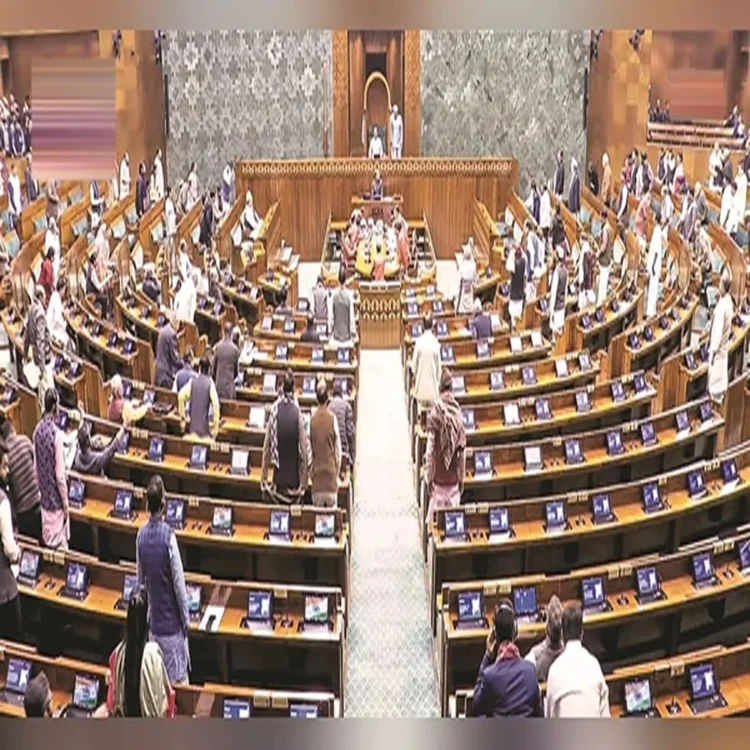
Parliament – A political exchange has intensified between the government and the opposition over proposed amendments linked to the Women’s Reservation Act, 2023, with questions emerging around timing, consultation, and procedural clarity. The debate comes just ahead of a special three-day session of Parliament, adding to the growing political attention on the issue.
Opposition Seeks Clarity on Delimitation Process
Congress president Mallikarjun Kharge has written to Prime Minister Narendra Modi, expressing reservations about moving forward with discussions on the law without first addressing the issue of delimitation. In his letter, Kharge stated that any meaningful debate on amendments would require a clearer understanding of how constituency boundaries might be redrawn and how that could impact the implementation of the legislation.
He emphasized that the absence of detailed information on delimitation makes it difficult for opposition parties to engage constructively. According to Kharge, this aspect is closely tied to the operational framework of the Women’s Reservation Act and cannot be overlooked during deliberations.
Call for All-Party Meeting After State Elections
Kharge also proposed convening an all-party meeting after the completion of ongoing state elections, scheduled to conclude on April 29. He argued that such a meeting would provide an appropriate platform for broader consultation and consensus-building among political stakeholders.
The Congress leader suggested that holding a special parliamentary session in the midst of election activity could create an impression that the government is attempting to expedite the process for political advantage. He reiterated that while his party supports the legislation, transparency and inclusive dialogue are essential for its effective implementation.
Government Defends Urgency of Amendments
In response, Union Parliamentary Affairs Minister Kiren Rijiju defended the government’s approach, stating that delaying the process could hinder timely implementation of the law. He maintained that the Women’s Reservation Act represents a long-standing national commitment and that further postponement would not serve the interests of women awaiting its benefits.
Rijiju noted that if necessary steps are not taken promptly, there is a possibility that the reservation provisions may not be in place ahead of the 2029 general elections. He described the current moment as both appropriate and necessary to move forward with amendments linked to the legislation.
Exchange Highlights Political Differences
The exchange between Kharge and Rijiju has been described by observers as a sharp difference in approach rather than disagreement over the principle of women’s reservation itself. While the opposition is seeking detailed discussions and procedural clarity, the government appears focused on ensuring timely execution of the law.
Rijiju also responded to concerns about lack of consultation, asserting that the government has been engaging with various stakeholders since mid-March 2026. He mentioned that discussions had already taken place with senior opposition leaders during the Budget session, indicating that dialogue channels remain open.
Background of the Legislation
The Women’s Reservation Act, passed unanimously by Parliament in September 2023, aims to reserve one-third of seats in the Lok Sabha and state legislative assemblies for women. At the time of its passage, there was broad political support across parties, though some concerns were raised regarding its implementation timeline and linkage with delimitation.
Kharge, in his recent communication, pointed out that despite the law being passed more than two years ago, there has been limited progress on its operational aspects. He stressed that cooperation from opposition parties should be sought with full transparency and prior consultation.
Ongoing Debate Likely to Continue
As the special session approaches, the issue is expected to remain a key point of discussion within Parliament. The differing positions of the government and opposition underline the complexity of implementing structural electoral reforms while maintaining political consensus.
The coming weeks may determine whether a middle ground can be reached through further dialogue or whether the debate continues to unfold in a more confrontational manner within the parliamentary framework.