
Nadda : Condemns Opposition Protest During President Murmu’s Address in Parliament
Nadda: The Budget Session of Parliament opened on a tense note on Wednesday after opposition parties staged a protest during President Droupadi Murmu’s address to a joint sitting of both houses. Union Health Minister and Leader of the House in the Rajya Sabha, J.P. Nadda, criticized the disruption, calling it a serious breach of parliamentary conduct and respect for constitutional institutions.
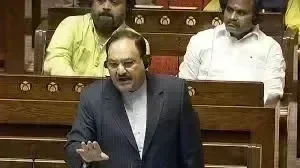
Protest During Joint Sitting Sparks Controversy
The disruption occurred as opposition members raised slogans from their seats while the President was delivering her customary address at the start of the session. The protest was linked to opposition claims that the government had effectively scrapped the Mahatma Gandhi National Rural Employment Guarantee Act, a charge the government has rejected. The sloganeering interrupted the proceedings and drew sharp reactions from the Treasury benches.
Nadda Cites Breach of Parliamentary Decorum
Responding to the incident, Nadda said the Budget Session formally began with the President’s address, but the conduct displayed by opposition leaders undermined the dignity of Parliament. He stated that such behaviour reflected a disregard for long-established parliamentary norms and traditions that are expected to be upheld, particularly during a joint sitting addressed by the Head of State.
Disruption During Reference to National Heritage
The protest intensified when President Murmu referred to the recently introduced Viksit Bharat–G RAM G law and also spoke about cultural milestones being observed across the country. During her speech, she highlighted the nationwide commemorations marking 150 years of Vande Mataram, the iconic composition by Bankim Chandra Chatterjee, and acknowledged Parliament’s decision to hold a special discussion on the occasion.
Allegations of Disrespect to National Symbols
Nadda alleged that the opposition’s actions went beyond political protest and amounted to disrespect towards national symbols and cultural figures. He said the shouting and disruption coincided with the President’s tribute to Bankim Chandra Chatterjee, which, according to him, sent a troubling message. He argued that the scenes witnessed inside Parliament were seen across the country and warranted serious reflection by those involved.
Questions Raised Over Opposition Unity
The Rajya Sabha Leader of the House also expressed concern over the participation of multiple opposition parties in the protest, including the Trinamool Congress. He said their involvement was unexpected and added to the gravity of the situation. According to Nadda, the collective nature of the disruption reflected poorly on the opposition’s commitment to preserving the dignity of parliamentary proceedings.
Call for Apology to Parliament and the Nation
Emphasising the seriousness of the episode, Nadda said that condemnation alone was insufficient. He asserted that those responsible for disrupting the President’s address should offer an apology to Parliament and the public. He maintained that respect for constitutional offices must remain above political disagreements, regardless of differences over policy or legislation.
Background on the Viksit Bharat G RAM G Law
The controversy unfolded against the backdrop of recent legislative changes affecting rural employment policy. The Viksit Bharat – Guarantee for Rozgar and Ajeevika Mission (Gramin) Bill, 2025, was passed by Parliament in December last year. According to the government, the new law replaces the MGNREGA framework introduced in 2005 with the aim of strengthening rural development outcomes.
Key Provisions of the New Rural Employment Framework
The government has said the updated legislation increases the guaranteed annual employment from 100 to 125 days per household and introduces a 60:40 funding arrangement between the Centre and states. It also places greater emphasis on infrastructure creation as part of the long-term vision aligned with the Viksit Bharat 2047 resolution. Opposition parties, however, have continued to raise concerns over the transition and its implications.