
LPG -Government Raises Concern Over Cooking Gas Supply Pressures
LPG – The government on Friday acknowledged that the availability of liquefied petroleum gas (LPG) has come under pressure as tensions escalate between Iran and the US-Israel alliance, raising concerns about the stability of global energy supplies. Officials said the situation is being closely monitored, although domestic distribution networks continue to function and no distributor has reported running out of stock.
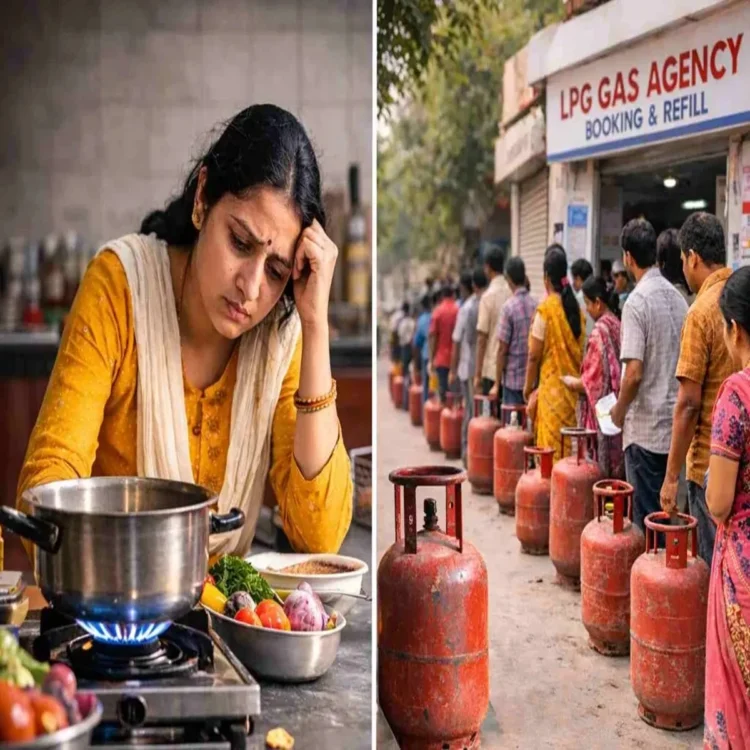
Government Acknowledges Supply Pressure
During a media briefing, Sujata Sharma, Joint Secretary in the Ministry of Petroleum and Natural Gas, stated that the government considers the current LPG supply situation a matter of concern. However, she clarified that the country’s distribution system remains operational.
According to officials, LPG cylinders are still available through the nationwide network of nearly 25,000 distributors. Authorities emphasized that the present pressure on supplies does not mean that stock levels have been exhausted. Instead, the situation is being influenced by sudden spikes in consumer demand.
Sharma noted that the government is continuously evaluating the supply chain and coordinating with relevant agencies to ensure that cooking fuel remains available to households and commercial establishments.
Commercial Sector Faces Greater Impact
The tightening supply conditions have had a noticeable effect on businesses that rely heavily on LPG for daily operations. Restaurants, hotels, and other commercial kitchens are among the sectors experiencing the most difficulty securing consistent cylinder supplies.
To reduce pressure on LPG demand, the government has advised commercial consumers to temporarily consider alternative fuel options such as coal or kerosene. Officials believe this measure could help stabilize LPG availability for domestic users while global supply conditions remain uncertain.
Coal India has already issued directives to facilitate the supply of coal to smaller commercial users and medium-scale businesses. The aim is to ensure that alternative fuel sources remain accessible for enterprises that depend on energy for cooking and heating.
Panic Buying Adds to Demand Surge
Officials say the current strain on supplies is being amplified by a sharp rise in bookings, largely driven by precautionary buying among consumers. The petroleum ministry indicated that the spike in demand is not necessarily linked to an actual collapse in supply.
Under normal circumstances, the country records approximately 5 million LPG cylinder bookings per day. However, that number has recently climbed to around 7.5 million daily bookings. Authorities believe this surge reflects consumer concerns about possible shortages rather than a genuine depletion of stock.
Government representatives urged consumers to avoid unnecessary bookings and rely on regular refill schedules to help maintain balance in the distribution system.
Additional LPG Allocation Approved
In response to the growing demand, the government has approved an additional allocation of 48,000 kilolitres of LPG beyond the routine supply quota. This extra allocation is intended to support the distribution network and prevent local supply disruptions.
Officials said logistical arrangements are being adjusted to ensure that the additional supply reaches distributors efficiently. The petroleum ministry is also coordinating with oil marketing companies to manage transportation and stock movement more effectively.
Authorities stressed that these measures are precautionary steps aimed at maintaining steady availability during a period of heightened global uncertainty.
PNG Available as an Alternative for Some Households
The government has also highlighted piped natural gas as a viable alternative for households that have access to the infrastructure. Officials confirmed that there is currently no shortage of PNG supplies.
According to official data, nearly 700,000 LPG consumers live in areas where piped natural gas connections are available. These households have the option to switch to PNG, which could help reduce overall LPG demand and support more balanced distribution.
Energy officials said consumers who already have PNG access may consider using it as their primary cooking fuel while the government continues to manage LPG supplies carefully.
Authorities reiterated that the situation remains under close observation, and additional measures may be taken if global energy disruptions continue to affect domestic supply conditions