
LPG – Government Prioritises Household Gas Supply Amid Import Disruptions
LPG –The Union petroleum ministry has instructed state-owned oil marketing companies to give priority to domestic consumers in the supply of LPG cylinders, following concerns about possible shortages linked to disruptions in imports. The directive comes as tensions in West Asia, particularly the ongoing Iran-Israel conflict, affect global energy supply chains that India heavily relies on.
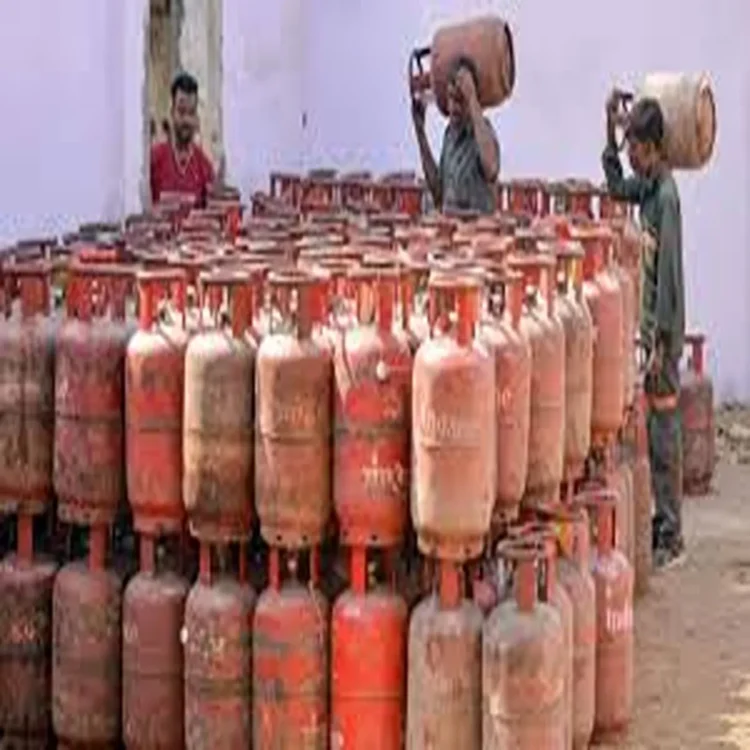
Government Steps In to Protect Household LPG Supply
In an order issued on Monday, the ministry directed public sector oil marketing companies to ensure that LPG obtained through imports or domestic production is primarily distributed to household users. Officials said the move aims to safeguard the cooking gas needs of millions of families across the country.
The government also extended the mandatory waiting period for LPG cylinder refills from 21 days to 25 days. According to officials, this measure has been introduced to discourage hoarding and prevent the possibility of black marketing during the current supply uncertainty.
Authorities believe the temporary change will help maintain stable distribution and prevent panic buying among consumers.
Refineries Asked to Focus Only on LPG Production
Along with supply management measures, the government has also issued fresh instructions to oil refineries and petrochemical complexes operating in India. Facilities have been asked to divert propane and butane streams entirely toward the production of LPG.
Normally, these hydrocarbon streams are also used to manufacture other petrochemical products. However, the ministry said that during the current situation, producing LPG will remain the priority in order to maintain sufficient availability for households.
Officials stated that this decision could significantly boost domestic LPG output and help offset part of the import disruption.
Import Dependence Creates Supply Concerns
India relies heavily on overseas suppliers to meet its cooking gas requirements. More than half of the country’s LPG consumption is fulfilled through imports, with a large share arriving from Gulf nations such as Saudi Arabia, Qatar and the United Arab Emirates.
The ongoing conflict in West Asia has disrupted logistics and shipping routes in the region, raising concerns about consistent supply. In response, the government had already instructed oil marketing companies last week to increase domestic LPG production wherever possible.
Energy officials noted that monitoring of supply chains has been intensified to ensure that any disruption is addressed quickly.
India Expands LPG Import Sources
To reduce dependence on a limited number of suppliers, India has begun exploring alternative sources for LPG imports. Government officials confirmed that discussions are underway with several countries, including Australia, Norway and Algeria, to secure additional supplies.
These talks are part of a broader strategy to diversify energy imports and build a more resilient supply network.
In addition, India recently signed agreements to import around 2.2 million tonnes of LPG annually from the United States. These contracts account for roughly 10 percent of the country’s total LPG imports. Deliveries under these agreements began in January 2026.
Officials believe the additional supply will help stabilise the market in the coming months.
Some States Report Localised Shortages
Despite government assurances, several states including Bihar, Maharashtra and Punjab have reported local shortages of LPG cylinders and other fuels in recent days. Authorities said these issues are largely logistical and temporary.
The petroleum ministry has clarified that petrol pumps and gas stations across the country are operating normally and that there is no nationwide shortage of fuel.
Distribution networks are being closely monitored to ensure that supply remains steady across regions.
Businesses Raise Concerns Over Commercial LPG Supply
While the decision to prioritise domestic LPG supply has been welcomed by consumer groups, it has created anxiety among businesses that depend on commercial LPG cylinders.
Industry associations have approached the government, warning that reduced availability of commercial cylinders could disrupt operations for restaurants, hotels and catering businesses.
The National Restaurant Association of India stated that many establishments could face operational difficulties if supply interruptions continue. Similarly, the Bengaluru Hotels Association indicated that several restaurants in the city may struggle to remain open if commercial LPG supplies do not improve soon.
Government Assures Support for Essential Services
Responding to concerns from businesses, the petroleum ministry clarified that imported LPG allocated for non-domestic use will still be supplied to essential sectors such as hospitals and educational institutions.
For restaurants and hospitality businesses facing shortages, the ministry has established a review mechanism. A committee consisting of three directors from oil marketing companies will evaluate requests for commercial LPG supply and make decisions on a case-by-case basis.
Officials said the aim is to balance household needs with the operational requirements of key industries.
Global Oil Prices Cross Four-Year High
Meanwhile, global oil markets also reflected the impact of the ongoing conflict. Crude oil prices crossed the $100 mark on Monday for the first time in four years.
Brent crude briefly surged to an intraday high of $119 per barrel before settling near $102.1 per barrel later in the day. West Texas Intermediate also climbed sharply, touching $119.48 per barrel before easing closer to the $100 level.
Energy analysts say continued geopolitical tensions could keep oil prices volatile in the near term.