
LPG – Delhi Government Raises Commercial Gas Supply to Ease Shortage Concerns
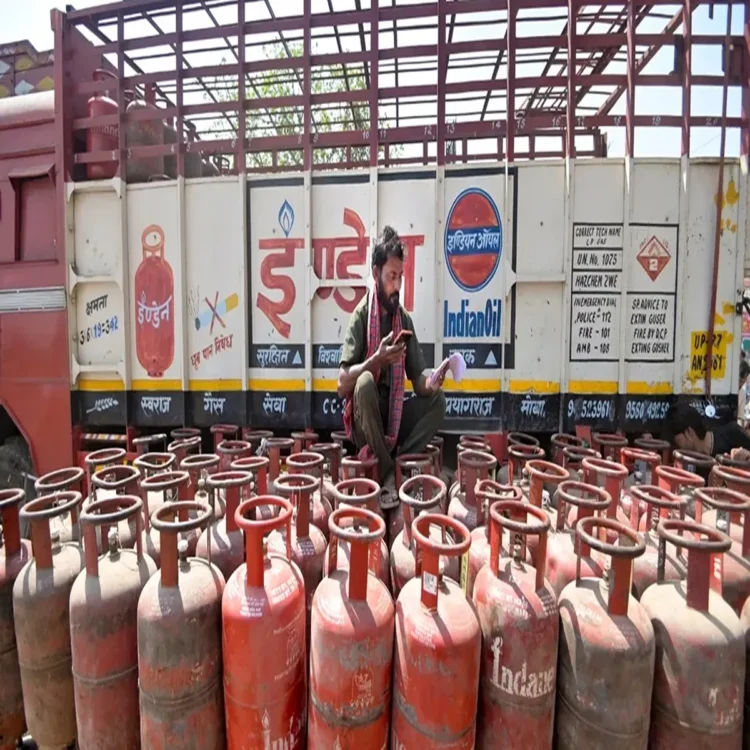
LPG – The Delhi government has stepped up the supply of commercial LPG, bringing relief to businesses that rely heavily on gas for daily operations. On Friday, minister Manjinder Singh Sirsa confirmed that the allocation has been increased to 70 percent of earlier supply levels, addressing concerns raised by industries and food establishments across the city. He also assured that there is no actual shortage of LPG in the national capital.
Revised Allocation Offers Partial Relief
The updated directive follows guidance from the Ministry of Petroleum and Natural Gas, which recommended easing earlier restrictions. Previously, commercial LPG distribution had been capped at 50 percent, leading to supply challenges for several sectors. With the new revision, availability has increased by 20 percentage points.
According to official figures, the city will now receive approximately 6,300 cylinders of 19 kg LPG per day. While this is still below the usual daily consumption of around 9,000 cylinders, officials believe the revised allocation will significantly reduce pressure on businesses that depend on consistent fuel access.
Focus on Critical Industrial Sectors
The government has prioritized industries where LPG remains an essential energy source and cannot easily be replaced by alternatives such as piped natural gas. These include sectors like steel manufacturing, automobile production, textiles, chemicals, and plastics.
Out of the total daily supply, about 1,800 cylinders have been earmarked specifically for these labour-intensive industries. This allocation represents roughly 28.5 percent of the total supply, ensuring that production activities in key sectors continue without major disruption.
Support for Food and Hospitality Businesses
Restaurants, street food vendors, and small eateries are among the primary beneficiaries of the increased LPG supply. Many of these businesses had faced operational challenges due to limited access to commercial gas cylinders under the earlier cap.
With the revised allocation, authorities expect smoother operations across the hospitality sector. Industry representatives have welcomed the move, noting that even a partial increase in supply can help stabilize daily operations and reduce uncertainty.
Government Reassures Public on Availability
Addressing concerns about a possible shortage, the minister emphasized that the city is not facing a supply crisis. Instead, the earlier restrictions were part of a temporary adjustment in distribution, which is now being gradually eased.
Officials have reiterated that the current supply levels are sufficient to meet essential demand while ensuring fair distribution among different sectors. Monitoring mechanisms have also been put in place to track consumption patterns and prevent misuse or hoarding.
Gradual Approach to Full Restoration
While the increase to 70 percent marks a significant step, authorities have indicated that further adjustments may be considered based on demand trends and overall availability. The government is expected to review the situation regularly in coordination with central agencies.
Experts suggest that a phased approach helps maintain balance in supply chains, especially during periods of fluctuating demand. It also allows policymakers to prioritize sectors that contribute significantly to employment and economic activity.
Industry Response and Outlook
Businesses across affected sectors have responded positively to the revised policy. Many see it as a sign of improving supply conditions and a step toward normalcy. However, some stakeholders have pointed out that full restoration to previous levels would provide greater stability in the long term.
For now, the increased allocation is expected to ease immediate pressures and support ongoing industrial and commercial activities in Delhi. Authorities continue to monitor the situation closely, aiming to ensure that supply remains steady and equitable.