
Judiciary – Supreme Court Begins Hearing on Women’s Entry in Religious Sites
Judiciary – The Supreme Court of India on Tuesday commenced hearings on a series of petitions that question alleged discrimination against women at various religious institutions, including the well-known Sabarimala temple. The case also seeks to define the broader limits of religious freedom across different faiths in the country.
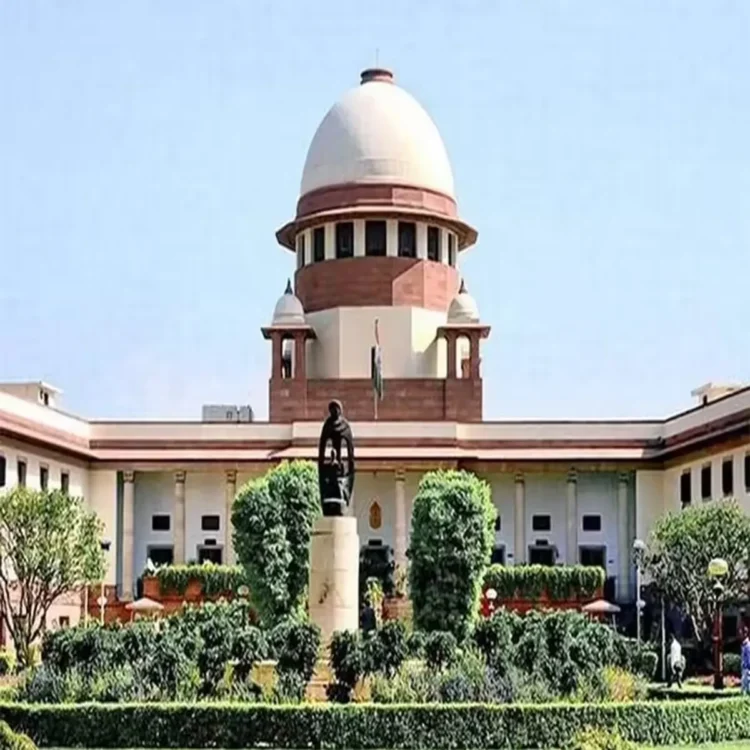
Constitution Bench Takes Up Key Petitions
A nine-judge Constitution bench, headed by Chief Justice Surya Kant, is examining the matter. The bench includes Justices B V Nagarathna, M M Sundresh, Ahsanuddin Amanullah, Aravind Kumar, Augustine George Masih, Prasanna B Varale, R Mahadevan, and Joymalya Bagchi. The proceedings are expected to continue over the coming weeks, reflecting the complexity and importance of the issues involved.
Centre Defends Religious Practices
Ahead of the hearing, the central government submitted written arguments supporting the continuation of restrictions on the entry of women of menstruating age at the Sabarimala temple. The government maintained that such practices fall within the domain of religious belief and the autonomy of specific denominations. According to its position, courts should exercise restraint in intervening in matters deeply rooted in faith traditions.
Background of the Sabarimala Verdict
The issue traces back to a landmark judgment in September 2018, when a five-judge Constitution bench ruled by a 4:1 majority that the ban on women aged between 10 and 50 entering the Ayyappa shrine was unconstitutional. The decision was widely debated, as it raised questions about balancing gender equality with religious customs.
In November 2019, another Constitution bench led by then Chief Justice Ranjan Gogoi decided that the matter required a more comprehensive examination. It referred the issue, along with similar disputes from other religions, to a larger bench for authoritative interpretation.
Broader Questions Across Religions
The present hearing is not limited to Sabarimala alone. It also covers concerns related to Muslim women’s access to mosques and dargahs, as well as the rights of Parsi women who marry outside their community to enter fire temples. These cases together highlight a broader legal challenge involving gender rights and religious practices across multiple communities.
Legal Clarifications and Judicial Scope
In May 2020, the Supreme Court clarified that even while reviewing earlier decisions, a Constitution bench has the authority to refer substantial questions of law to a larger bench. This clarification paved the way for the current nine-judge bench to take up the matter in detail.
The court has indicated that it will examine several critical constitutional questions. Among them are the scope of the right to freedom of religion under Article 25 and how it interacts with the rights of religious denominations under Article 26.
Key Constitutional Issues Under Review
The bench is also expected to consider whether denominational rights are subject to other fundamental rights, including equality. Another important aspect involves interpreting the concept of “morality” within the framework of Articles 25 and 26, which has been a central point of debate in earlier rulings.
Additionally, the court will look into the meaning of the phrase “sections of Hindus” under Article 25(2)(b) and assess whether individuals outside a particular religious group have the standing to challenge its practices through public interest litigation.
Toward a Uniform Judicial Framework
The Supreme Court has emphasized the need to develop a consistent judicial approach that can address conflicts between religious freedom and other constitutional rights. The aim is to ensure that justice is both comprehensive and equitable, particularly in cases where women’s access to places of worship is restricted.
As the hearings progress, the outcome is expected to have far-reaching implications for how religious practices are interpreted within the framework of constitutional rights in India.