
Jamia Millia Islamia Exam: Question Sparks Nationwide Academic and Social Media Debate
Jamia Millia Islamia Exam: A recent academic incident at Jamia Millia Islamia University in Delhi has drawn significant public attention, igniting a heated debate across social media platforms and academic circles alike. The controversy emerged after a question included in an undergraduate examination paper triggered strong reactions, raising concerns about academic neutrality, institutional responsibility, and the boundaries of classroom discourse in higher education.
Background of the Examination Controversy
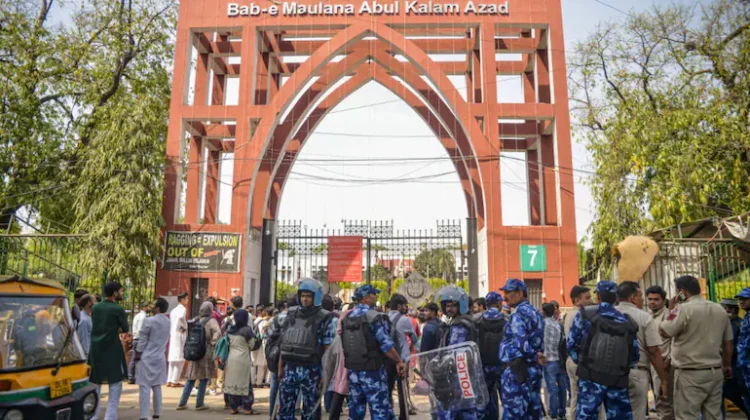
The issue originated during the BA (Honours) Social Work first-semester examination, specifically for the subject titled Social Problems in India. Within the question paper, a 15-mark question asked students to discuss atrocities faced by Muslim minorities in India, supported by relevant examples. Soon after the examination concluded, images of the question paper began circulating widely on social media, where the wording of the question became the focal point of criticism.
Many users online alleged that the phrasing reflected a particular ideological or communal bias. Critics argued that such a question could influence students’ perspectives rather than encourage neutral academic analysis. Supporters, on the other hand, viewed it as a legitimate sociological topic aligned with the subject syllabus. The polarized reactions quickly escalated into a broader debate on academic freedom versus perceived bias.
Student Protests and University Response
As the discussion intensified online, students on campus reportedly organized protests, expressing concerns over how sensitive topics were being framed in examinations. In response to the growing unrest, the university administration stated that it had taken a serious view of the matter. According to official sources, the incident was considered an act of carelessness by the faculty member responsible for setting the question.
To address the situation formally, the university constituted an internal inquiry committee tasked with examining the circumstances under which the question was framed and approved. Pending the outcome of the investigation, the professor involved, identified as Professor Virendra Balaji Shahare, was suspended with immediate effect until further notice.
Details of the Suspension Order
An official suspension order, signed by the officiating registrar, was circulated publicly and gained widespread traction online. The order emphasized the institution’s commitment to maintaining academic responsibility and protecting the sanctity of the university’s examination process. It also specified that during the suspension period, the professor’s headquarters would remain in New Delhi, and any travel outside the city would require prior approval from the competent authority.
Additionally, the order mentioned that a police complaint could be lodged in accordance with established rules. This particular line further fueled speculation and debate, as many interpreted it as an indication of possible legal action.
Clarification on Legal Action and Internal Review
Subsequently, university authorities issued a clarification to dispel confusion regarding potential police involvement. Officials stated that there was no immediate proposal to file a First Information Report against the faculty member. They clarified that the wording in the suspension order should not be misconstrued and that the matter was being reviewed internally by the inquiry committee.
This clarification aimed to calm public speculation and refocus attention on the institutional review process rather than external legal consequences.
Role of Social Media and Public Figures
The controversy gained additional momentum when a senior adviser to the Ministry of Information and Broadcasting shared the suspension order on social media platform X. In his post, he criticized the nature of the question, describing it as inappropriate for a central university with a diverse student population. His remarks further amplified the debate, drawing national attention to the issue and reinforcing concerns about perceived intent behind academic content.
What Lies Ahead for the University
According to reports citing university sources, the findings of the inquiry committee will play a decisive role in determining the next steps. These could range from internal disciplinary measures to policy revisions related to exam moderation and content review. The incident has also prompted renewed discussions on how universities can balance academic exploration of social issues with institutional neutrality and inclusivity.
As the review process continues, the episode serves as a reminder of the heightened scrutiny faced by educational institutions in the digital age, where academic decisions can quickly become subjects of nationwide discourse.