
IsraelVisit – BJP Targets Priyanka Gandhi Over Gaza Remarks
IsraelVisit – A political exchange unfolded on Wednesday after the Bharatiya Janata Party (BJP) criticized Congress leader Priyanka Gandhi Vadra for her recent comments regarding the humanitarian crisis in Gaza, accusing her of responding selectively to international events.
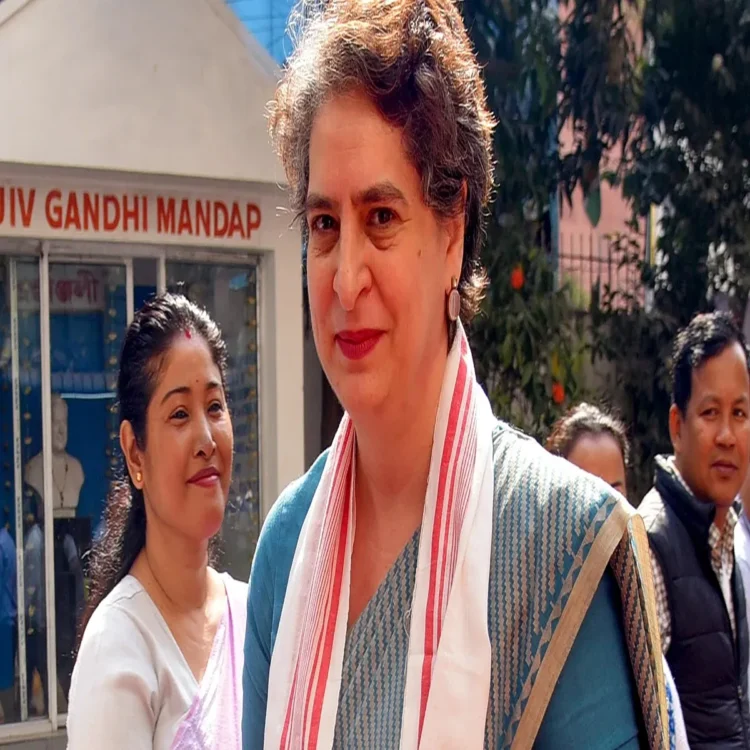
BJP Accuses Congress Leader of Selective Response
The sharp reaction came from BJP national spokesperson Gaurav Bhatia, who used a cinematic reference to question Gandhi’s position. Drawing a comparison to a character from the 2008 Hindi film Ghajini, known for suffering from short-term memory loss, Bhatia alleged that Gandhi was focusing on the situation in Gaza while overlooking the October 7 attacks in Israel.
In a post shared on social media platform X, Bhatia suggested that condemning violence must not be selective. He referred to the killing of over 1,200 people in Israel during the October 7 assault and said that public representatives should demonstrate equal concern for all victims of violence. He also shared an older photograph of Gandhi carrying a bag marked “Palestine,” using it to reinforce his argument that her stance appeared politically motivated.
Priyanka Gandhi’s Remarks Ahead of Prime Minister’s Visit
The BJP’s comments followed a statement by Priyanka Gandhi Vadra ahead of Prime Minister Narendra Modi’s two-day visit to Israel. Gandhi had expressed hope that the Prime Minister would raise concerns about what she described as a genocide in Gaza during his engagements, including any address to the Israeli Parliament.
In her message on X, the Congress MP from Wayanad emphasized that India should continue to stand for truth, peace and justice in global affairs. Her remarks reflected concern about the humanitarian toll of the ongoing conflict in Gaza and called for accountability.
While Gandhi focused on the civilian suffering in Gaza, BJP leaders argued that her comments did not adequately acknowledge the October 7 attacks carried out in Israel, which marked a major escalation in the conflict.
Escalating Political Rhetoric
Bhatia’s post characterized Gandhi’s remarks as politically selective and accused her of avoiding a clear condemnation of the initial assault in Israel. He further suggested that political leaders must rise above what he described as vote-bank considerations when addressing matters of international violence and terrorism.
The exchange underscores how international developments are increasingly becoming part of domestic political debate in India. Statements related to global conflicts often draw strong responses from rival parties, particularly when they involve questions of moral positioning and foreign policy.
Modi’s Visit Focused on Strategic Cooperation
Prime Minister Narendra Modi’s visit to Israel, beginning Wednesday, is expected to center on strengthening bilateral cooperation in defense and trade. Officials have indicated that discussions will aim to deepen strategic ties between the two countries, which have expanded significantly over the past decade.
This marks Modi’s second visit to Israel in nine years, reflecting the importance New Delhi attaches to its relationship with Tel Aviv. India and Israel have collaborated closely in areas such as defense technology, agriculture and innovation.
The diplomatic engagement comes at a time when the conflict in Gaza continues to draw global attention and concern. As world leaders navigate complex geopolitical realities, domestic political reactions remain closely tied to how these events are framed and addressed.
The debate between the BJP and Congress highlights differing approaches within India’s political spectrum on how to articulate positions on international crises. While the government emphasizes strategic partnerships and security cooperation, opposition leaders have stressed humanitarian considerations and moral responsibility.
As the Prime Minister proceeds with his engagements in Israel, the broader conversation around India’s stance on the Middle East conflict is likely to continue both within Parliament and across political platforms.