
Infrastructure – Delhi Plans Elevated Yamuna Corridor and New Flyovers by 2026
Infrastructure – The Delhi government has outlined an ambitious roadmap to strengthen connectivity through new elevated roads, flyovers, and metro expansions across the capital.
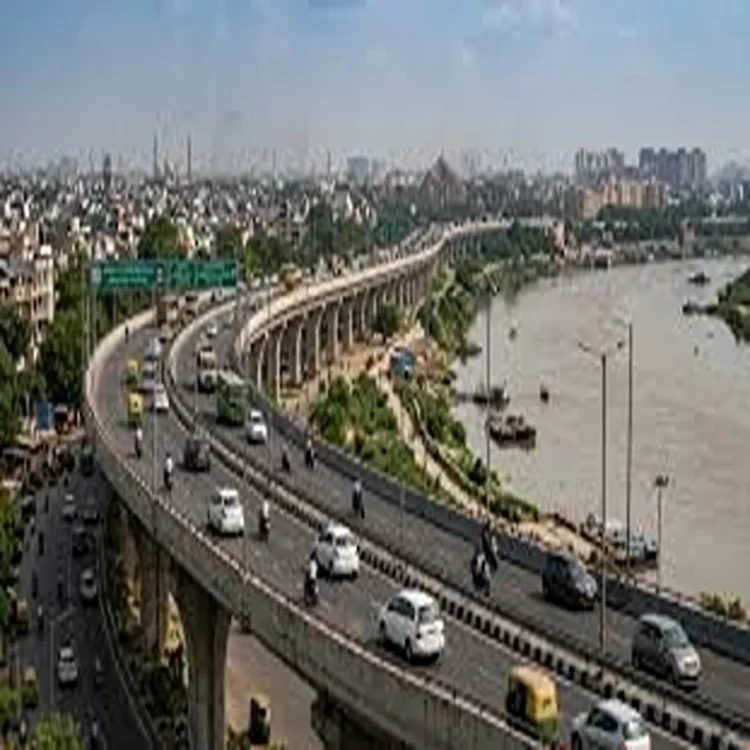
The Delhi administration has unveiled plans to build a 19.2-kilometre elevated road running along the Yamuna river, aimed at easing traffic flow and improving connectivity between key parts of the city. The proposed corridor will link Wazirabad to DND, while also covering stretches from Surghat to ISBT, ISBT to Sarai Kale Khan, and Sarai Kale Khan to DND. The project forms a major part of the government’s broader urban mobility strategy targeted for completion by 2026.
Focus on Integrated Transport Development
Alongside the elevated corridor, authorities have prepared a proposal for a 2.62-kilometre flyover connecting Tripolia Gate to Barfkhana. The move is intended to streamline vehicular movement in congested areas and reduce travel time for daily commuters.
Chief Minister Rekha Gupta recently chaired a comprehensive review meeting focusing on metro expansion and road infrastructure projects. During the discussion, she emphasized the importance of building a modern and efficient public transport system to meet the city’s growing demands. The review covered ongoing developments as well as upcoming proposals aimed at improving connectivity across Delhi.
Progress on Double-Decker Flyover
One of the key highlights of the review was the 2.16-kilometre double-decker flyover being constructed between Azadpur and Tripolia Chowk. Designed to accommodate both metro trains and regular road traffic, the project represents a significant step toward integrated transport solutions.
Officials reported that nearly 73 percent of the work has already been completed. The total estimated cost of this project stands at ₹264.27 crore. Once operational, the flyover is expected to ease congestion in the northern parts of the city while offering a more efficient commuting option.
Near Completion of Yamuna Vihar Flyover
Another major project nearing completion is the 1.40-kilometre flyover connecting Yamuna Vihar and Bhajanpura. With an estimated cost of ₹291.17 crore, construction has reached approximately 85 percent completion.
This flyover is expected to significantly improve traffic conditions in East Delhi, an area that often experiences heavy congestion. Authorities believe the project will help streamline traffic flow and reduce travel delays for thousands of commuters once it becomes operational.
Ongoing Infrastructure Work in South Delhi
In South Delhi, large-scale construction activity is underway along MB Road. A 2.48-kilometre six-lane flyover is being built from Saket G Block to Sangam Vihar, accompanied by underpasses at Saket G Block and Ambedkar Nagar.
The project, with an estimated cost of ₹694.98 crore, has achieved around 40 percent progress so far. Once completed, it is expected to ease congestion in one of the busiest corridors in South Delhi and provide smoother connectivity to surrounding areas.
Metro Expansion Plans Move Forward
In addition to road infrastructure, efforts are also underway to expand the Delhi Metro network. Work has begun on the remaining Phase IV corridors, which include Lajpat Nagar to Saket G Block (8.38 km), Inderlok to Indraprastha (12.37 km), and Rithala to Kundli (26.46 km).
These new metro lines are expected to enhance public transport accessibility and reduce dependence on private vehicles. Officials believe the expansion will play a crucial role in addressing traffic congestion and improving air quality across the city.
Long-Term Vision for Urban Mobility
The government’s multi-pronged approach reflects a broader vision to modernize Delhi’s transport infrastructure. By combining elevated corridors, flyovers, and metro expansion, the administration aims to create a more efficient and sustainable urban mobility system.
With several projects already in advanced stages and others in the planning phase, the coming years are expected to bring significant improvements to the city’s transport network. If completed as scheduled, these developments could reshape daily commuting for millions of residents while supporting Delhi’s long-term growth.