
Indore : High Court Orders Independent Probe Into Deadly Water Contamination
Indore: More than a month after multiple deaths were reported in Indore and linked to a contaminated water supply, the Indore Bench of the Madhya Pradesh High Court has ordered an independent inquiry to examine the circumstances surrounding the incident. The court’s decision follows concerns over public health and the constitutional right to life, prompting judicial intervention to establish accountability and clarity.
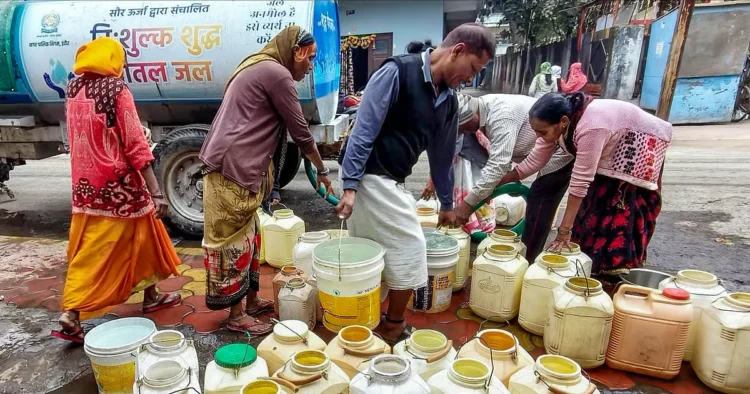
Court cites need for independent fact-finding
In its order issued late Tuesday, the High Court emphasized the seriousness of the allegations and their implications for citizens’ fundamental rights under Article 21 of the Constitution. The bench observed that the nature of the reported deaths required an inquiry conducted by an authority that is both independent and credible, rather than an internal administrative review.
The judges noted that the situation raised significant questions about public safety and governance, warranting a transparent investigation to restore public confidence and determine whether lapses occurred in the supply of drinking water.
Former High Court judge appointed to lead inquiry
To carry out the investigation, the court appointed Justice Sushil Kumar Gupta, a former judge of the Madhya Pradesh High Court, as the sole member of the inquiry commission. The appointment was made by a two-judge bench comprising Justice Vijay Kumar Shukla and Justice Alok Awasthi.
According to the order, the commission will focus on issues related to water contamination in the Bhagirathpura area of Indore and examine the broader impact of the incident on residents. The court stated that the inquiry would look into whether the water supplied for drinking purposes was contaminated and, if so, how the contamination occurred.
Scope and timeline of the commission’s work
The High Court directed the commission to submit an interim report within four weeks from the commencement of proceedings. This interim submission is expected to outline preliminary findings and identify key factors that may have contributed to the contamination.
A final report will follow after a more detailed examination of evidence, records, and expert inputs. The court has scheduled the next hearing in the matter for February 5, when it will review the progress of the inquiry and consider any interim recommendations.
State government shares audit findings
Earlier on Tuesday, the state government informed the court about the findings of a specialized death audit committee constituted to examine the reported fatalities. According to the submission, 16 out of 23 deaths reviewed so far were found to be linked to contaminated water.
These findings were placed on record as part of the proceedings and underscored the urgency of an independent probe. The court took note of the audit results while stressing that a judicially appointed commission was necessary to ensure an impartial assessment of responsibility and systemic failures, if any.
Civil court powers granted to commission
To enable a thorough investigation, the High Court granted the commission powers equivalent to those of a civil court. These powers include summoning government officials and witnesses, seeking documents and records from government departments, hospitals, laboratories, and civic bodies, and ordering water quality tests.
The commission is also authorized to conduct on-site inspections in affected areas. These provisions are intended to ensure that the inquiry has full access to relevant information and can independently verify technical and administrative aspects of the case.
Focus on accountability and public safety
The court’s order reflects a broader emphasis on accountability in matters affecting public health and essential services. By mandating an independent inquiry with defined powers and timelines, the High Court signaled that incidents involving basic necessities such as drinking water require rigorous scrutiny.
The outcome of the commission’s findings is expected to play a key role in determining future corrective measures and responsibilities, as authorities seek to prevent similar incidents and address public concerns in Indore.