
Gujarat Electoral Roll Revision: Political Imbalance Raises Questions Over Fairness of
Gujarat Electoral Roll Revision: A recent disclosure obtained through the Right to Information mechanism has triggered a fresh debate over the neutrality of the electoral roll revision process in Gujarat. The data reveals a striking imbalance in the political composition of Booth Level Agents deployed during the Special Intensive Revision exercise, raising concerns about fairness, transparency, and equal access for voters, particularly those from migrant and marginalised communities.
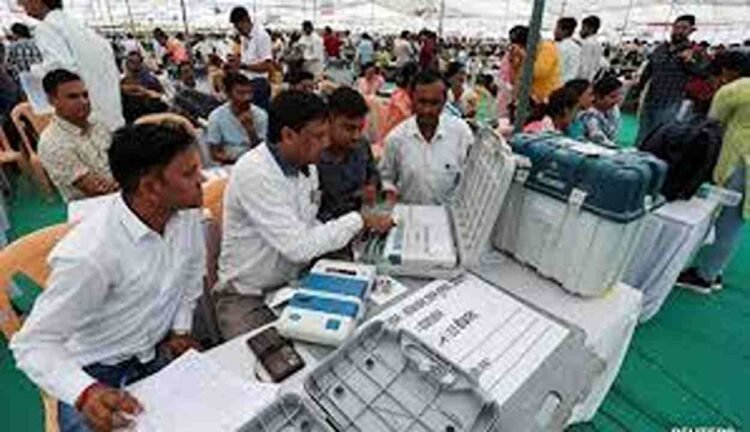
RTI Findings Highlight Disproportionate Representation
According to the RTI report, out of 73,169 Booth Level Agents appointed across Gujarat, nearly two-thirds were affiliated with the Bharatiya Janata Party. The ruling party accounted for 49,168 BLAs, while the Indian National Congress followed with 18,057 representatives. The Aam Aadmi Party had 5,893 BLAs. Representation from other political groups was negligible, with the Bahujan Samaj Party and the Communist Party of India (Marxist) together contributing fewer than 100 agents, while some parties had no presence at all.
Understanding the Role of Booth Level Agents
Booth Level Agents play a crucial role during electoral roll revisions. They act as the primary link between election officials, Booth Level Officers, political parties, and voters. Their responsibilities include assisting voters with form submissions, clarifying documentation requirements, and ensuring that eligible citizens are correctly listed on electoral rolls. In areas with low awareness or limited administrative outreach, BLAs often become the first and sometimes only source of guidance.
Timing of the SIR Exercise and Voter Absence
The Special Intensive Revision in Gujarat commenced shortly after the monsoon season. This period coincides with peak migration for daily-wage earners, construction workers, farm labourers, and other seasonal workers. Many voters were away from their native villages when the exercise was conducted, reducing direct participation and increasing reliance on intermediaries for information and assistance.
Those who remained faced confusion over procedural details. Questions related to which forms were required, what supporting documents were acceptable, and how to verify past electoral mappings remained unanswered for many. Instead of a straightforward civic activity, the process became an administrative challenge.
Concerns Over Administrative Neutrality
The overwhelming dominance of a single political party among BLAs has led to questions about neutrality at the grassroots level. While BLAs are not official election employees, their influence is significant. They can affect how quickly a voter receives assistance, the clarity of information provided, and even whether certain voters are proactively guided through the process.
In such a scenario, political imbalance is not merely a statistical issue. It has practical implications for voter inclusion, especially for communities already facing socio-economic disadvantages. Migrant workers, urban poor, and first-time voters are particularly vulnerable to gaps in information and support.
Implications for Electoral Integrity
As the SIR exercise approaches its conclusion, the RTI findings prompt a broader reflection on electoral integrity. An exercise intended to correct and cleanse voter lists must not only be accurate but also visibly impartial. When political representation at the booth level is heavily skewed, public trust in the process risks erosion.
The situation in Gujarat highlights the need for more balanced representation or stronger institutional safeguards to ensure that voter assistance remains unbiased. Without corrective measures, the impact of such imbalances may extend beyond administrative concerns and influence political outcomes.
A Question Beyond Procedure
Ultimately, the Gujarat SIR episode underscores a deeper issue within electoral management. For many voters, particularly the marginalised, the consequences of unequal booth-level representation may prove more political than procedural. Ensuring fairness at the most basic level of voter interaction remains essential for the credibility of democratic processes.