
Governors – TMC Criticises Centre Over West Bengal Governor Appointment
Governors – The Trinamool Congress (TMC) on Friday strongly criticised the Union government following the reshuffle of governors across several states, claiming the move reflects disregard for the principles of constitutional federalism. The party alleged that Raj Bhavans are increasingly being used for political purposes, particularly by the ruling Bharatiya Janata Party (BJP).
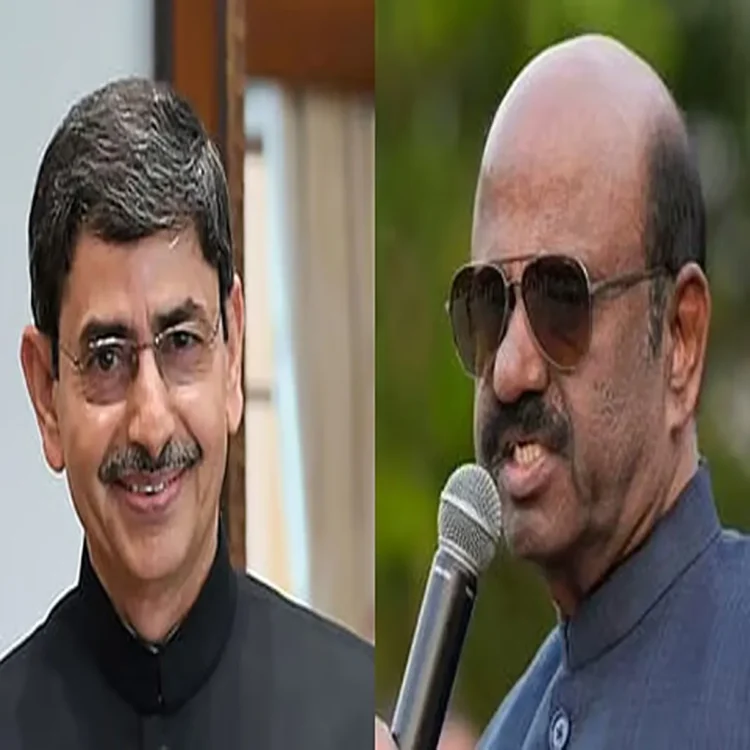
Governor reshuffle triggers political reaction
The criticism came after Tamil Nadu Governor R N Ravi was appointed as the new governor of West Bengal. He replaces C V Ananda Bose, who stepped down from the position on Thursday in a sudden move that surprised political observers.
The change forms part of a broader reshuffle of gubernatorial appointments announced late Thursday night by President Droupadi Murmu. Several states and Union territories saw changes in their Raj Bhavans as part of the decision.
TMC demands consultation with states
Senior TMC leader and Rajya Sabha member Sukhendu Sekhar Roy argued that state governments should play a role in selecting governors. Referring to past recommendations made by commissions studying Centre-State relations, Roy said consultation with state authorities is an important democratic practice.
He cited the Sarkaria Commission, which suggested that governors should be appointed from a panel prepared in consultation with the concerned state government. Roy also pointed to the Punchhi Commission report on Centre-State relations, which made similar recommendations.
According to Roy, both commissions clearly emphasised that governors should be chosen after discussions with the state leadership. He questioned whether these recommendations were being respected in current appointments.
Concerns over federal principles
TMC’s deputy leader in the Rajya Sabha, Sagarika Ghose, also criticised the Centre’s decision. She stated that involving state governments in the appointment process is fundamental to maintaining federal balance in the country.
Ghose said the recommendations of the Sarkaria and Punchhi Commissions outline a clear framework that supports cooperative federalism. She added that unilateral appointments by the Centre undermine this principle and weaken democratic norms.
The TMC leader further alleged that Raj Bhavans are increasingly being used for political purposes rather than functioning as neutral constitutional offices.
Commissions highlighted role of consultation
The Punchhi Commission, established to review Centre-State relations and chaired by former Chief Justice Madan Mohan Punchhi, submitted its report in 2010. Among its suggestions was the creation of a panel that includes the chief minister of the concerned state for recommending candidates for governor.
Earlier, the Sarkaria Commission, led by retired Supreme Court judge Ranjit Singh Sarkaria, had also advised that the chief minister should be consulted before appointing a governor. The commission emphasised that the office must remain politically neutral to preserve the federal structure.
Unexpected resignation of Bose raises questions
The reshuffle drew additional attention because of the sudden resignation of C V Ananda Bose from the West Bengal governor’s post. His departure came only weeks before the state is expected to head toward assembly elections, prompting discussions in political circles about the timing.
In a statement issued by Rashtrapati Bhavan, President Droupadi Murmu formally accepted Bose’s resignation. Speaking to reporters from New Delhi, Bose confirmed that he had stepped down after serving as governor for around three and a half years.
He described the tenure as sufficient and said he felt it was an appropriate time to leave the position.
Allegations of political pressure
West Bengal Chief Minister Mamata Banerjee raised questions about the circumstances surrounding Bose’s resignation. She suggested that the governor might have been asked to step down in order to serve certain political objectives ahead of the upcoming elections.
Banerjee also alleged that Union Home Minister Amit Shah could have played a role in the decision, though the Centre has not responded to these claims.
Administrative changes in Tamil Nadu
Following R N Ravi’s transfer to West Bengal, the President’s communication stated that Kerala Governor Rajendra Vishwanath Arlekar will handle the responsibilities of Tamil Nadu governor.
Ravi’s tenure in Tamil Nadu had been marked by several disagreements with the state government led by Chief Minister M K Stalin. The disputes, which played out publicly on multiple occasions, revolved around legislative procedures and policy matters.
With the new appointments now in effect, political attention is likely to remain focused on how relations between governors and state governments evolve in the coming months.