
Euthanasia – Supreme Court to Deliver Key Verdict in Long-Term Coma Case
Euthanasia – India’s Supreme Court is set to deliver a crucial judgment on Wednesday in a deeply sensitive case concerning a man who has remained in a coma for over a decade. The petition, filed by the father of 32-year-old Harsh Rana, requests the court’s permission to withdraw artificial life support and allow passive euthanasia after doctors concluded that recovery is no longer possible.
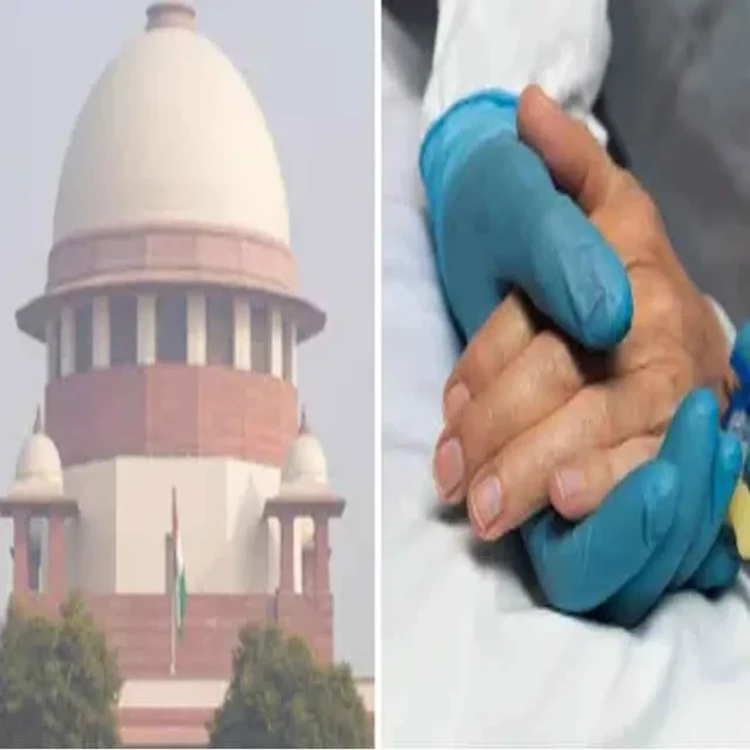
A Father’s Plea After Twelve Years of Uncertainty
Harsh Rana has been in a persistent vegetative state for more than 12 years following a severe accident in 2013. According to court records, he suffered critical head injuries after falling from the fourth floor of a building. Since then, he has depended entirely on medical support systems to survive.
His father, Ashok Rana, approached the Supreme Court seeking legal permission to discontinue life-sustaining treatment. The plea argues that continuing artificial support for a patient with no chance of recovery prolongs suffering and does not serve the patient’s dignity.
The case has raised significant ethical and legal questions about the right to die with dignity and the application of India’s passive euthanasia guidelines.
Medical Boards Confirm No Chance of Recovery
During the hearings, the Supreme Court directed the formation of two separate medical boards to independently evaluate Harsh Rana’s medical condition. Both panels submitted reports indicating that the patient’s neurological condition is irreversible and that meaningful recovery is highly unlikely.
The medical reports examined his complete medical history, neurological status, and ongoing treatment requirements. Doctors noted that Harsh remains dependent on a tracheostomy tube for breathing and a gastrostomy tube for nutrition. Medical documentation also recorded severe bed sores, reflecting the prolonged period he has spent immobile in a hospital bed.
These findings were submitted to the court as part of the legal process required before granting permission for passive euthanasia.
Supreme Court Bench Examines Legal and Ethical Dimensions
The matter was heard by a bench comprising Justices J. B. Pardiwala and K. V. Viswanathan. Before reserving the judgment on January 15, the bench considered submissions from Additional Solicitor General Aishwarya Bhati, representing the Union government, and advocate Rashmi Nandakumar, who appeared on behalf of the petitioner.
During the proceedings, the judges also interacted directly with Harsh Rana’s parents. The court insisted that the conversation take place in person rather than through video conferencing, emphasizing the seriousness and emotional sensitivity of the case.
After reviewing the medical assessments from the All India Institute of Medical Sciences in New Delhi, the bench reportedly described the findings as deeply distressing. The judges acknowledged the grim nature of the medical report and observed that the patient had been living in an extremely compromised condition for many years.
Legal Framework Governing Passive Euthanasia
The Supreme Court’s decision will rely on legal principles established in its landmark 2018 Constitution Bench ruling in the Common Cause v. Union of India case. That judgment recognized the right to die with dignity as part of the fundamental right to life under the Constitution.
Under the framework laid down in that ruling, passive euthanasia may be permitted under strict safeguards. Courts must obtain medical opinions from both primary and secondary medical boards to ensure that the patient’s condition is irreversible and that the decision aligns with established medical and legal standards.
The procedure was further clarified in a January 2023 order, which streamlined the process but retained the requirement for detailed medical evaluation before withdrawing life support.
What Passive Euthanasia Means
Passive euthanasia involves allowing a terminally ill or permanently unconscious patient to die naturally by withholding or withdrawing life-sustaining medical treatment. This may include discontinuing artificial ventilation, feeding tubes, or other interventions that keep the patient alive.
The Supreme Court’s upcoming verdict in the Harsh Rana case is expected to provide further clarity on how these principles should be applied in real-life circumstances involving long-term vegetative states.
The ruling is likely to be closely watched by medical professionals, legal experts, and families dealing with similar situations across the country.