
Environment – Delhi Budget Focuses on Green Growth and Women Empowerment
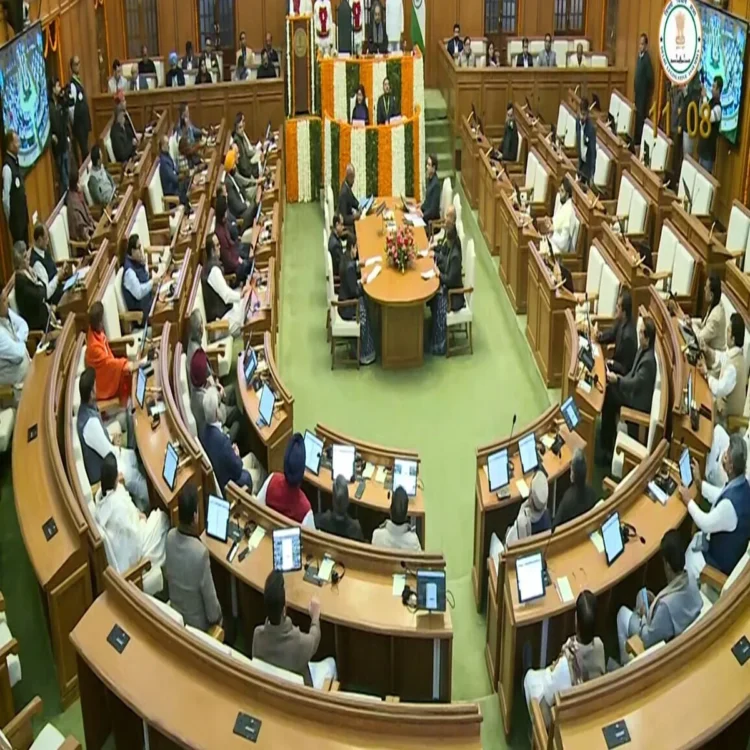
Environment – Delhi Chief Minister Rekha Gupta on Tuesday presented the 2026–27 budget, placing strong emphasis on environmental sustainability and inclusive development. Describing it as a “green budget,” she announced that 21 percent of the total expenditure—amounting to ₹22,236 crore—has been dedicated to eco-friendly initiatives aimed at improving air quality, expanding green cover, and promoting sustainable urban living.
Increased Allocation for Environment and Forest Sectors
The government has significantly raised funding for the environment and forest departments this year. A total of ₹822 crore has been allocated, marking a sharp increase of 62.7 percent compared to last year’s ₹505 crore. The move reflects a renewed focus on ecological restoration and conservation efforts across the capital.
Gupta stated that the administration is committed to reviving Delhi’s identity as a green city by investing in urban forests, parks, and open spaces. As part of this effort, ₹25 crore has been set aside for the Delhi Park and Garden Society. Additionally, the government plans to plant 3.5 million native trees, including species such as peepal, neem, and mango, over the next four years.
Pollution Control and Monitoring Measures
To tackle pollution more effectively, the budget introduces a ₹300 crore scheme focused on emergency response and pollution control. This includes the deployment of mechanical road sweepers, anti-smog guns, and water sprinkling systems. The Municipal Corporation of Delhi has also been allocated ₹204 crore specifically to strengthen anti-pollution efforts.
The government is exploring advanced technological solutions in collaboration with the World Bank. These initiatives will enhance monitoring systems, including real-time tracking, mobile applications, and operations at the Integrated Command and Control Centre. A separate ₹2 crore has been earmarked to support these monitoring upgrades.
Waste Management and Circular Economy Push
A key highlight of the budget is the expansion of waste processing capacity. The government aims to nearly double the current capacity from 7,000 metric tonnes to 15,000 metric tonnes per day. This will be achieved by upgrading waste-to-energy plants in areas such as Narela, Okhla, Ghazipur, and Tehkhand.
According to the Chief Minister, notable progress has already been made in reducing legacy waste at major landfill sites. Waste reduction stands at 16 percent in Ghazipur, 54 percent in Bhalswa, and 68 percent in Okhla.
In addition, around 1,500 tonnes of cow dung generated daily will be converted into energy. This initiative is expected to cut emissions, reduce dependence on imported fuels, and contribute to building a circular economy model for the city.
Women-Centric Schemes and Financial Support
The budget also introduces several initiatives aimed at empowering women and improving their access to economic opportunities. One of the key announcements is the distribution of e-auto permits to 1,000 women and 100 transgender individuals under the ‘DURGA’ scheme, promoting both employment and sustainable transport.
The Women and Child Development department has received an allocation of ₹17,406 crore. A new scheme titled ‘Delhi Lakhpati Betiya Yojana’ will provide financial assistance of up to ₹1.20 lakh to girls, covering support from birth through higher education.
To strengthen women’s livelihoods, the government plans to expand ‘Rani Haat’ outlets, enabling women entrepreneurs to connect with markets more effectively. Investments are also being made in safety infrastructure, including expanded CCTV coverage, improved street lighting, and additional One Stop Centres.
Formation of DITI Aayog for Policy Planning
In a move aimed at improving governance and policy implementation, the government announced the establishment of a Delhi Institutional Think Tank, named DITI Aayog. Modeled after the national NITI Aayog, this body will focus on evidence-based policymaking and expert-driven planning.
The think tank will include specialists and professionals tasked with designing and evaluating policies, schemes, and development projects. The initiative is expected to enhance transparency, strengthen execution, and ensure that policies are aligned with ground-level needs.