
Encounter – Gurdaspur Police Killing Sparks Demand for Independent Probe
Encounter – The death of a 19-year-old in a police encounter in Gurdaspur has intensified calls for a transparent and independent investigation across Punjab.
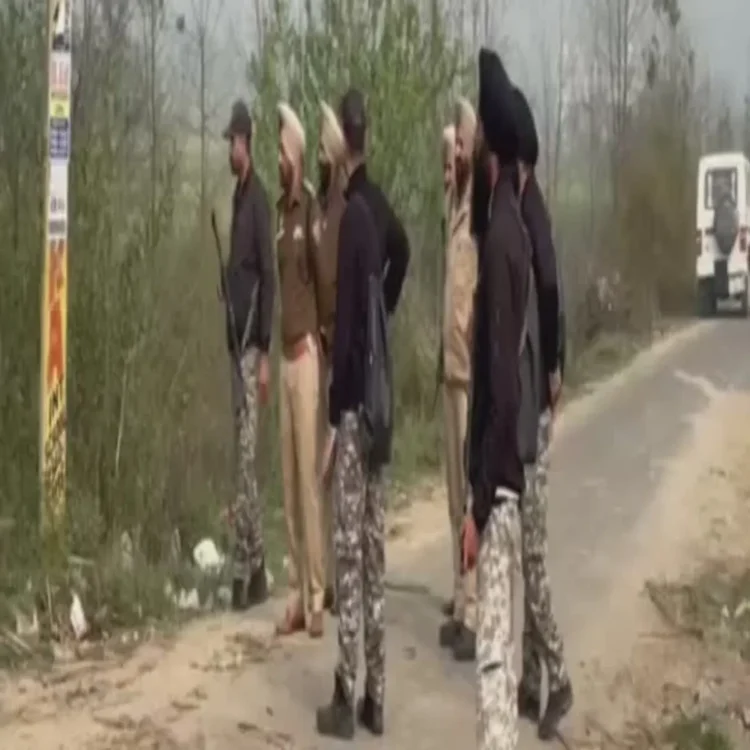
The killing of Ranjit Singh, who was shot dead by Punjab Police in connection with the murder of two security personnel, has triggered a political and legal storm. Questions surrounding the circumstances of his death have led to mounting pressure on authorities to hand over the case to a central agency.
Political Demand for Central Agency Investigation
Sukhjinder Singh Randhawa, Member of Parliament from Gurdaspur and a senior Congress leader, has formally written to Amit Shah, urging that the investigation be transferred to either the National Investigation Agency or the Central Bureau of Investigation.
In his communication, Randhawa expressed concern over what he described as widespread distress in Gurdaspur and other parts of Punjab. He pointed to conflicting accounts surrounding the encounter, noting that while police maintain the teenager was killed during an armed exchange, the family claims he had been picked up from his home earlier.
Randhawa stated that such sharply differing narratives have created a credibility gap that may be difficult for the state police to address on their own. He argued that, given the potential national security implications and possible cross-border links suggested by investigators, an impartial probe by a central agency is necessary to restore public trust.
The police had earlier alleged that the three accused in the case were provided financial support by Pakistan’s intelligence agency, ISI. However, these claims have not been independently verified.
Family Refuses to Accept Body
Ranjit Singh’s family has declined to take possession of his body, insisting that murder charges be filed against the officers involved in the operation. Relatives have also sought legal intervention from both the Supreme Court and the Punjab and Haryana High Court.
His uncle, Harvinder Singh Malhi, said the family would not proceed with the last rites until a criminal case is registered against the personnel responsible for the shooting.
Ranjit’s mother, Sukhwinder Kaur, alleged that her son had been taken from their home for questioning in connection with the killing of Assistant Sub-Inspector Gurnam Singh and Home Guard jawan Ashok Kumar at the Adhian check post. She claimed he was subjected to severe physical assault during interrogation and later died.
The family has demanded that the post-mortem examination be conducted by an independent board of doctors and that the case be handed over to the CBI to ensure a fair inquiry.
Human Rights Groups Seek Judicial Oversight
Several civil society and rights organisations have also entered the debate. The Punjab Human Rights Organisation has called for the formation of a judicial commission led by a retired judge to examine the sequence of events. Other groups, including the Khalra Mission Organisation and the Manukhi Adhikar Insaaf Sangarsh Committee, have urged the Chief Justice of the Punjab and Haryana High Court to take suo motu cognisance of the matter.
These organisations argue that an independent review of the arrest, custody, movement, medical examination, and forensic evidence is critical to establishing accountability and preserving investigative leads.
Background of the Case
Ranjit Singh and another suspect, Dilawar Singh, were shot dead by police earlier this week for their alleged involvement in the killing of the two security personnel in Gurdaspur. According to officials, a third accused, Inderjit Singh, remains absconding.
Ranjit was a first-year Bachelor of Arts student, while Dilawar reportedly worked online for a Delhi-based company. The three young men were from Adhian village and were known to each other from their school days.
As demands for transparency grow louder, the case has evolved beyond a criminal investigation into a broader debate about accountability, due process, and public confidence in law enforcement agencies in Punjab.