
Elections – Voting Begins in Kerala Assembly Polls Amid Tight Contest
Elections – Voting commenced across Kerala on Thursday as citizens lined up early to take part in the single-phase Assembly elections, marking a crucial political moment for the state.
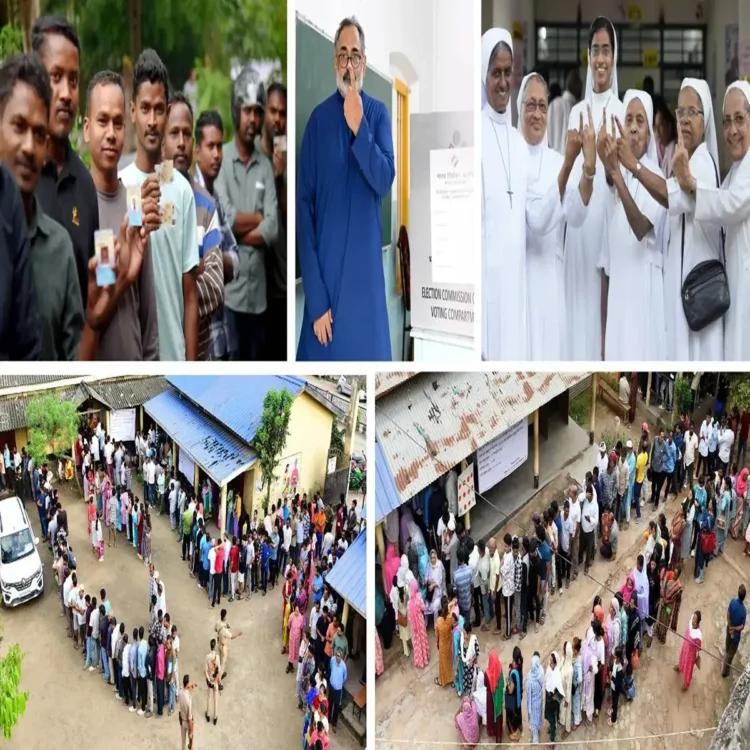
Early Voting Sees Strong Public Participation
Polling began at 7 am across Kerala, with voters arriving at booths in large numbers to exercise their democratic right. In Thiruvananthapuram’s Mudavanmugal area, state minister V Sivankutty was among the early voters. He cast his ballot at a local polling station, joining several others who had queued up since morning.
Prominent Malayalam actor Mohanlal was also seen waiting patiently in line before casting his vote, reflecting the widespread public engagement in the electoral process.
Key Contest in Nemom Draws Attention
The Nemom constituency has emerged as one of the most closely watched battlegrounds in this election. Sivankutty, representing the Left Democratic Front (LDF), is contesting against senior Bharatiya Janata Party leader Rajeev Chandrasekhar. The United Democratic Front (UDF) has fielded KS Sabarinadhan, adding a third strong contender to the race.
Nemom holds political significance due to its past electoral outcomes. In 2016, the BJP secured its first-ever Assembly victory in Kerala through O Rajagopal, defeating Sivankutty. However, the LDF leader reclaimed the seat in the 2021 elections, setting the stage for another intense contest this year.
Voting Across Multiple Regions
Alongside Kerala, voting is also taking place in Assam and the Union Territory of Puducherry. In this phase, elections are being conducted for 140 seats in Kerala, 126 seats in Assam, and 30 seats in Puducherry. The Election Commission has implemented extensive arrangements to ensure smooth and transparent polling across all regions.
Other states are scheduled for voting later in April, with Tamil Nadu going to polls on April 23, while West Bengal will conduct voting in multiple phases. The counting of votes for all these regions is set for May 4.
Large Electorate and Demographic Spread
Kerala has a sizable electorate, with over 2.6 crore registered voters participating in the election. Among them, women voters slightly outnumber men, highlighting strong female participation in the democratic process. Additionally, a small but significant number of voters have been registered under the third gender category.
Young voters also form an important segment, with more than four lakh individuals aged between 18 and 19 eligible to vote. At the same time, over two lakh voters aged 85 and above reflect the continued engagement of senior citizens in elections.
Extensive Arrangements for Smooth Polling
To manage the large-scale voting exercise, authorities have set up over 30,000 polling stations across the state. These include multiple logistical centers for distributing voting machines and materials, as well as designated counting centers.
Election officials have deployed approximately 1.46 lakh trained polling personnel to ensure the process runs efficiently. Security measures have also been strengthened, with more than 1,200 police teams active across the state to maintain order and prevent disruptions.
Authorities confirmed that action has been taken against individuals involved in election-related violations, with cases registered to uphold the integrity of the process.
Political Stakes Remain High
The election is primarily seen as a contest between the ruling LDF and the opposition UDF, while the BJP-led alliance continues efforts to expand its influence in the state. The LDF currently holds a strong position in the Assembly and is aiming to retain power for another term.
Kerala’s political landscape has traditionally alternated between the two major coalitions over the years. However, the LDF broke that pattern in the previous election by securing consecutive victories, making this election particularly significant for all parties involved.
As voting continues, attention now shifts to turnout figures and the eventual results, which will determine the state’s political direction for the coming years.