
Elections – Congress Faces Fresh Setbacks Ahead of Assam Assembly Polls
Elections – The Congress party is grappling with mounting challenges in Assam just weeks before the Assembly elections scheduled for April 9. The developments in the northeastern state reflect broader organisational and political struggles confronting the party across the country, raising concerns about its preparedness for upcoming electoral battles.
Leadership exits deepen uncertainty
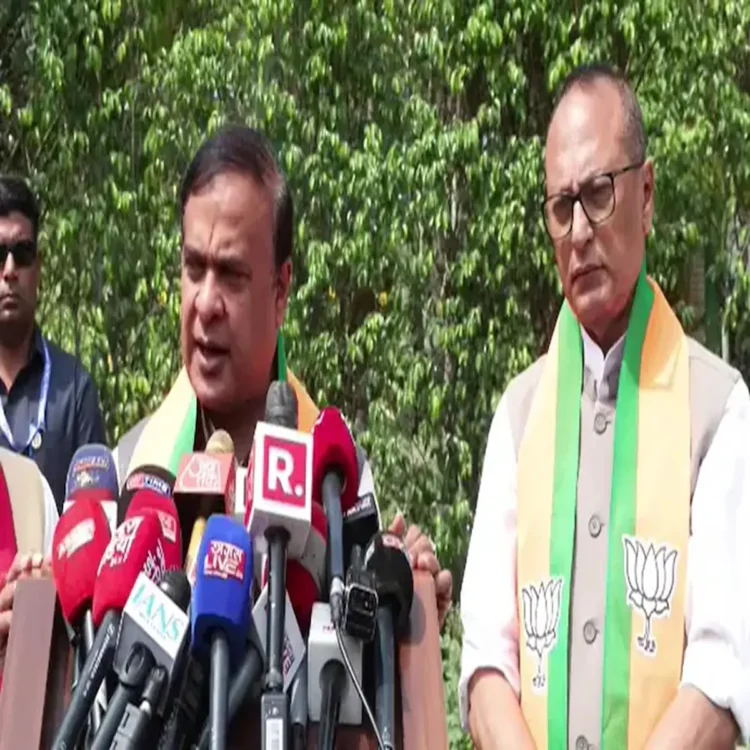
In Assam, the situation has worsened following the departure of two key leaders in quick succession. Former state unit chief Bhupen Kumar Borah stepped down from his position recently, and Nagaon Member of Parliament Pradyut Bordoloi has now left the party after nearly three decades to join the Bharatiya Janata Party (BJP).
Bordoloi’s resignation is widely linked to disagreements over candidate selection in the Laharighat constituency, underlining persistent internal divisions that continue to trouble the party’s state unit.
Party struggles to regain lost ground
The timing of these exits has dealt a significant blow to Congress’s efforts to rebuild its base in Assam. Once a dominant political force in the state, the party governed for 15 consecutive years between 2001 and 2016 under former chief minister Tarun Gogoi. However, its influence has steadily declined since the BJP rose to prominence nearly a decade ago.
Since losing power in 2016, Congress has not secured a major electoral victory in Assam, and its organisational strength has weakened considerably over time.
Signs of revival now under pressure
Despite past setbacks, there were indications of a potential comeback. Gaurav Gogoi’s victory from the Jorhat constituency in the 2024 Lok Sabha elections was seen as a morale booster, especially as it came against a strong BJP campaign. His appointment as the state Congress president last year further strengthened hopes of a renewed push in the Assembly elections.
With growing voter dissatisfaction reported in certain regions, particularly in Upper Assam—which accounts for 27 of the state’s 126 Assembly seats—the party was expected to present a competitive challenge.
However, recent developments have disrupted that momentum, leaving the party scrambling to maintain cohesion at a critical juncture.
Alliance limitations add to challenges
Efforts to build a united opposition front have also faced obstacles. Congress ultimately formed a five-party alliance but was unable to reach an agreement with Raijor Dal on seat-sharing. Meanwhile, the All India United Democratic Front (AIUDF) has opted to contest independently.
This fragmented opposition landscape is likely to benefit the BJP, making the electoral contest more difficult for Congress.
Nationwide pattern of internal strain
The situation in Assam is not an isolated case. Across several states, Congress is dealing with similar issues, including leadership exits, internal disagreements, and organisational weaknesses. These problems have surfaced at a time when the party is preparing for elections in multiple regions, including Puducherry.
Rajya Sabha polls expose discipline concerns
Recent Rajya Sabha elections have further highlighted cracks within the party. Instances of cross-voting and absenteeism among Congress legislators affected outcomes in closely contested states.
In Haryana, although the party managed a narrow victory, it faced embarrassment as several of its legislators voted against the party line. In Bihar, the absence of a significant number of Congress MLAs contributed to a clean sweep by candidates backed by the ruling National Democratic Alliance (NDA). Similarly, in Odisha, multiple legislators defied the party whip, leading to disciplinary action, including expulsions.
Coordination gaps remain unresolved
These incidents point to deeper issues related to coordination and internal discipline. Even measures such as relocating MLAs ahead of voting failed to ensure unity, suggesting underlying dissatisfaction among party members.
Disagreements have also emerged during candidate selection processes in various states. While senior leaders have attempted to streamline decision-making, consensus remains elusive in several regions.
Questions over stability persist
In states like Kerala, where Congress is hopeful of forming the next government, internal disputes have provided political opponents with an opportunity to question its stability and readiness to govern.
As the election season intensifies, the party faces the dual challenge of addressing internal concerns while presenting a united front to voters. With limited time remaining before key polls, its ability to resolve these issues could play a crucial role in shaping its electoral prospects.