
EducationPolicy – BJP Criticises Karnataka’s Shift on SSLC Language Marks
EducationPolicy – The political row over Karnataka’s recent decision regarding language evaluation in Class 10 examinations has intensified, with the Bharatiya Janata Party (BJP) strongly opposing the move and questioning its broader implications.
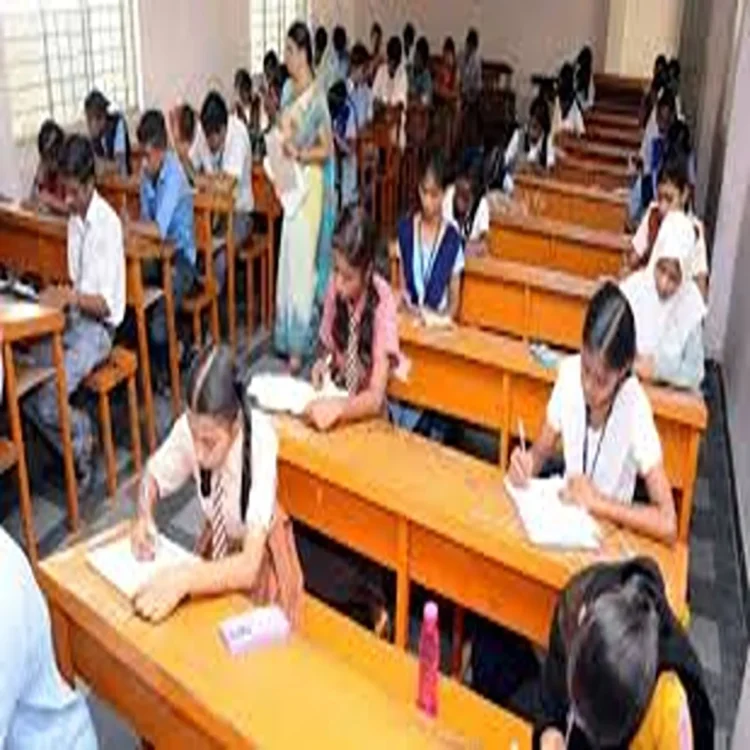
The controversy centres on the state government’s decision not to include marks for the third language, such as Hindi, in the Secondary School Leaving Certificate (SSLC) results for this academic year. BJP leaders have described the step as unnecessary and potentially harmful to students’ academic development.
BJP Raises Concerns Over Language Policy Shift
Speaking to reporters in Bengaluru, senior BJP leader and former deputy chief minister C.N. Ashwath Narayan criticised the Congress-led government, alleging that the decision signals an indirect shift towards a two-language system. He argued that such a move could undermine the long-standing three-language framework followed in Indian education.
Narayan pointed out that the three-language system has historical roots dating back to the pre-independence era and continued to be implemented during previous Congress administrations. He questioned why the current government chose to alter the approach without clear justification.
According to him, having a common language plays a vital role in strengthening national unity. He emphasised that learning Hindi or any additional Indian language should not be viewed as a threat, adding that students have the flexibility to choose regional or mother tongue languages as their third option.
Government Clarifies Its Position
Amid growing criticism, Karnataka Chief Minister Siddaramaiah responded to the issue, stating that the government has not taken any formal decision to fully adopt a two-language policy. He clarified that the administration does not oppose the learning of Hindi and that the current change should not be interpreted as a rejection of multilingual education.
The clarification aims to ease concerns that the state is moving away from established language education practices. However, the opposition remains unconvinced and continues to question the intent behind the decision.
Broader Political Criticism by BJP
Beyond the education issue, Narayan also used the opportunity to criticise the Congress party on several national and regional matters. Referring to the Mangaluru cooker blast case, he claimed that earlier political responses had been inconsistent and alleged that new developments in the investigation had exposed contradictions in the party’s stance.
He further accused the Congress of engaging in appeasement politics and relying on vote-bank strategies, asserting that such approaches have eroded public trust over time.
Questions Over Congress Promises and Governance
Narayan also commented on Congress’ recent political announcements in Assam, where the party introduced a set of guarantees ahead of elections. He expressed scepticism about these promises, stating that voters across the country have grown increasingly doubtful of such assurances.
Additionally, he backed Prime Minister Narendra Modi’s criticism of the opposition, particularly regarding its handling of sensitive international issues. Narayan argued that national unity is essential during crises and said political disagreements should not overshadow collective interests.
Concerns Over Law and Order in Karnataka
The BJP leader also raised concerns about law enforcement in Karnataka, especially in relation to rising drug-related cases. He accused the state government of adopting a lenient approach toward drug networks and called for stricter measures to tackle the issue.
He stressed the importance of joint efforts involving families, educational institutions, and authorities to address drug abuse effectively. According to him, a coordinated strategy is necessary to safeguard young people from such threats.
Demand for Action on Election Conduct
In a separate development, Narayan urged the Election Commission of India to take action against a leader from the Indian Union Muslim League over a controversial statement related to voter incentives. He called for disqualification proceedings, citing concerns over the integrity of the electoral process.
The unfolding debate highlights not only differences over education policy but also deeper political disagreements, as both sides continue to defend their positions on governance and public policy.