
Education – Limited Computer Access Challenges Student Social Media Control in India
Education – India’s school education system is facing a growing digital divide, with limited access to computers making it difficult to regulate how students use technology, Union Education Minister Dharmendra Pradhan said on Wednesday. He highlighted that only a small proportion of students in the country can use computer systems, a stark contrast to developed nations where digital access is far more widespread.
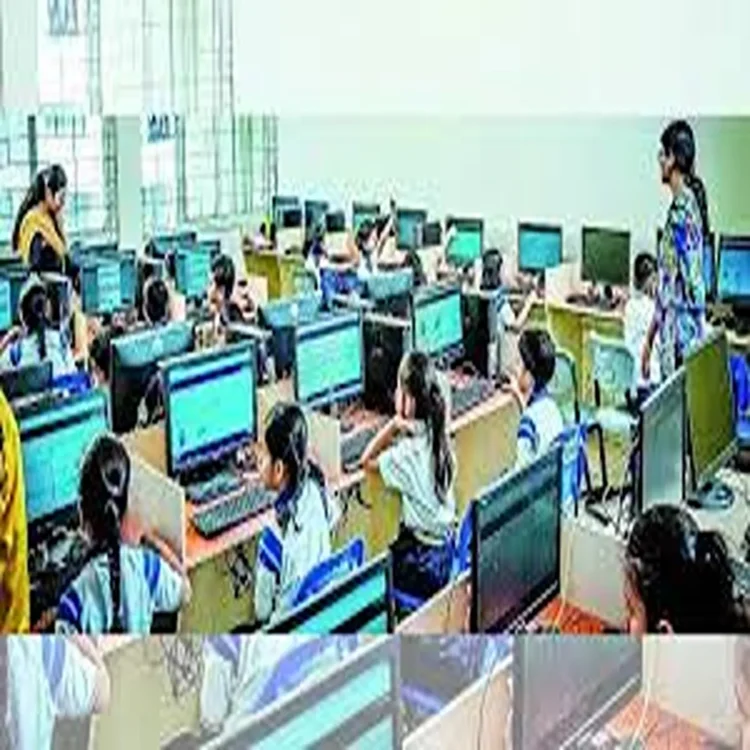
Digital Divide in Classrooms Raises Concerns
Speaking at Vigyan Bhawan during the launch of a new CBSE curriculum on Computational Thinking and Artificial Intelligence for Classes III to VIII, the minister pointed out that just 12% to 15% of students in India have access to computers. In comparison, nearly 80% of students in advanced economies benefit from such resources.
This disparity, he noted, complicates efforts to limit children’s exposure to social media. With smartphones becoming common, students often rely on them for both learning and entertainment, making it difficult to separate academic use from recreational browsing.
Smartphones Blur Line Between Learning and Leisure
Pradhan explained that while around 60% to 70% of school campuses now have internet connectivity, mobile phones remain the primary digital tool for many students. These devices serve multiple purposes, from attending online classes to accessing social media platforms.
This overlap creates a challenge for educators and policymakers trying to ensure that technology is used responsibly. Restricting phone usage entirely may not be practical, especially when devices are also essential for educational activities.
He added that some countries and even certain Indian states have already experimented with policies to limit social media usage among school-going children. However, implementing similar measures nationwide remains complex due to uneven access to digital infrastructure.
Shift Towards Critical Thinking in Education
Alongside addressing digital access issues, the minister emphasized the importance of reforming teaching methods. He stressed that the education system must move beyond rote memorisation and encourage analytical and critical thinking skills among students.
The newly introduced curriculum on Computational Thinking and Artificial Intelligence is seen as a step in that direction. It aims to equip students with problem-solving abilities and a better understanding of emerging technologies from an early age.
Need for Multilingual Curriculum Accessibility
Pradhan also urged the National Council of Educational Research and Training to ensure that the new curriculum is made available in multiple Indian languages. Currently released in English, the content needs to be translated to make it accessible to a wider student base.
He called for coordination between NCERT and State Councils of Educational Research and Training to speed up this process. Ensuring availability in mother tongues, he said, would help bridge learning gaps and make the curriculum more inclusive.
India Joins Global Effort in AI Education
According to Sanjay Kumar, Secretary of the Department of School Education and Literacy, India has now joined a group of countries that have integrated artificial intelligence into school education. Nations such as China, Singapore, Finland, Estonia, and the United States have already taken similar steps.
This move reflects a broader global trend where education systems are adapting to technological advancements and preparing students for a data-driven future.
Curriculum Expansion Planned in Phases
CBSE Chairperson Rahul Singh stated that the new curriculum has been carefully designed after multiple rounds of discussions by an academic committee. The focus is to simplify and clarify concepts related to artificial intelligence for young learners.
He also outlined plans to expand the curriculum to higher classes in the coming years. It is expected to be introduced for Classes IX and X next year, followed by Classes XI and XII at a later stage.
The initiative aims to prepare students for a rapidly evolving technological landscape while addressing existing challenges related to access and usage.