
Diplomacy – Modi Holds Call With Iranian President Over Rising West Asia Tensions
Diplomacy – Prime Minister Narendra Modi held a telephone conversation late Thursday with Iranian President Masoud Pezeshkian to review the worsening security situation in West Asia, as tensions across the region continue to intensify. The discussion focused on the humanitarian impact of the ongoing conflict, concerns over regional stability, and the safety of Indian citizens in affected areas.
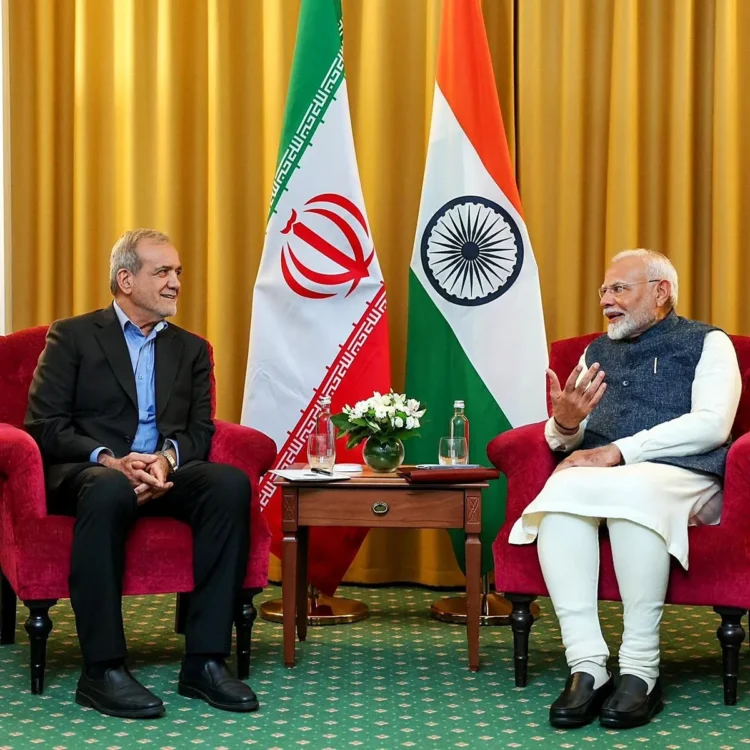
During the call, Modi conveyed India’s serious concern over the growing instability and the rising number of civilian casualties reported amid the conflict. He also highlighted the damage caused to essential civilian infrastructure, emphasizing the urgent need to prevent further escalation.
India Emphasizes Safety of Its Citizens and Energy Transit
According to the Prime Minister, protecting Indian nationals living or working in the region remains a key priority for the Indian government. He also underlined the importance of ensuring uninterrupted movement of goods and energy supplies, which are vital for global trade and India’s energy requirements.
In a message shared on the social media platform X, Modi said he had spoken with President Pezeshkian to exchange views on the serious developments unfolding in West Asia. He reiterated that India remains deeply concerned about the rising tensions and the human cost of the conflict.
The Prime Minister also reaffirmed India’s support for peaceful solutions and stressed the importance of dialogue and diplomatic engagement in resolving disputes.
Iranian President Shares His Perspective on Developments
An official statement from the Indian government said President Pezeshkian briefed Modi on the latest developments inside Iran and provided his assessment of the evolving regional situation. The Iranian leader reportedly outlined his country’s position regarding the recent escalation and the broader security dynamics affecting the region.
Both leaders agreed to remain in contact as the situation continues to develop, highlighting the importance of ongoing diplomatic communication during periods of uncertainty.
The conversation marked the first direct exchange between the leaders of India and Iran since the latest phase of the West Asia conflict began earlier this year.
Conflict Escalation Following Military Strikes
The current crisis escalated after coordinated military strikes carried out by the United States and Israel against Iranian targets on February 28. The attacks significantly heightened tensions across West Asia, triggering diplomatic concerns among several countries that maintain economic and strategic ties with the region.
The developments have also raised fears of a broader regional confrontation, prompting multiple nations to call for restraint and diplomatic engagement.
Impact on Global Energy Routes
The situation has had immediate consequences for international energy markets. Iran has closed the Strait of Hormuz, one of the world’s most important maritime energy corridors. A substantial portion of global crude oil and natural gas shipments pass through this narrow waterway, making it critical for global supply chains.
India, which imports a significant share of its energy resources from the region, is closely monitoring the developments. Any prolonged disruption in shipping through the strait could affect global energy prices and supply stability.
India Maintains Active Diplomatic Engagement
India has stepped up diplomatic outreach across West Asia as tensions continue to rise. External Affairs Minister S. Jaishankar has also spoken with Iran’s Foreign Minister Abbas Araghchi to discuss the evolving situation and address concerns related to Indian interests in the region.
Over the past ten days, Prime Minister Modi has held discussions with several leaders from West Asian countries, including Oman, Kuwait, Bahrain, Saudi Arabia, the United Arab Emirates, Jordan, Israel, and Qatar.
During these interactions, the Prime Minister expressed concern about the ongoing violence and emphasized the importance of respecting national sovereignty and territorial integrity. India has consistently advocated for restraint and diplomatic solutions as the region navigates one of its most tense periods in recent years.