
Detention – Government Revokes NSA Order Against Activist Sonam Wangchuk After Six Months
Detention – The Union Ministry of Home Affairs has withdrawn the detention order issued against climate activist Sonam Wangchuk under the National Security Act (NSA), bringing an end to his custody nearly six months after his arrest in Leh, Ladakh. The government announced on Saturday that the order had been revoked with immediate effect following a review of the circumstances surrounding the case.
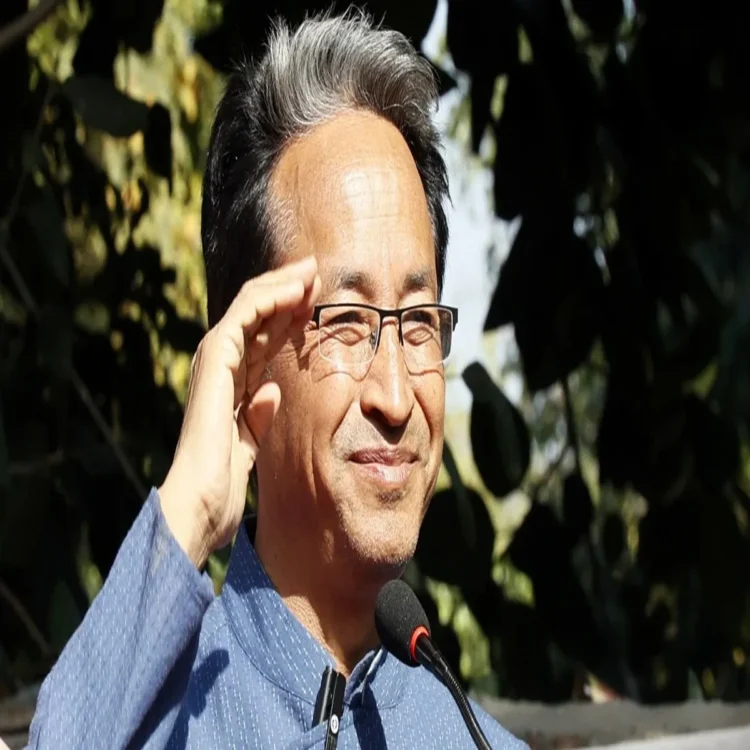
Government cites review and partial completion of detention period
According to an official statement from the ministry, the decision was taken after examining the situation and noting that Wangchuk had already completed almost half of the maximum detention period permitted under the law. Authorities said the step was aimed at maintaining stability in the region while encouraging dialogue with different community groups.
The statement emphasized that the government remains focused on ensuring peace and trust in Ladakh. Officials added that revoking the detention was intended to help create conditions for meaningful engagement with local stakeholders on issues affecting the region.
Background of the arrest under National Security Act
Sonam Wangchuk was taken into custody in September 2025 after authorities accused him of making statements that allegedly encouraged unrest during protests in Leh. Those demonstrations were linked to ongoing demands from regional groups seeking statehood for Ladakh and inclusion of the territory under the Sixth Schedule of the Constitution.
The protests turned violent during one of the gatherings, and police opened fire on demonstrators. The incident resulted in the deaths of four people, intensifying political tensions in the region and drawing national attention to the situation.
Under the National Security Act, both the central and state governments have the authority to detain individuals without trial to prevent actions considered harmful to national security or public order. The law allows detention for up to twelve months, although the order can be revoked earlier depending on circumstances.
Decision comes ahead of planned protest rallies
The announcement of Wangchuk’s release came shortly before large public rallies planned by two major Ladakh-based organisations — the Leh Apex Body (LAB) and the Kargil Democratic Alliance (KDA). These groups have been leading a joint movement advocating for constitutional safeguards, including statehood and protection under the Sixth Schedule.
Both organisations had scheduled major demonstrations for March 16. The rallies were intended to press the central government to accelerate talks on their demands and to release the findings of an inquiry commission investigating the violence that occurred during the September 24 protests in 2025.
Among the demands raised by the two organisations was the release of Wangchuk and other individuals detained in connection with the unrest.
Regional leaders respond to the development
Leaders associated with the Kargil Democratic Alliance described the government’s decision as a positive step. Sajjad Kargili, a senior member of the alliance, welcomed the revocation of the NSA order but said the broader campaign for Ladakh’s political and constitutional rights would continue.
In a public message, he urged authorities to also release two other detainees, Deldan Namgial and Smanla Dorjey. He further called for all legal cases filed against people arrested during the September protests to be withdrawn without conditions.
Centre stresses dialogue and stability in Ladakh
The Ministry of Home Affairs also reiterated that the central government has been holding consultations with community representatives and regional leaders to address concerns in Ladakh. Officials said efforts are underway to balance public aspirations with the need to maintain order and stability in the territory.
At the same time, the ministry expressed concern over repeated shutdowns and protest activities in the region. According to the statement, such disruptions have affected several sections of society, including students preparing for examinations, job seekers, local businesses, tourism operators and visitors.
Authorities said prolonged unrest could also impact the broader economy of Ladakh, which relies heavily on tourism and seasonal commercial activity.
Legal developments surrounding the detention
The decision to revoke the detention order came days after the Supreme Court postponed hearing a habeas corpus petition filed by Wangchuk’s wife, Gitanjali Angmo. The petition had challenged the legality of his detention under the National Security Act.
During earlier proceedings, the central government had opposed requests for Wangchuk’s release on medical grounds. Government lawyers argued that the reasons cited in the detention order continued to exist.
The court had also examined a transcript of Wangchuk’s speech submitted by the authorities as evidence in support of the detention. Questions were raised during the hearing regarding the interpretation of the remarks.
With the revocation now announced, Wangchuk’s detention under the NSA has formally come to an end while discussions over Ladakh’s political future and regional demands continue.