
Delhi-NCR : Air Quality Remains Critically High Despite Partial Policy Relaxation
Delhi-NCR : Air pollution continued to pose a serious challenge across the Delhi-NCR region on Wednesday, with air quality remaining firmly in the very poor category. According to official monitoring data, the overall Air Quality Index stood at 380 at 8:00 a.m., reflecting sustained exposure to harmful airborne pollutants. This situation has prolonged health concerns for residents and highlighted the ongoing struggle to manage environmental stress in one of India’s most densely populated urban zones. Data released by the Central Pollution Control Board confirms that pollution levels have remained consistently high across multiple monitoring stations, offering little relief even after recent regulatory adjustments.
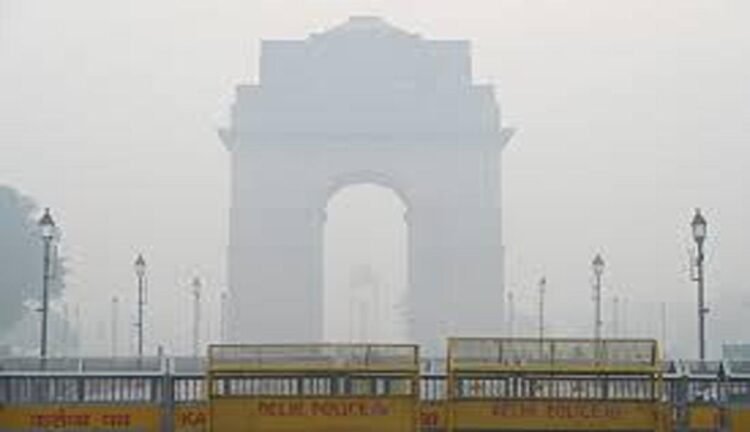
Regional Air Quality Overview
Most monitoring locations across Delhi-NCR reported readings in the very poor range, indicating that the concentration of particulate matter continues to exceed safe limits. Northern and northwestern zones of the capital were among the worst affected, demonstrating how pollution is evenly spread rather than localized. This uniformity suggests a combination of factors such as vehicular emissions, industrial activity, construction dust, and unfavorable meteorological conditions contributing simultaneously to deteriorating air quality.
Pollution Hotspots in North and Northwest Delhi
Several residential and industrial neighborhoods recorded alarmingly high AQI values. Jahangirpuri emerged as one of the most polluted areas with an AQI close to the upper threshold of the very poor category. Rohini and Anand Vihar followed closely, reflecting similar exposure levels. Wazirpur and Bawana also recorded readings well above acceptable standards, underscoring the impact of industrial clusters and heavy traffic corridors in these zones. These figures indicate that daily outdoor activities in such areas carry heightened health risks, especially for children, elderly individuals, and those with respiratory conditions.
Conditions in West, Central, and East Delhi
Air quality concerns were not limited to the northern belt alone. Western areas such as Mundka, Punjabi Bagh, and Dwarka Sector-8 continued to experience very poor air quality, while central and eastern locations including ITO and Vivek Vihar reported only marginally lower but still hazardous readings. Chandni Chowk and Patparganj, both densely populated and commercially active zones, also remained under severe pollution stress. The widespread nature of these readings reflects how urban congestion and limited dispersion of pollutants are affecting the entire metropolitan area.
Understanding AQI Categories and Health Impact
The AQI scale defined by national standards classifies air quality from good to severe. Values between 301 and 400 fall under the very poor category, where prolonged exposure can lead to respiratory discomfort, reduced lung function, and aggravated asthma. With the regional average hovering near the upper end of this range, health experts continue to advise limiting outdoor exposure and using protective measures. The persistence of such levels suggests that short-term improvements are insufficient without long-term emission control strategies.
Policy Measures and GRAP Developments
Earlier this week, the Commission for Air Quality Management decided to revoke Stage IV of the Graded Response Action Plan following a slight improvement in air quality indicators. Despite this rollback, Stages I, II, and III of the plan remain active across the region. These stages continue to regulate construction activity, industrial operations, and vehicular movement to prevent further deterioration. The partial easing of restrictions reflects a cautious approach, balancing economic activity with environmental protection.
Transport and Industrial Restrictions Update
One notable change following the policy review was the complete lifting of the ban on BS-IV diesel trucks and older heavy goods vehicles entering the capital. This decision has provided logistical relief to transport operators and supply chains. However, environmental experts warn that increased vehicular movement could offset any gains achieved through earlier restrictions if not carefully monitored. Sustainable transport planning and stricter emission compliance remain critical to preventing further air quality decline.
Weather Trends and Their Limited Influence
Alongside pollution concerns, seasonal weather patterns in the capital are gradually shifting. Winter temperatures have begun to moderate, with daytime highs approaching the mid-twenties and nighttime lows stabilizing around single digits. While this easing of cold conditions brings some comfort, it has not significantly improved air dispersion. Calm winds and temperature inversions continue to trap pollutants near ground level, limiting the positive impact of changing weather on air quality.
Conclusion and Ongoing Concerns
The persistent very poor air quality across Delhi-NCR highlights the complexity of managing urban pollution. Temporary policy relaxations and minor meteorological changes have proven insufficient in delivering meaningful relief. Long-term solutions focused on cleaner energy, efficient public transport, industrial emission control, and urban planning are essential to safeguard public health. Until such measures yield tangible results, residents remain exposed to elevated pollution levels that demand continued vigilance and responsible policy action.