
ClimateChange – Rising Heat Threatens India’s Farmland and Food Security, Scientists Say
ClimateChange – India stands to lose a substantial portion of its productive farmland and crop output as rising temperatures linked to climate change reshape growing conditions, agricultural scientists cautioned at an international conference, warning that the issue is not receiving the global urgency it demands.
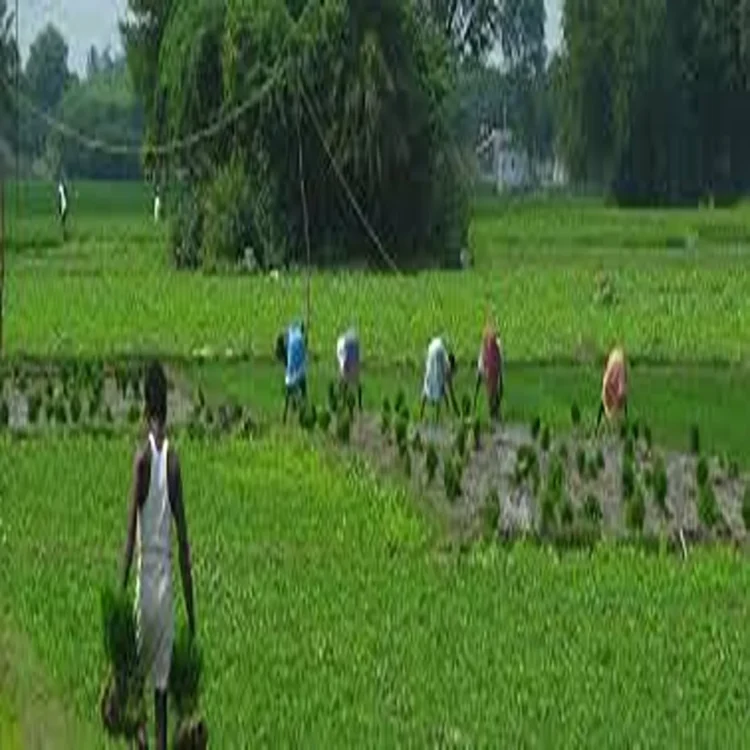
Researchers pointed to mounting evidence showing that climate stress is already undermining yields, soil health, and the nutritional value of staple crops, particularly in dryland and semi-arid regions. They noted that these risks are intensifying even as geopolitical tensions and conflicts draw attention away from the escalating food security challenge.
Long-Term Yield Declines Loom for Key Crops
Studies conducted by the Indian Agricultural Research Institute indicate that if current emission and farming patterns continue, rice productivity could fall by as much as 15 percent over the next 25 years. Wheat yields may decline even more sharply, by up to 20 percent, under similar conditions. Such reductions would place heavy pressure on farm incomes and rural livelihoods.
Experts at the conference explained that these losses are not hypothetical projections but trends already visible in many parts of the country. Higher average temperatures, erratic rainfall, and soil degradation are steadily eroding the reliability of traditional farming systems.
Shrinking Farmland and Falling Nutritional Quality
Dr Himanshu Pathak, Director General of the International Crops Research Institute for the Semi-Arid Tropics, said assessments show climate change could reduce yields of major food crops by nearly one-fifth overall. He added that 15 to 20 percent of conventional crop-growing areas may become unsuitable due to salinity, land degradation, and water stress.
According to Pathak, these shifts will not only reduce output but also affect food quality. Micronutrients such as zinc and iron are expected to decline significantly in staple grains, worsening hidden hunger among vulnerable populations. Increased pest and disease pressure, driven by warmer conditions, further threatens farm productivity and household incomes.
Extreme Weather Already Altering Rural Landscapes
Speakers stressed that climate change is no longer a distant concern but a lived reality for farmers. Pathak cited examples from the Bundelkhand region, where temperatures reached 49 degrees Celsius last year. In another instance, areas that typically receive modest monthly rainfall experienced more than 300 millimetres in just one hour.
Such extreme events are becoming more frequent, leading to floods that damage villages and fields, followed by prolonged dry spells that cause crops to wither. The alternating pattern of excess rain and drought has made farming increasingly unpredictable, especially in rain-fed regions.
Food Security Overshadowed by Global Conflicts
Pathak also warned that the global fight against hunger has lost priority in recent years. International attention, he said, has shifted toward military conflicts, territorial disputes, and energy concerns, leaving food security under-addressed.
As a result, agricultural research efforts are now largely focused on developing climate-resilient crop varieties rather than broader systemic reforms. He highlighted the injustice of the situation, noting that poorer communities contribute little to greenhouse gas emissions but suffer the most severe consequences.
Vulnerable Nations Face Disproportionate Risks
Drawing a global comparison, Pathak referred to low-lying island nations that face existential threats from climate change despite having minimal emissions. Such countries, he said, lack the resources to protect themselves, while those most responsible for emissions continue largely unchanged.
Rising Disease Pressure on Crops
Dr Raman Meenakshi Sundaram, Director of the Indian Institute of Rice Research, said climate change has dramatically altered the disease landscape for crops. Decades ago, rice farmers dealt with only a few major diseases. Today, nearly two dozen significant diseases affect rice across different agroclimatic zones, increasing costs and risks for growers.
Call for Resilient Food Systems
Prof. Shravan Singh of Banaras Hindu University said the conference provided a platform for scientists to exchange ideas and develop strategies for building a more resilient food system. He emphasized the need for innovation, policy support, and coordinated action to help agriculture withstand the growing impacts of climate change.