
Budget – Delhi Opposition Questions Transparency in ₹1 Lakh Crore Plan
Budget – The Aam Aadmi Party (AAP) on Tuesday raised serious concerns over the Delhi government’s latest Budget exceeding ₹1 lakh crore, questioning both the clarity of current allocations and the absence of detailed accounting for last year’s expenditure. The party alleged that despite announcing similar figures previously, the government has not adequately explained how public funds were utilised.
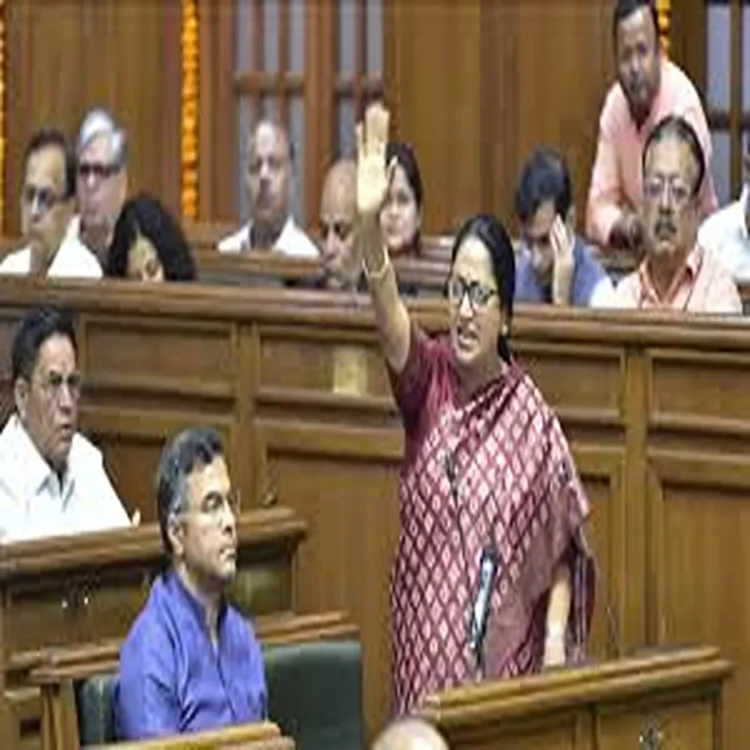
Questions Over Budget Transparency
Addressing the media, AAP’s Delhi unit chief Saurabh Bharadwaj described the Budget as lacking substance and accountability. He argued that while the government continues to present large financial plans, there is little information available on actual spending patterns. According to him, the absence of transparency raises doubts about the effectiveness and credibility of the financial roadmap presented in the Assembly.
Bharadwaj pointed out that even after announcing a comparable budget last year, the administration has yet to disclose detailed expenditure records. He stressed that such gaps make it difficult for both citizens and opposition leaders to assess whether the funds were used appropriately.
Allegations of Welfare Cuts
The AAP leader further claimed that several cost-cutting measures have been implemented by the government, including job reductions, suspension of pension schemes, and cancellation of ration cards. He questioned how, despite these steps aimed at reducing financial burden, there remains no clear explanation of where the allocated funds have gone.
He suggested that these actions should have led to savings, making it even more important for the government to provide a transparent account of its financial management. The lack of such clarity, he said, continues to fuel public concern.
Assembly Proceedings Draw Criticism
Bharadwaj also criticised the manner in which the Budget was presented in the Assembly. He alleged that it was introduced without meaningful debate and in the absence of opposition members. Highlighting a recent tragic incident involving the deaths of nine family members in a fire, he said the Assembly failed to acknowledge the victims before proceeding with the Budget presentation.
He described this as insensitive and indicative of misplaced priorities, adding that the government should have shown greater responsibility in addressing both governance and humanitarian concerns.
Congress Joins Criticism
Echoing similar concerns, Delhi Congress president Devender Yadav criticised the Budget, calling it misleading and inconsistent. He remarked that the financial plan fails to address the city’s developmental needs effectively and does not provide a clear direction for future growth.
Yadav alleged that the government has focused heavily on publicity despite financial limitations. He claimed that over ₹100 crore was spent on promotional activities in the previous year and that the allocation for such expenditure is expected to rise further this year.
Concerns Over Revenue Estimates
The Congress leader also highlighted a decline in revenue projections from centrally sponsored schemes. According to him, the estimated revenue for the current year stands at ₹3,931 crore, which is lower than last year’s figure of ₹4,127.82 crore. He suggested that this drop raises additional concerns about the government’s financial planning and resource management.
Demand for Clear Accountability
Both AAP and Congress leaders emphasised the need for greater transparency and accountability in the government’s financial decisions. They argued that without clear disclosures on spending and revenue, it becomes difficult to evaluate the effectiveness of policies or ensure responsible governance.
The opposition maintained that the primary concern for Delhi residents remains unanswered: how public funds, particularly the substantial ₹1 lakh crore allocation, are being utilised. They called on the government to provide detailed explanations and make financial data more accessible to the public.