
BMC Elections: Mumbai Civic Politics Witnesses a Major Shift as Mahayuti Alliance Gains Upper Hand
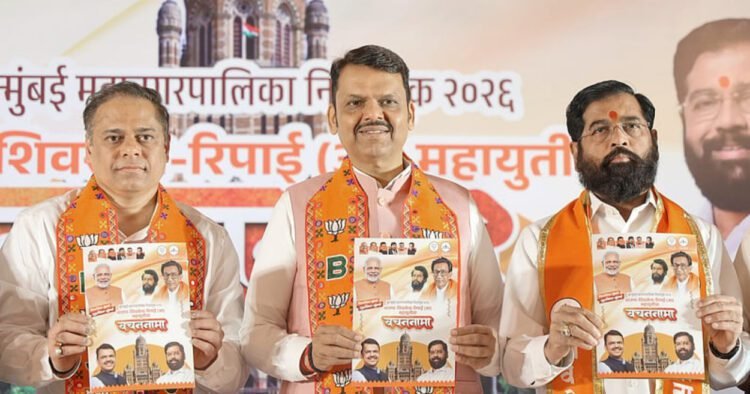
BMC Elections: The Brihanmumbai Municipal Corporation elections are witnessing a significant political transformation as the Mahayuti alliance, led by the Bharatiya Janata Party and the Eknath Shinde faction of Shiv Sena, moves decisively ahead according to early counting trends. With leads in more than 110 wards, the alliance is nearing the majority mark and appears set to challenge the long-standing dominance of the Uddhav Thackeray-led Shiv Sena in India’s richest municipal body. The developments signal a possible end to nearly three decades of uninterrupted control over Mumbai’s civic administration by one political formation.
Background of the Brihanmumbai Municipal Corporation Elections
The Brihanmumbai Municipal Corporation, commonly known as BMC, is the most influential municipal body in the country, governing civic affairs of Mumbai. It consists of 227 wards, and the halfway mark required to form control stands at 114 seats. Elections for the BMC were conducted alongside polls for 28 other local bodies across Maharashtra, making it one of the largest civic electoral exercises in recent years.
Voter Participation and Electoral Scale
Mumbai recorded a voter turnout of 52.94 percent, making it the second-highest participation rate since 1992. A total electorate of more than 12 million voters participated in choosing representatives for 227 wards. Nearly 1,700 candidates contested these seats, reflecting the highly competitive nature of the election. The scale and turnout underline the importance of municipal governance in shaping urban infrastructure, public services, and local development policies.
Current Trends and Party-Wise Performance
As counting progresses, early trends show the Mahayuti alliance taking a commanding lead. Nine candidates have already been officially declared winners. Of these, Shiv Sena has secured four wards, the Bharatiya Janata Party has won three, while the Indian National Congress and All India Majlis-e-Ittehadul Muslimeen have won one seat each. If the current trajectory continues, the alliance is likely to cross the majority threshold, reshaping the power structure of Mumbai’s civic administration.
Comparison with the 2017 BMC Elections
The 2017 BMC elections presented a very different political picture. At that time, the undivided Shiv Sena emerged as the single largest party with 84 seats, closely followed by the Bharatiya Janata Party with 82 seats. Congress secured 31 seats, while the Nationalist Congress Party won nine. Other parties such as Maharashtra Navnirman Sena, Samajwadi Party, and smaller regional outfits also managed to gain representation. The contrast between 2017 and the current trends highlights the impact of political realignments and leadership changes in Maharashtra over the past few years.
Role of Political Realignments in Maharashtra
One of the key factors behind the current shift is the split within Shiv Sena and the formation of new alliances. The Mahayuti coalition, combining BJP’s national organizational strength with Eknath Shinde’s regional influence, has managed to consolidate a broad voter base. This realignment has altered traditional voting patterns, especially in urban constituencies where development, governance efficiency, and stability have emerged as dominant concerns.
Statements from National Leadership
Union Minister Ramdas Athawale expressed strong confidence in the Mahayuti alliance forming the next civic leadership in Mumbai. Speaking to ANI, he stated that the mayoral position is likely to go to the alliance, citing the visible trend of seats moving in its favor. He also remarked that Uddhav Thackeray’s long tenure in power was closely linked to earlier alliances with the BJP, and emphasized that the BJP’s current national standing has played a crucial role in influencing voter sentiment.
Implications for Mumbai’s Governance
If the Mahayuti alliance secures control of the BMC, it could lead to significant changes in civic policy direction. Infrastructure development, urban transport, housing projects, and municipal financial management are expected to see renewed focus. Given Mumbai’s economic importance, decisions taken by the BMC often set benchmarks for urban governance across India.