
Aviation – Noida International Airport Phase One Set for Launch
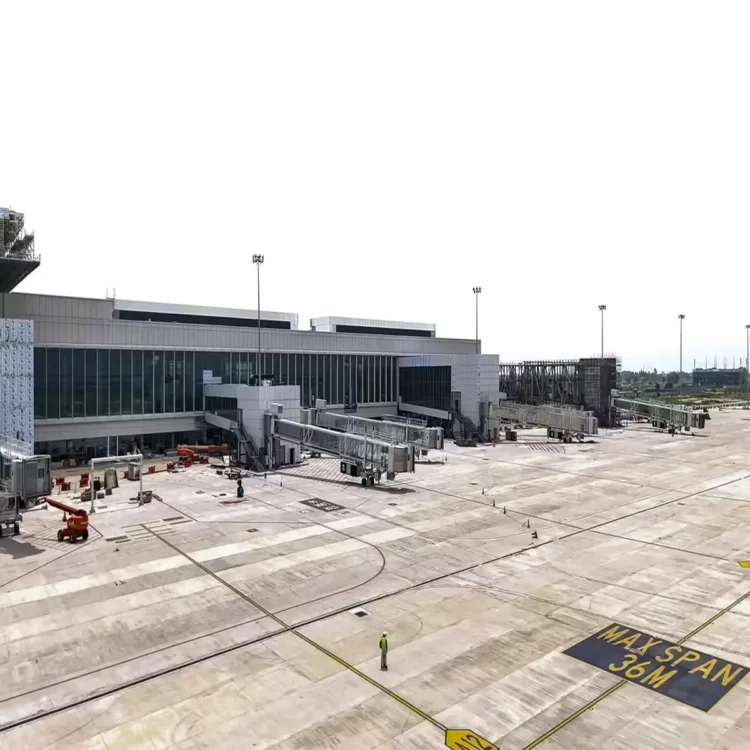
Aviation – Prime Minister Narendra Modi is scheduled to inaugurate the first phase of the Noida International Airport in Jewar, located in Uttar Pradesh’s Gautam Buddha Nagar district, on Saturday. The project, developed under a public-private partnership model, has been completed with an investment of approximately Rs 11,200 crore.
A Major Step in India’s Aviation Expansion
The opening of this airport marks a significant advancement in India’s aviation sector. Officials say the facility is expected to play a key role in strengthening the country’s position as an emerging global aviation hub. It is being viewed as a strategic development that will improve both domestic and international air connectivity, particularly in the National Capital Region (NCR).
Supporting Delhi NCR’s Growing Air Traffic Needs
Noida International Airport has been planned as a second international gateway for the Delhi NCR region. It will operate alongside the existing Indira Gandhi International Airport, helping to reduce congestion and distribute passenger traffic more efficiently. Together, the two airports are expected to enhance the region’s capacity to handle increasing air travel demand while improving overall operational efficiency.
Capacity and Infrastructure Highlights
In its initial phase, the airport will be capable of handling up to 12 million passengers annually. Over time, this capacity is expected to expand significantly, reaching up to 70 million passengers per year once the full development is completed.
The airport features a 3,900-meter runway designed to accommodate large, wide-body aircraft. It is also equipped with modern navigation technologies, including an Instrument Landing System and advanced lighting systems. These features will enable safe and efficient operations in all weather conditions and support round-the-clock flight services.
Strong Focus on Cargo and Logistics
Apart from passenger services, the airport has been designed to support a robust cargo network. It includes a multi-modal cargo hub with an integrated cargo terminal and dedicated logistics zones. Initially, the cargo facility is expected to handle more than 2.5 lakh metric tonnes annually, with future expansion plans targeting up to 18 lakh metric tonnes.
Additionally, a 40-acre Maintenance, Repair, and Overhaul (MRO) facility has been incorporated into the project. This is expected to strengthen India’s aviation maintenance capabilities and reduce dependency on overseas services.
Sustainable Design and Cultural Inspiration
The airport has been planned as a future-ready and environmentally responsible infrastructure project. Authorities aim to operate it as a net-zero emissions facility by integrating energy-efficient technologies and sustainable practices.
Its architectural design also reflects elements of Indian heritage. Features inspired by traditional ghats and havelis have been incorporated, offering a blend of cultural aesthetics with modern infrastructure.
Boost to Regional Development
The launch of Noida International Airport is expected to bring significant economic benefits to the surrounding region. Improved connectivity is likely to attract investment, create employment opportunities, and support the growth of industries such as logistics, tourism, and trade.
Officials believe the project will not only transform air travel in the NCR but also contribute to India’s broader infrastructure development goals.