
Aravalli Dispute: Supreme Court Reconsiders the Definition of the Aravalli Range Amid Rising Environmental Concerns
Aravalli Dispute: The debate over the definition of the Aravalli Range has intensified in recent weeks, drawing attention from environmentalists, policy experts, and political groups across India. Amid mounting protests, criticism, and public concern, the Supreme Court of India has decided to take suo motu cognizance of the issue and rehear the matter. The case will be examined by a three-judge bench headed by the Chief Justice of India, with the hearing scheduled to take place soon. This move signals the judiciary’s recognition of the seriousness of the environmental and legal questions involved.
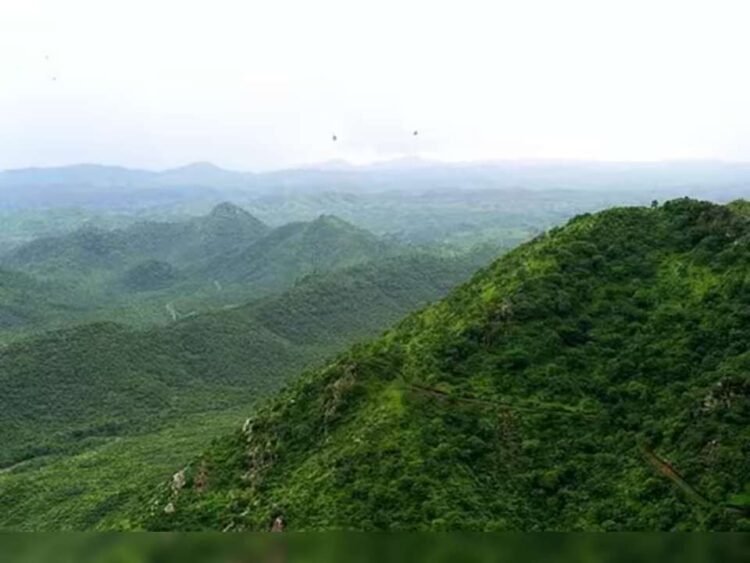
Background of the Aravalli Definition Dispute
The core of the controversy lies in the Union Government’s newly proposed definition of the Aravalli Range. According to this definition, only landforms that rise 100 metres or more above the surrounding ground level qualify as Aravalli hills. Additionally, two or more such hills located within a distance of 500 metres are collectively termed the Aravalli Range. While the government has described this approach as uniform and scientific, environmental groups argue that it oversimplifies a complex and ancient mountain system.
The Aravalli Range is one of the oldest geological formations in the world and plays a crucial role in maintaining ecological balance across large parts of northern and western India. Critics fear that redefining it solely on the basis of altitude could exclude a vast majority of the region from legal protection.
Supreme Court’s Earlier Order on Mining
In an earlier order issued on November 20, the Supreme Court accepted the government-backed definition and imposed a ban on the granting of new mining leases within the identified Aravalli areas in Delhi, Haryana, Rajasthan, and Gujarat. This ban was intended as an interim measure and will remain in force until an expert committee submits its detailed report.
Although the mining ban was welcomed by some as a protective step, environmentalists argue that the relief is limited. They believe that if the definition itself is flawed, the ban may not prevent large-scale environmental damage in areas that fall outside the newly defined boundaries.
Concerns Raised by Environmental Groups
Environmental activists have strongly objected to the new definition, calling it inadequate and potentially dangerous. According to them, an altitude-based criterion ignores the Aravallis’ unique geomorphology, which includes low-lying hills, ridges, and forested areas that are ecologically interconnected. They warn that excluding these features from the protected category could open the door to extensive mining and construction activities.
Activists also stress that the Aravalli ecosystem is deeply linked to groundwater recharge, river systems, biodiversity, and regional climate stability. Any weakening of protections could therefore threaten water security, food systems, and public health for millions of people living in and around the region.
Questions Over Data and Transparency
Another major concern is the lack of publicly available data supporting the government’s claim that the new definition will affect only a small percentage of the total Aravalli area. Environmental groups argue that without transparent scientific studies and detailed mapping, such assertions cannot be independently verified.
There is also criticism regarding the absence of public consultation. Experts believe that redefining an ecologically sensitive region should involve local communities, independent scientists, and environmental institutions to ensure balanced decision-making.
Role of the Central Empowered Committee
Adding to the debate is the issue of the Central Empowered Committee’s earlier recommendation. In March 2024, the committee had reportedly suggested conducting a comprehensive environmental impact assessment of the entire Aravalli region. Critics point out that this recommendation has not yet been implemented, raising questions about why a thorough assessment was overlooked before accepting a new definition.
Environmentalists argue that such an assessment is essential to understand the cumulative impact of legal and illegal mining, deforestation, groundwater depletion, and pollution already reported in several districts across the Aravalli belt.
Demands and Way Forward
Environmental organisations are now demanding a halt to all mining activities in the region until independent scientific studies and meaningful public consultations are conducted. They also seek clarity on how much land will remain protected under the new framework compared to earlier forest and environmental norms.
As the Supreme Court prepares to rehear the matter, the outcome is expected to have far-reaching implications. Beyond legal definitions, the case represents a critical moment for balancing economic interests with long-term environmental sustainability and public welfare.