
Aquaculture – Uttarakhand Reconsiders Trout Export Plan Amid Rising West Asia Tensions
Aquaculture – Uttarakhand’s plan to begin exporting premium trout fish to international markets has encountered an unexpected setback even before shipments could begin. Escalating tensions in West Asia, following military strikes involving the United States, Israel, and Iran, have disrupted the state’s early export strategy, forcing officials to rethink their approach to overseas markets.
The initiative was originally designed to send nearly 20 tonnes of trout fish every month to Dubai and other destinations in the region. However, growing geopolitical uncertainty and concerns over trade stability have prompted authorities to reassess logistics and potential export routes.
Export Strategy Faces Early Challenge
The export programme had been announced by the Uttarakhand government as part of a broader effort to strengthen rural livelihoods and promote aquaculture in high-altitude areas. Officials had expected the first international shipments to begin within six months.
The project was particularly focused on mountain regions such as Dharchula, Munsyari, Didihat, Kanalichhina, and Uttarkashi, where cold water conditions are suitable for trout farming. These areas were identified as the main production centres under the plan.
Local fish farmers were expected to benefit from the initiative through higher market prices and access to international buyers. The government believed the move could significantly improve income opportunities in remote Himalayan communities while expanding the state’s presence in global seafood markets.
Rising West Asia Conflict Alters Trade Plans
Recent military developments in West Asia have introduced uncertainty into shipping routes and trade conditions in the region. The conflict involving the United States, Israel, and Iran has raised concerns over the stability of logistics networks that were expected to support the export programme.
Officials say the plan to use Dubai as the primary export hub is now under review. According to BVRC Purushottam, Secretary of the Fisheries Department, the changing geopolitical situation has made it necessary to explore alternative markets.
He explained that Dubai had initially been chosen due to its convenient trade links and shorter transportation routes from India. However, the evolving situation has encouraged authorities to examine European destinations as potential buyers for Uttarakhand’s trout exports.
Growing Aquaculture Sector in Uttarakhand
Despite the export delay, officials remain confident about the long-term prospects of the state’s trout farming industry. Aquaculture, particularly trout cultivation, has been expanding steadily across the Himalayan state with strong government support.
Rainbow trout farming has emerged as one of the fastest-growing activities in the region’s fisheries sector. The species thrives in the cold, clean water found in the mountainous districts of Uttarkashi, Chamoli, and Pithoragarh, making these locations ideal for large-scale production.
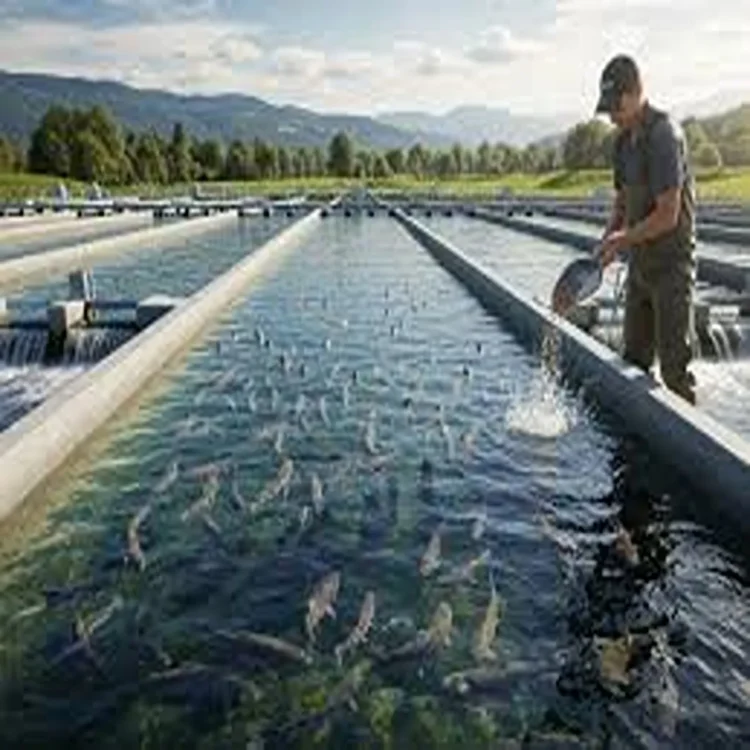
Government data indicates that Uttarakhand currently produces more than 710 metric tonnes of trout every year. This output comes from approximately 1,625 raceways established across different districts.
The state government has invested in training programmes, hatcheries, and infrastructure to encourage farmers to adopt trout farming. Officials believe the sector has the potential to become an important source of income in areas where traditional agriculture faces geographical limitations.
European Markets Under Consideration
With West Asia presenting logistical uncertainties, authorities are now examining the possibility of targeting European markets. Officials say the quality of trout raised in the cold Himalayan waters could appeal to international buyers seeking premium seafood products.
The state administration is studying export requirements, transportation logistics, and certification processes needed to access European markets. Industry experts believe diversification of export destinations could strengthen the resilience of Uttarakhand’s fisheries sector.
While the initial export timeline may change due to the current situation, officials say preparations for international trade will continue. The government remains optimistic that Uttarakhand’s trout farming industry will eventually establish a stable presence in global markets.