
AQI: As the enters the “severe” zone, Delhi chokes
AQI: The Air Quality Index (AQI) for Delhi was 408 on Wednesday, significantly worsening the city’s air quality and pushing it into the “severe” category. Visibility in the nation’s capital was severely hampered by thick fog and high pollution.
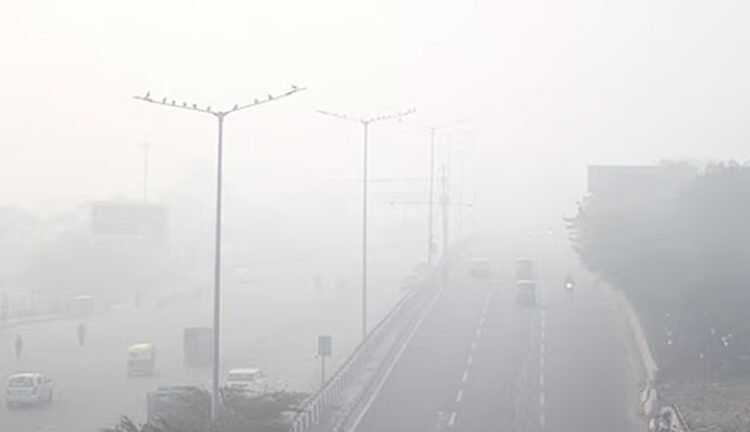
“Very poor” air quality was reported by a number of monitoring sites in central and south Delhi. Rashtrapati Bhawan and ITO both scored an AQI of 357, while Mandi House and India Gate recorded 370 and Mathura Road and Sarojini Nagar recorded 340.
The air quality reached the “severe” zone in a number of other regions of the city and surrounding areas, where conditions were significantly worse.
The AQI was 418 in Noida, 408 in Karol Bagh, 406 in Rajouri Garden, 472 in Mundka, 410 in Patel Nagar, 405 in Chanakyapuri, 402 in Vasant Kunj, 430 in Saket, and 472 in Vikaspuri.
IGI Airport reported a frightening 512 AQI, while Lajpat Nagar reached the high end of the scale with 500. Another reading listed Patel Nagar at 406.
Concerning predictions from air quality analysts, who warned that pollution levels in the national capital area are anticipated to drastically deteriorate as the year comes to an end, coincided with the foggy circumstances.
Air quality is classified as acceptable (0–50), tolerable (51–100), moderate (101–200), poor (201–300), extremely bad (301–400), and severe (401–500) according to the Air Quality Index.
The India Meteorological Department (IMD) has warned commuters and travelers to use caution while driving and has predicted that there will be heavy fog conditions through Wednesday.
Airline and airport authorities issued warnings due to the disruption of air traffic caused by low visibility.
At Delhi and a number of other airports in northern India, IndiGo alerted travelers about potential delays and cancellations. The airline said it was carefully monitoring the weather and modifying operations to minimize disturbance.
A travel alert and the preemptive cancellation of a few early flights that were anticipated to be impacted by visibility problems caused by fog were also issued by Air India.
An vigorous Western Disturbance is still influencing the weather across north India.
In areas of Punjab and Chandigarh, where heavy fog and light rain are predicted to persist till January 1, the Meteorological Department has issued a yellow advisory.
Travel difficulties and public health concerns were exacerbated by reports of almost zero visibility in a number of sites around the region due to cold, wet, and dangerous weather.