
Aerospace – HAL Clarifies Tejas Incident, Production Progress Detailed
Aerospace – Responding to speculation about a possible accident involving the Light Combat Aircraft Tejas, Hindustan Aeronautics Limited has clarified that no crash occurred. The company stated that the reported event was a minor technical snag detected while the aircraft was on the ground, and there was no in-flight emergency.
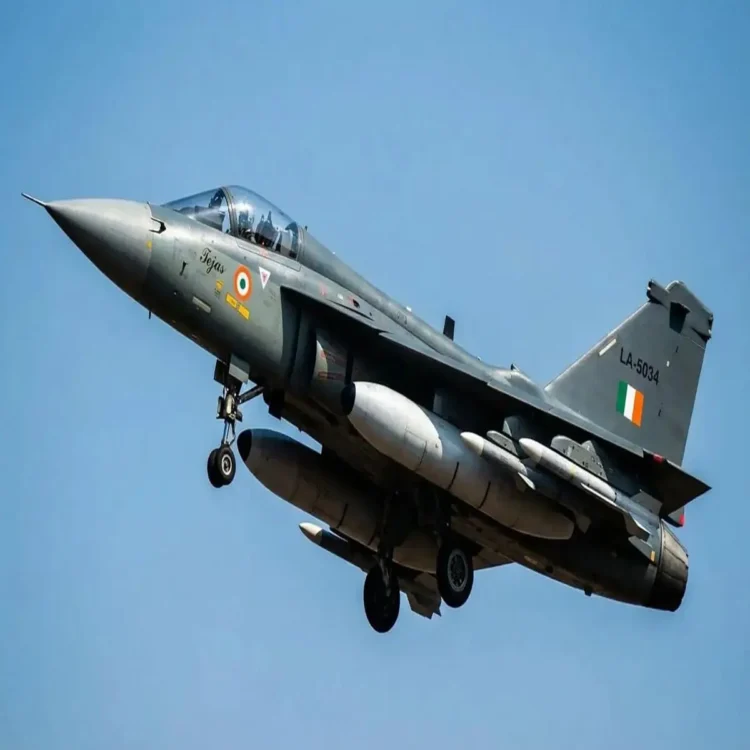
HAL Issues Clarification on Tejas Report
In a formal communication to the stock exchange, Hindustan Aeronautics Limited (HAL) addressed media reports suggesting that a Tejas fighter jet had crashed. The aerospace manufacturer dismissed those claims, explaining that the issue was confined to a limited ground-based technical fault.
The company emphasized that the Light Combat Aircraft Tejas continues to maintain a strong safety performance record among modern fighter jets worldwide. HAL also noted that, in line with established safety protocols, the incident is being thoroughly reviewed. Engineers are examining the matter in coordination with the Indian Air Force to ensure that corrective steps are implemented promptly.
Update on LCA Mark 1A Production
The clarification comes amid broader updates on the LCA Mark 1A programme. Earlier this month, Defence Secretary Rajesh Kumar Singh provided details on the project’s progress, stating that five engines are currently available and five aircraft are already operational in the skies.
According to him, production activities among domestic suppliers and HAL have largely stabilized. He indicated that further improvement is expected once the engine supply chain achieves greater consistency. Engine availability, particularly from international partners, has been a crucial factor in determining delivery schedules.
Operational Requirements Under Review
While weapon trials for the LCA Mark 1A have been successfully completed, some operational parameters outlined by the Air Force are yet to be fully aligned with expectations. The Defence Secretary acknowledged that certain performance benchmarks require additional refinement.
He pointed out that ongoing discussions between HAL and the Air Force are focused on bridging these gaps. The long-term plan includes a substantial order of 180 aircraft, a scale that officials believe will allow incremental improvements and system enhancements over time. The objective is to ensure the aircraft ultimately meets the full operational spectrum required by the Air Force.
Aircraft Readiness and Engine Supply
Earlier in February, HAL confirmed that five LCA Mk1A fighter jets are fully prepared for delivery. In addition, nine more aircraft have already been manufactured and have completed flight activities. These aircraft are awaiting engine integration before final delivery clearance.
The company stated that once engines are received from GE, the pending jets will be readied for handover. HAL also expressed confidence that it remains on track to meet its projected targets for the current financial year.
The LCA Mark 1A programme represents a key element of India’s broader defence manufacturing strategy, aimed at strengthening indigenous aerospace capability and reducing reliance on imports. Officials have repeatedly underscored that steady production, combined with iterative improvements, is central to achieving long-term operational readiness.
Despite the recent reports that sparked concern, HAL’s clarification underscores that the Tejas fleet remains unaffected by any airborne accident. As production stabilizes and supply chain issues are addressed, the focus remains on meeting delivery commitments and aligning the aircraft’s capabilities with the evolving requirements of the Air Force.