
War – Trump Signals Conflict Nearing End Without Clear Strategy
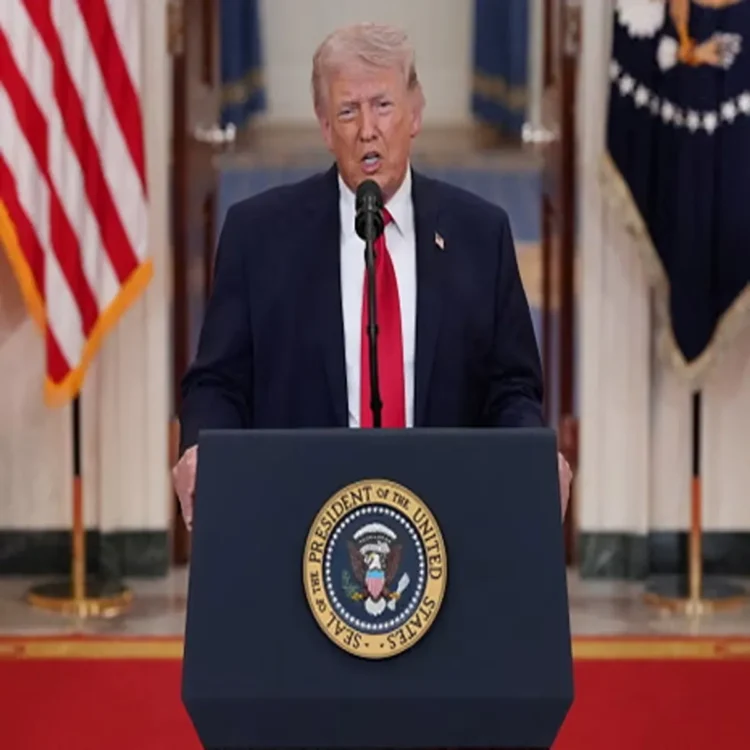
War – US President Donald Trump, in a televised prime-time address, indicated that the ongoing conflict with Iran could be approaching its final phase. However, his remarks stopped short of providing concrete details on how the situation would unfold or conclude, leaving key aspects of the strategy unclear.
Lack of Clarity on Military Plans
During the speech, Trump did not confirm whether the United States would deploy ground forces inside Iran. This omission comes at a time when discussions within Washington reportedly continue over possible next steps in military operations. The absence of a firm position on troop involvement has raised questions about how the US intends to proceed if the conflict intensifies further.
He also refrained from outlining any detailed operational roadmap, even while suggesting that hostilities might continue for another two to three weeks. Analysts note that such timelines, without supporting plans, offer limited insight into actual decision-making on the ground.
No Defined Diplomatic Exit Strategy
Another notable gap in the address was the lack of a diplomatic pathway to end the conflict. While Trump emphasized that the situation was nearing resolution, he did not present any framework for negotiations or peace-building measures.
Experts have pointed out that conflicts of this scale typically require parallel diplomatic efforts alongside military actions. The absence of such details has contributed to growing uncertainty about how a sustainable resolution might be achieved.
Strait of Hormuz Responsibility Shifted
Trump briefly mentioned the Strait of Hormuz, a vital route for global oil shipments, but suggested that other nations—especially those heavily reliant on Middle Eastern energy—should take the lead in ensuring its reopening.
He stated that while the US would provide assistance, responsibility should largely fall on other stakeholders. He also expressed confidence that the waterway would return to normal operations once the conflict subsides, though he did not elaborate on any immediate measures to secure it.
Limited Reference to Allies and Coordination
The speech made minimal mention of key allies involved in the region. There was little discussion about coordination with countries such as Israel or broader alliances like NATO, despite earlier reports indicating challenges in maintaining unified support.
This lack of detail has led observers to question the extent of international cooperation and whether joint strategies are being effectively aligned.
Ambiguity Around Iran’s Political Future
On the issue of Iran’s leadership, Trump stated that regime change was not an objective of the United States. At the same time, he hinted that shifts in leadership may have already occurred following recent military actions.
However, he did not provide specifics about Iran’s current political structure or emerging leadership figures. This omission leaves a gap in understanding how internal developments within Iran might influence the broader conflict.
Concerns Over Nuclear Security
The address also did not address whether the US plans to secure Iran’s nuclear materials. Analysts warn that recovering such materials, particularly those stored deep underground, would likely require complex and high-risk ground operations.
Without clarity on this issue, concerns remain about nuclear safety and the long-term implications for regional and global security.
Continued Military Activity Despite Claims
While Trump stated that Iran’s military capabilities had been significantly weakened, reports indicate that Tehran continues to carry out missile and drone attacks across the region. This ongoing activity suggests that the conflict remains active despite claims of progress.
The speech largely reiterated existing positions without introducing new policy measures or initiatives, reinforcing a sense of uncertainty about the next phase.
Ongoing Global and Regional Impact
The Strait of Hormuz continues to play a critical role in global energy supply chains, and disruptions have already begun affecting markets worldwide. As the conflict enters its second month, concerns over escalation, regional stability, and long-term strategy remain at the forefront.
Observers say that without clearer direction on military objectives, diplomatic efforts, and post-conflict governance, uncertainty is likely to persist in the weeks ahead.