
US: congressman claims that the Yunus government has not gone far enough in protecting minorities in Bangladesh
US: Indian American Congressman Suhas Subramanyam expressed alarm over what he called a deteriorating situation for religious minorities in Bangladesh, stating that the administration in Dhaka has not done enough to safeguard Hindus and other minority populations from targeted violence.
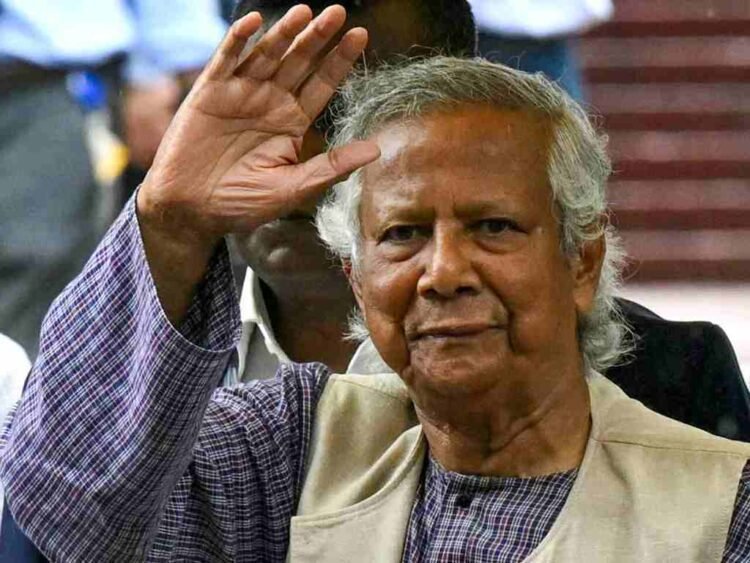
In an interview with IANS, Subramanyam said, “From an American perspective, we want to make sure that people who visit Bangladesh won’t face any form of violence or backlash in any sort of way because of their ethnicity, background, or religion.” He said, “In this case, we’ve seen multiple incidents of Hindus specifically being attacked in Bangladesh.”
The Democrat from Virginia said that since the present administration took office, there has been a more widespread pattern of assaults. He said, “We are concerned that the government is not doing enough to protect minorities in Bangladesh,” and that Washington would have to evaluate Dhaka’s plans.
According to Subramanyam, the violence has included assaults on people, businesses, and places of worship. “We have seen attacks and vandalism against Hindu and other religious monuments and places. Businesses owned by Hindus and other religious minorities have been assaulted and vandalized, he claimed. “And now we’re witnessing multiple attacks and fatalities.”
Subramanyam said the extent and duration of the violence were concerning, acknowledging that political changes may be unstable. “We recognize that when governments and regimes change, there is frequently a great deal of violence that ensues when that process is not democratic,” he added. “However, in this instance, this has been occurring ever since the government assumed power.”
According to him, the Bangladeshi American community in the US is becoming more and more concerned. Many of my Bangladeshi American clients, who practice Islam, Hinduism, and other faiths, expressed worry about the situation in Bangladesh, Subramanyam said. “They want us to try to figure out how we can protect minorities there going forward because they have family there.”
Despite considering potential diplomatic measures, the congressman said that the United States should keep denouncing acts of violence and hate crimes. “We will continue to consider our options in the United States to ensure that people are protected there, irrespective of their race, religion, or background,” he said. “However, we must denounce acts of violence and hatred in the interim.”
When asked whether Washington could exert pressure on Dhaka on the matter, Subramanyam said that bipartisan collaboration would be necessary. “It may. But we’ll wait and see,” he replied. “We’ll need to collaborate across party lines on something similar.”
The Trump administration presently has a lot of diplomatic clout, he continued. He said, “The Trump administration has most of the diplomatic power right now to put pressure on Bangladesh.” “We’ll observe their actions as well.”
Subramanyam voiced concerns regarding minorities’ freedom to vote in the next elections in Bangladesh. He said, “We would like to see a free and fair election where every citizen’s voice is taken into account.” “After everything that has transpired in the last two years, we are worried about the election process.”
He said that Washington’s ultimate goal is to cooperate with any administration that has been duly elected. “As Americans, we want to be able to cooperate with any government that wins that election,” he said. “However, we want to ensure that the government reflects the will of the people.”
Additionally, Subramanyam cautioned that escalating violence and anti-American sentiment might harm bilateral relations. He said that such acts might “really hurt the relationship with the United States” and that “it’s concerning, especially the anti-American sentiment and the violence.”
Although human rights organizations have sometimes raised concerns about political violence and religious intolerance, Bangladesh has generally presented itself as a secular democracy with constitutional safeguards for minorities. In South Asia, the nation is an important ally of the United States, especially when it comes to counterterrorism and regional stability.
In the past, Washington has expressed concerns about human rights in Bangladesh via diplomatic engagement, public declarations, and legislative investigation, particularly during election periods when political freedoms and minority safety are often given more attention.