
US: As China practices close to Taiwan, the calls for moderation
US: Concerned by China’s biggest-ever military drills outside Taiwan, the US warned that Beijing’s words and deeds run the danger of needlessly raising regional tensions and jeopardizing security across the Taiwan Strait.
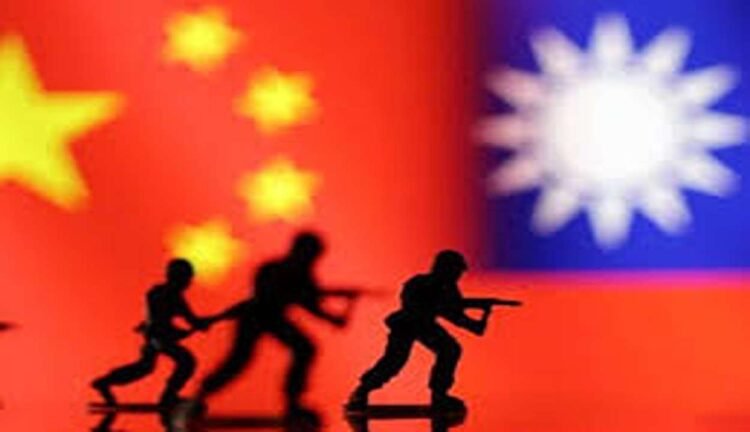
Tommy Pigott, the principal deputy spokesperson for the US State Department, responded to news of the exercises by saying that China should refrain from using military coercion and instead seek communication.
In a statement released on January 1, Pigott said that “China’s military actions and rhetoric toward Taiwan and others in the region increase tensions unnecessarily.” “We implore Beijing to use moderation, stop using force against Taiwan, and have meaningful talks instead.”
The announcement was made as China wrapped off “Justice Mission 2025,” a massive military drill that took place from December 29 to December 31 and included synchronized actions by the air force, rocket forces, navy, and army of the People’s Liberation Army. In a simulated noose-style blockade surrounding Taiwan, the exercises assessed unified combat skills. They included scenarios centered on blocking important ports, executing pinpoint attacks, and interfering with supply lines.
During the practice time, Taiwanese officials reported seeing 17 Chinese naval vessels and 77 Chinese military aircraft. As part of its ready posture, Taiwan retaliated by rushing fighter planes and putting defensive measures in place, such as placing barriers like explosive barrels at river mouths.
A number of US partners and allies expressed worry about the exercises’ scope and timing. Rising military pressure in the Taiwan Strait has alarmed governments and organizations in the European Union, the United Kingdom, Japan, and Australia, which warn that such measures raise the possibility of mistake.
Beijing connected the drills to recent advances in US-Taiwan military relations, including a $11.1 billion US weapons deal to Taipei, and framed them as a warning to what it termed separatist forces. Military action near Taiwan has often been described by Chinese authorities as a reaction to outside meddling.
“The United States supports peace and stability across the Taiwan Strait and opposes unilateral changes to the status quo, including by force or coercion,” Pigott said, restating Washington’s stance.
The importance of Taiwan Strait stability for global commerce, supply lines, and regional security has been emphasized repeatedly by US authorities. The most recent exercises, which are said to be the biggest of their type, have raised concerns about China’s military stance against Taiwan.
As the drills came to an end, Chinese President Xi Jinping reiterated the objective of reunification with Taiwan in his New Year’s speech. Beijing’s claims to sovereignty have been denied by Taiwan’s administration, which insists that the island’s destiny is solely up to its people.
Since 1949, Taiwan has operated independently of the Chinese mainland and established its own democratic political structure, armed forces, and economy. Beijing has said repeatedly that it wants to merge Taiwan into the mainland and views it as a renegade province.
The nonpartisan Congressional Research Service has reported that concerns over China’s military actions in the Indo-Pacific region go beyond the Taiwan Strait and are a part of a larger trend of pressure and coercion in disputed maritime areas.
According to the paper, US officials have long advocated for the region’s problems to be resolved peacefully, in compliance with international law, and while preserving freedom of overflight and navigation.
The CRS report also emphasizes that the United States maintains long-standing policy frameworks that promote peace and stability in the Taiwan Strait and oppose the use of force to change current arrangements, despite acknowledging the People’s Republic of China as the only legitimate government of China. The paper points out that these policies have shaped US involvement in the area for many years and continue to be essential to Washington’s strategy in the face of escalating regional tensions.