
Technology – US Lawmakers Frame China Tech Rivalry as Moral Battle
Technology – Senior policymakers in the United States have intensified their warnings about China’s growing influence in critical technologies, describing the rivalry as more than a race for innovation. Speaking at a policy forum in Washington, lawmakers emphasized that the contest spans artificial intelligence, semiconductor development, and biotechnology, with long-term implications for global leadership and economic stability.
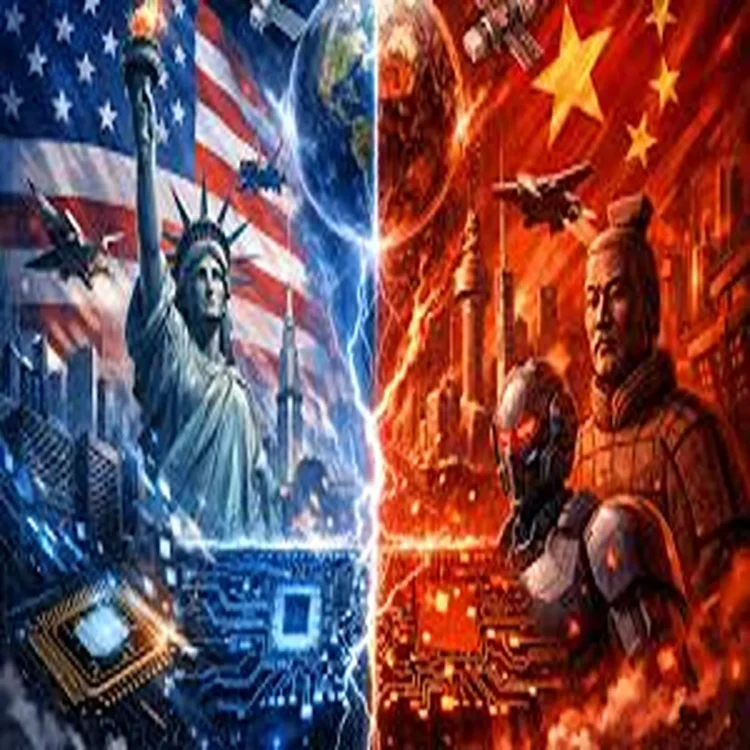
Lawmakers highlight strategic urgency
At the Hill & Valley Forum, leading voices in Congress outlined a coordinated approach aimed at countering China’s technological rise. Their strategy combines tighter export controls, increased domestic investment, and stronger collaboration with allied nations.
Senator Jim Banks described the competition in stark terms, linking it to broader geopolitical tensions. He argued that advancements in artificial intelligence are central to what he characterized as a new era of global rivalry. According to Banks, ensuring that the United States maintains its edge in AI development is a priority that cannot be compromised.
Focus on semiconductor restrictions
A key component of the proposed strategy involves limiting China’s access to advanced semiconductor technology. Banks pointed to ongoing policy efforts that aim to restrict exports of high-performance chips to adversarial nations.
He also referenced legislative measures designed to strengthen these controls, noting that such steps are intended to prevent sensitive technologies from being used against US interests. Alongside these restrictions, he stressed that domestic industries should be given priority access to American-made semiconductor products.
Competition framed beyond economics
Beyond market leadership, some lawmakers framed the rivalry in ethical terms. Banks argued that the stakes extend beyond economic gains, suggesting that differences in governance and business practices make the competition fundamentally ideological.
This perspective reflects a broader shift in Washington, where technological leadership is increasingly linked to national values and global influence.
Calls for a defense-oriented approach
Representative John Moolenaar, who chairs a congressional committee focused on China, echoed concerns about the need for a stronger response. While acknowledging the traditional US emphasis on open markets and innovation, he suggested that current conditions require a more strategic and defensive mindset.
Moolenaar pointed to vulnerabilities in supply chains, particularly the reliance on China for critical components. He warned that such dependencies could weaken the United States in the long term and stressed the importance of reducing reliance on key competitors.
Addressing supply chain risks
Lawmakers also raised concerns that American technology could indirectly support the advancement of rival nations. This has led to increased focus on securing supply chains, strengthening domestic manufacturing, and investing in workforce development.
According to Moolenaar, addressing these challenges will require coordinated efforts across government and industry to ensure resilience in essential sectors.
Expanding focus to biotechnology
The discussion extended beyond artificial intelligence and semiconductors to include biotechnology, an area gaining importance in national security considerations. Senator Todd Young highlighted the need for continued US leadership in this field, pointing to policy recommendations aimed at accelerating innovation.
He emphasized the role of partnerships between public institutions and private companies in maintaining a competitive advantage. Experts at the forum noted that breakthroughs in biotechnology could have far-reaching implications for healthcare, defense, and economic growth.
A broader shift in policy thinking
The forum discussions underscored a significant evolution in US policy thinking. Artificial intelligence, semiconductor manufacturing, and biotechnology are now increasingly viewed as interconnected domains that will shape future global power dynamics.
Lawmakers from both parties appear aligned on the need for a comprehensive strategy that balances economic interests with national security concerns. As the competition with China continues to evolve, these sectors are expected to remain central to policy debates in Washington.