
Taiwan – KMT Leader’s China Visit Raises Strategic and Political Concerns
Taiwan – Beijing’s latest outreach toward Taiwan has taken a significant turn with the recent visit of Kuomintang (KMT) chairwoman Cheng Li-wun to mainland China. While the trip was presented as an effort to ease tensions, it has sparked debate over its broader implications for Taiwan’s political future and its ties with global partners.
A Symbolic Visit With Strategic Undertones
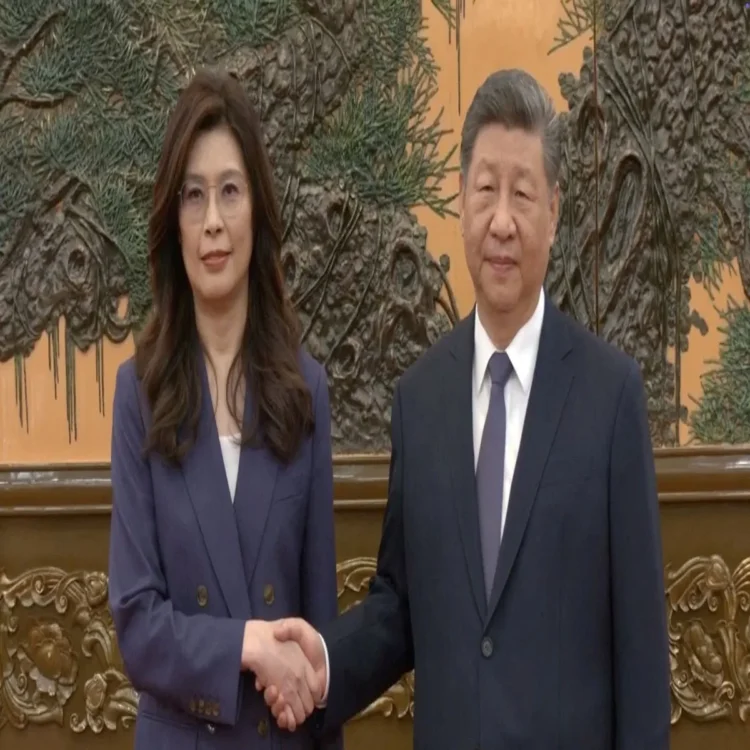
Cheng’s visit from April 7 to April 12 marked the first high-level engagement between leaders of the KMT and the Chinese Communist Party in nearly a decade. She described the trip as a mission aimed at restoring dialogue and stability across the Taiwan Strait. A key moment came during her meeting with China’s top leadership, where carefully choreographed optics suggested a renewed channel of communication.
However, critics argue that the symbolism of the visit may carry deeper consequences. The interaction was interpreted by some observers as signaling a willingness to align more closely with Beijing’s position, raising questions about Taiwan’s long-standing political stance.
Beijing’s Preference for Political Alignment
China has consistently viewed the KMT as a more cooperative partner compared to Taiwan’s ruling Democratic Progressive Party (DPP). The DPP’s emphasis on maintaining Taiwan’s sovereignty has often drawn sharp criticism from Beijing. Against this backdrop, Cheng’s outreach appears to align with China’s preference for engagement through parties seen as less confrontational.
Yet, Cheng’s political journey has been marked by significant shifts. Once associated with pro-independence views, her current approach reflects a notable transformation. This shift has fueled skepticism among both political analysts and segments of the Taiwanese public.
Implications for US-Taiwan Relations
The timing of the visit adds another layer of complexity. It comes ahead of anticipated high-level discussions between Washington and Beijing, placing the United States in a delicate position. Analysts suggest that the optics of improving cross-strait relations could be used by China to argue against external involvement in what it considers an internal matter.
At the same time, Cheng’s rhetoric has increasingly questioned the reliability of Taiwan’s security partnership with the United States. She has expressed concerns about defense spending and suggested that closer ties with Washington may heighten risks rather than reduce them. This stance contrasts sharply with the current Taiwanese administration, which continues to prioritize defense preparedness and international cooperation.
Domestic Political Risks and Divisions
Within Taiwan, Cheng’s approach has not been universally welcomed. Even members of her own party have voiced unease over her diplomatic strategy and messaging. Critics worry that her engagement with Beijing could be perceived as undermining Taiwan’s autonomy.
Public opinion also reflects these tensions. Recent polling indicates that support for the KMT has declined, particularly among younger voters. The party faces challenges in appealing to a new generation that is more cautious about closer integration with mainland China. Internal divisions within the KMT further complicate its electoral prospects ahead of upcoming local and national elections.
Broader Strategic Concerns
Experts note that Beijing’s engagement with Taiwanese political figures often occurs during periods of domestic political division. Such interactions can amplify internal disagreements and potentially weaken public confidence in democratic institutions.
There are also concerns about defense preparedness. Ongoing political disagreements over military funding have raised doubts about Taiwan’s ability to maintain a credible deterrence strategy. Delays in budget approvals and procurement could affect coordination with international partners.
A Critical Moment for Taiwan’s Future
Cheng’s visit highlights a broader debate about Taiwan’s strategic direction. While engagement with China may offer short-term stability, it also raises questions about long-term security and political independence. The balance between maintaining peace and preserving sovereignty remains a central challenge.
As Taiwan approaches key elections, voters will ultimately decide whether this approach resonates. The outcome will shape not only domestic politics but also the island’s role in an increasingly complex geopolitical landscape.