
SriLanka – Colombo Declines US Request to Deploy Warplanes Locally
SriLanka – Sri Lanka has turned down a request from the United States to position military aircraft at a civilian airport, underscoring its continued commitment to neutrality amid rising tensions in the Indian Ocean region.
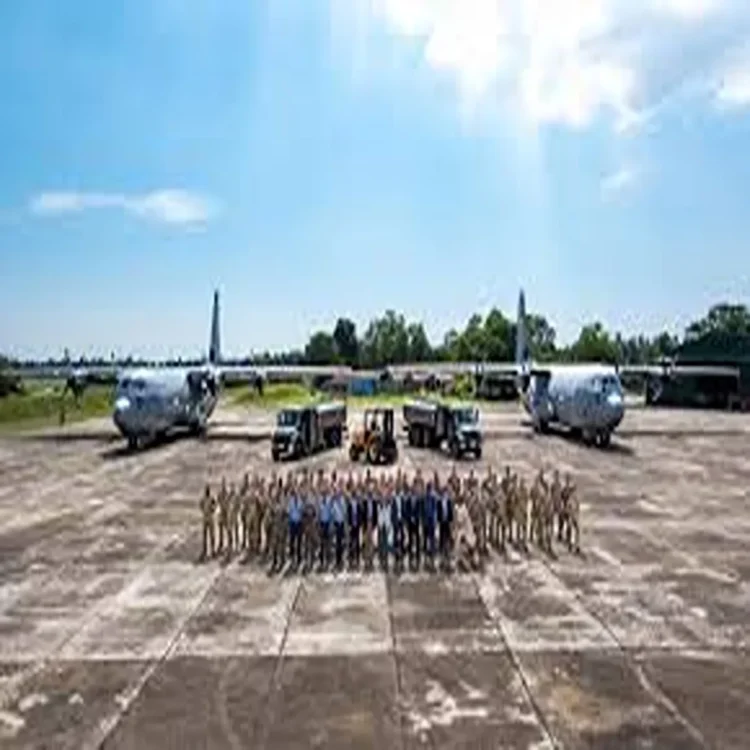
Sri Lankan President Anura Kumara Dissanayake confirmed in parliament on Friday that the government rejected a proposal from Washington to temporarily station two armed aircraft at Mattala Rajapaksa International Airport earlier this month. The decision, he explained, was taken to ensure that the country does not become entangled in external military operations or appear to favor any global power.
Decision Rooted in Neutral Foreign Policy
According to the president, the request was formally made on February 26. The United States had sought permission to deploy two warplanes equipped with anti-ship missiles between March 4 and March 8. However, authorities in Colombo declined the proposal, citing the importance of maintaining a neutral stance in international affairs.
Dissanayake emphasized that allowing foreign military assets on Sri Lankan soil could compromise the country’s long-standing policy of non-alignment. He told lawmakers that the government remains committed to ensuring that its territory is not used in ways that could influence ongoing global conflicts.
Parallel Request from Iran Raises Diplomatic Balancing Act
On the same day the United States submitted its request, Iran also approached Sri Lanka with a proposal. Tehran sought approval for three of its naval vessels, returning from a joint exercise in India, to dock in Colombo between March 9 and March 13.
The president noted that both requests placed Sri Lanka in a sensitive diplomatic position. Granting permission to one nation could have created pressure to extend the same privilege to the other. To avoid such complications, the government chose to decline both proposals.
He told parliament that this approach was necessary to preserve fairness and avoid sending conflicting signals to international partners.
Incident Off Southern Coast Escalates Tensions
The situation took a serious turn on March 4, when a United States naval action resulted in the sinking of an Iranian warship near Sri Lanka’s southern coastline. The vessel, identified as IRIS Dena, was reportedly struck by torpedoes, leading to significant loss of life.
Sri Lankan naval forces responded swiftly, rescuing 32 individuals from the water. However, at least 84 crew members are believed to have died in the incident, highlighting the risks posed by escalating maritime confrontations in the region.
Humanitarian Response and Safe Harbour
Following the incident, another Iranian vessel, IRIS Bushehr, entered Sri Lankan waters the next day. Authorities allowed the ship to dock due to concerns over the safety of its crew, numbering more than 200.
The crew has since been accommodated in Colombo, reflecting Sri Lanka’s willingness to provide humanitarian assistance despite its refusal to engage in military cooperation. Officials have stressed that this decision was based solely on safety considerations rather than political alignment.
Strategic Ties with Both Nations Remain Intact
Sri Lanka continues to maintain important economic and diplomatic relationships with both the United States and Iran. The United States remains a key export destination for Sri Lankan goods, while Iran is a major importer of the country’s tea.
Balancing these relationships requires careful navigation, particularly at a time of heightened geopolitical tension. The government’s recent decisions suggest a deliberate effort to avoid actions that could disrupt these ties.
President Dissanayake concluded by reaffirming that Sri Lanka’s foreign policy will remain guided by neutrality, stability, and national interest, a stance that received support from members of parliament.